
Hook & thesis
Insulet is not a one-hit wonder. The company’s Omnipod platform continues to win share in the insulin pump market, management has raised guidance on stronger adoption, and cash generation is meaningful enough to fund R&D and commercial expansion. With the stock trading at $252 today (prior close $248.12), the setup favors a patient long: growth remains visible and the balance sheet supports execution.
Yes, valuation is premium - price/earnings sits near 71x. But investors buying growth need to pay up for durable revenue acceleration and improving free cash flow. This trade idea assumes Omnipod’s adoption trajectory continues, incremental international rollouts compound revenue, and execution remains steady. The plan: enter at $252, protect capital with a $235 stop, target $310 over a long-term horizon of 180 trading days.
What Insulet does and why it matters
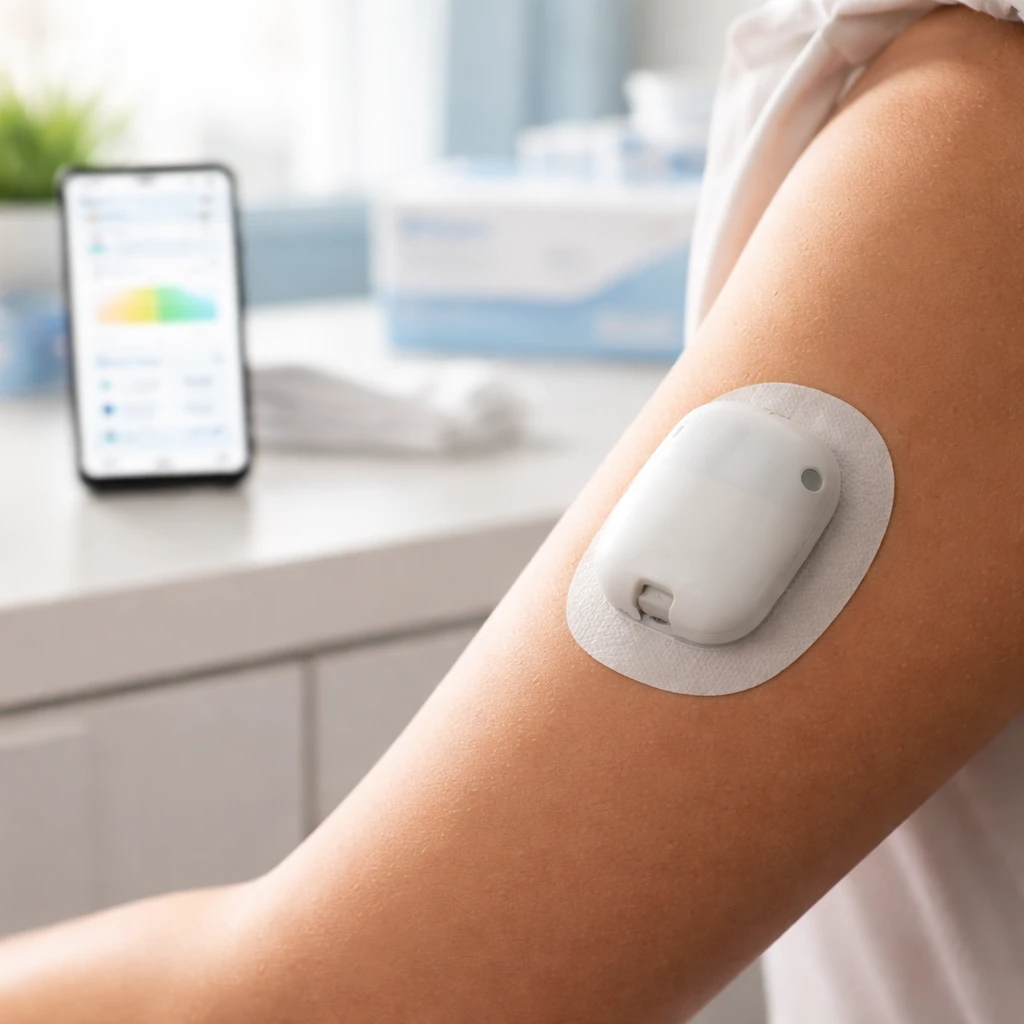
Insulet Corp. is a medical device company focused on insulin delivery through its tubeless Omnipod platform. The product replaces traditional pump-and-tubing systems with a wearable, automated insulin delivery device that appeals to patients and clinicians for convenience and automation. Insulet operates in a diabetes device market that is growing both by incidence of disease and by technological upgrades; a recent market report projects the diabetes care devices market expanding materially over the coming decade.
Investors should care because Insulet sits at the intersection of durable clinical demand (insulin-dependent diabetes) and a secular upgrade cycle (patients moving to automated delivery and continuous glucose monitoring integration). When adoption accelerates, revenue scales quickly because the business combines recurring supplies with device sales and software-enabled features.
Data-backed reasons to be constructive
- Recent revenue proof point: In Q2 2025 Insulet reported $649.1 million in revenue and raised full-year sales guidance to $2.57-$2.63 billion, signaling stronger-than-expected adoption (press release 08/07/2025).
- Cash generation: trailing free cash flow reported at $358.5 million. That level of FCF gives Insulet flexibility to invest in sales capacity and international expansion without compromising the balance sheet.
- Healthy profitability metrics: return on equity is roughly 16.3% and return on assets 7.75%, indicating efficient capital deployment compared with many early-stage medtech peers.
- Balance sheet and leverage: debt to equity is modest at 0.63 and the current ratio is 2.81, which supports continued investment and reduces near-term liquidity risk.
- Price action context: market cap sits near $17.7 billion and the stock trades at $252, roughly 29% below its 52-week high of $354.88 but well above the 52-week low of $230.05. Momentum indicators are mixed-to-modestly constructive: 10-day SMA at $247, 20-day SMA at $248.86, and MACD showing bullish momentum.
Valuation framework
Insulet’s trailing P/E is about 71x and price-to-sales near 6.45x on an enterprise value around $17.7 billion. Those metrics are stretched versus broad-market averages but not unusual for a high-growth medical device company that has shown accelerating revenue and margin expansion. The key valuation question is whether Insulet can maintain double-digit top-line growth and expand operating leverage to justify a premium multiple.
Consider the alternatives: if growth slows materially, the multiple will re-rate quickly because P/E already assumes robust future earnings growth. Conversely, if Omnipod adoption continues and FCF grows meaningfully from the current $358.5 million, the premium multiple could compress relative to earnings and still leave upside to the stock.
Trade plan (actionable)
Direction: Long
Entry price: $252.00
Target price: $310.00
Stop loss: $235.00
Horizon: long term (180 trading days). This horizon recognizes that adoption cycles and regulatory/international rollouts take time to translate into materially higher revenue and that earnings and free cash flow improvements will likely unfold over several quarters.
Why these levels? Entry at $252 roughly tracks current market liquidity and provides room above near-term moving averages (10-day and 20-day SMAs near $247 and $249). The $235 stop sits below the recent 52-week low vicinity and several support layers, limiting downside if adoption disappoints. The $310 target implies roughly 23% upside from the entry and is conservative relative to the 52-week high of $354.88, leaving room for additional upside if momentum and fundamentals re-accelerate.
Catalysts to watch (2-5)
- Continued Omnipod 5 adoption and higher-to-full-year revenue revisions - management's prior guidance raise (08/07/2025) is the template for future positive surprises.
- Geographic expansion, including recent Middle East expansion noted in industry coverage (02/13/2026) - new markets can extend runway and raise the cadence of recurring supply sales.
- New product features or integrations with CGM partners that improve clinical outcomes and stickiness.
- Quarterly results showing sequential margin improvement and rising free cash flow beyond the reported $358.5 million.
Risks and counterarguments
- High valuation leaves little room for misses. At ~71x P/E, any revenue or margin miss would likely trigger a sharp re-rating. This is the biggest risk for a long position.
- Competition and device corrections. Peers like Tandem and other pump manufacturers can pressure share; a prior Tandem device correction demonstrates how product issues can depress investor sentiment and trigger recalls or voluntary corrections by competitors as well.
- Regulatory and reimbursement pressures. Medical devices are exposed to changing reimbursement rules and regulatory scrutiny that can slow adoption or increase costs.
- Execution risk on international rollouts. Expanding into new geographies demands supply chain, regulatory approvals, and local payer relationships; missteps could delay revenue realization.
- Counterargument: One could argue the stock is fully priced for perfection. If Omnipod adoption slows even modestly, the premium multiple will not be supported and downside risk is substantial. This is a reasonable and important counter view that keeps position sizing disciplined.
What would change my mind
I would reduce conviction or exit the position if Insulet reports a multi-quarter slowing in pod shipments or materially weak guidance that implies decelerating demand, or if free cash flow turns negative and the company requires dilutive financing. Conversely, my thesis would strengthen if the company posts consecutive quarters of accelerating revenue above raised guidance, demonstrates expanding margins, or announces a material strategic partnership that widens distribution quickly.
Quick reference table
| Metric | Value |
|---|---|
| Current price | $252.00 |
| Market cap | $17.7B |
| P/E | ~71x |
| Free cash flow (trailing) | $358.5M |
| 52-week range | $230.05 - $354.88 |
| Guidance (FY 2025) | $2.57 - $2.63B (raised 08/07/2025) |
Final thoughts and stance
Insulet is a growth story with healthy cash flow and a credible path to further adoption through product momentum and international expansion. That said, the stock carries a premium valuation and is sensitive to execution. For disciplined traders and investors comfortable with growth-multiple risk, the proposed long entry at $252 with a $235 stop and $310 target across a long-term 180 trading day horizon offers a reasonable asymmetric payoff: enough upside to compensate for the valuation premium while protecting capital if adoption stalls.
Monitor product adoption metrics, quarterly guidance, and any regulatory headlines closely. If those signals remain positive, the growth thesis should continue to play out; if they deteriorate, materially tighten stops or step aside.