
Hook / Thesis
Carnival Corporation (CCL) looks like a pragmatic buy for income investors who want exposure to global leisure travel without paying a premium. At the current price near $28.11, CCL trades at a historically reasonable multiple (P/E ~14), generates solid free cash flow ($2.61 billion), and has just cleared the mechanics to pay a dividend with an ex-dividend date of 02/13/2026 and payable on 02/27/2026. The yield is modest (about 0.53%) but the combination of cash generation, improving leverage and an enterprise value that implies a sub-9x EV/EBITDA multiple creates an asymmetric risk/reward profile for income-focused investors.
Why the market should care
Carnival runs the world’s largest cruise platform with brands across North America and Europe. Its business is asset heavy but cash generative when sailings are full and onboard spend is healthy. The market is paying attention because Carnival has reduced debt meaningfully from pandemic peaks and is starting to return capital to shareholders after rebuilding balance sheet flexibility. Key operational metrics and cash generation have converged with valuation to create what I view as a lower-risk entry for investors chasing yield and downside protection.
The business in plain terms
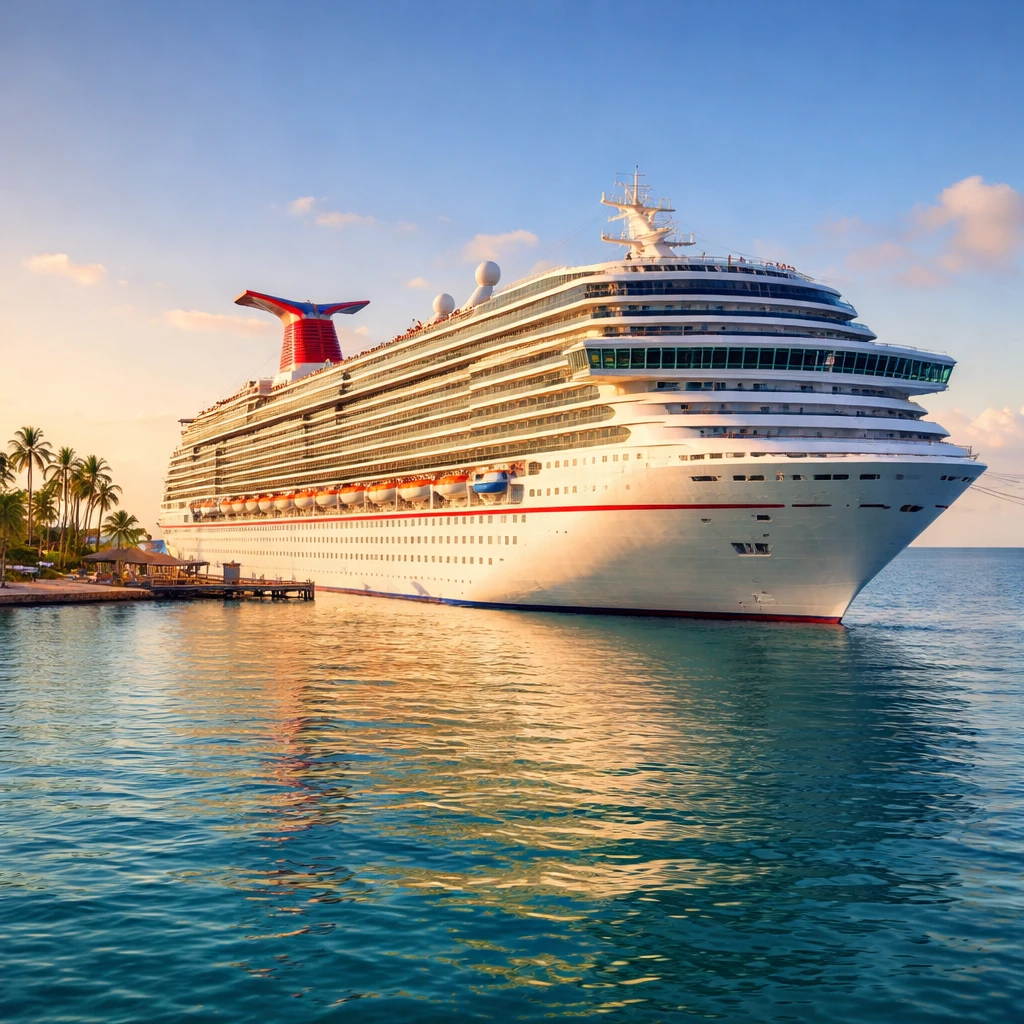
Carnival operates cruise brands including Carnival Cruise Line, Holland America, Princess, AIDA, Costa and P&O Cruises (UK). Revenue is driven by ticket sales, onboard spend and logistics tied to its cruise support operations and private islands. The company is cyclical, but travel demand has recovered strongly post-pandemic. Management has prioritized deleveraging and returning to dividend payments, while the company’s scale offers operational resilience versus smaller peers.
Numbers that matter
- Current price: $28.11.
- Market capitalization: roughly $38.7 billion.
- P/E: about 14 (earnings per share roughly $1.99), a multiple below many consumer discretionary recovering names.
- Enterprise value: roughly $63.51 billion with EV/EBITDA ~ 8.7x.
- Free cash flow: approximately $2.607 billion, supporting dividend capacity and debt reduction.
- Price-to-sales ~ 1.46x, price-to-free-cash-flow ~ 14.9x.
- Balance sheet signals: debt-to-equity ~ 2.17 (still elevated but improved), current ratio ~ 0.32, cash ratio ~ 0.15 - liquidity remains a watch item even as debt trends down.
- Valuation breadth: 52-week range is $15.07 - $34.03; the stock sits closer to the upper half of that range, but still below the 52-week high.
Valuation framing
Economically, Carnival is trading at a pragmatic recovery multiple: P/E ~14 and EV/EBITDA ~8.7x imply the market is assigning a middle-case outlook for demand and margins. Free cash flow of $2.6 billion gives the company runway to service interest, reduce leverage and fund a modest dividend. Market cap (~$38.7B) versus enterprise value (~$63.5B) highlights that much of the company’s capitalization is still in its leverage; as debt falls, equity holders stand to benefit. Compared to peak pandemic dislocation (the stock bottomed near $15) the recent move higher reflects normalization of travel and better-than-feared balance sheet repair. For income investors this is not a high-yield speculative play; it’s a yield-plus-value approach where getting paid a small dividend while waiting for deleveraging and revenue resilience is the point.
Technicals and investor positioning
Short-term momentum is subdued: the 10-day SMA sits at $30.72, the 50-day SMA at $30.99 and the 20-day at $31.68, so the price is testing lower relative to recent moving averages. The RSI is ~37, indicating the stock is not oversold but showing weaker buyer conviction. MACD is in bearish momentum territory. Short interest is moderate: recent settlements show short interest in the 40M range with days-to-cover roughly 1.8–2.4, which means short squeezes are possible but not extreme. For the income-minded buyer, the technicals offer the opportunity to scale in or set a conservative stop to manage downside while collecting the dividend and waiting for deleveraging to continue.
Catalysts (what will move the stock higher)
- Continued debt reduction - management has cut about $10 billion from peak debt in prior years and further reductions would materially lower enterprise leverage and justify higher multiples.
- Consistent free cash flow generation and dividend sustainability - quarterly cash flows in line with the reported $2.6B annual free cash flow will increase investor confidence.
- Stronger pricing/onboard spend - continued pricing power and higher onboard spend per passenger drives margin expansion and EPS upside.
- Macro stability - lower oil prices and calm geopolitical conditions reduce operating costs and travel frictions, aiding demand.
- Any buybacks or special dividends as leverage metrics improve would be a direct catalyst for equity value.
Trade plan (actionable)
Recommended trade: Go long CCL for income and capital appreciation with a conservative stop. Entry, stop and target are precise to aid execution.
| Trade Item | Value |
|---|---|
| Entry Price | $28.11 |
| Stop Loss | $25.00 |
| Target Price | $34.00 |
| Trade Direction | Long |
| Time Horizon | Long term (180 trading days) - Allow time for continued deleveraging, seasonal demand cycles and potential dividend flow to re-rate the stock. |
| Risk Level | Low (income-first, capital preservation focus with a defined stop) |
Rationale: The entry sits below the recent short-term moving averages and gives a margin of safety. The $25 stop caps downside near a level that reflects a roughly 11% decline from entry; that protects against cyclical weakness while allowing the company to execute its deleveraging plan. The target at $34 is near the 52-week high and reflects a realistic re-rating if cash flow remains steady and leverage continues to drop.
Risks (balanced view)
- Geopolitical and macro risk - sharp escalation in geopolitical tensions or travel disruptions can damp demand and spike fuel costs, pressuring margins and shares.
- Interest and financing risk - Carnival’s debt stock remains meaningful (debt-to-equity ~2.17). A rise in interest rates or tightening credit conditions could increase interest expense or slow deleveraging.
- Operational shocks - outbreaks, port closures, or regulatory actions could force cancellations and reduce near-term revenue and onboard spend.
- Liquidity ratios - current and quick ratios are low (current ~0.32, quick ~0.28), so any short-term cash crunch would be painful until further cash builds or financing occurs.
- Dividend uncertainty - the current yield is modest (~0.53%) and while a dividend has been paid, future payouts depend on cash flow and management priorities; the yield is not a guaranteed steady income stream.
Counterargument: Some investors will argue that Carnival is still a cyclical leisure play with excess leverage and therefore not suitable for income investors seeking safety. That view is defensible: the company’s liquidity ratios are low and travel demand can be volatile. If you need a high and reliable cash yield, other utilities or consumer staples with stronger balance sheets are better fits.
Why I still like it
The trade here is not a chase for high yield — it’s a low-risk income tilt built on improving fundamentals. Carnival’s free cash flow generation (~$2.6B), a P/E near 14 and EV/EBITDA under 9x create a valuation cushion. Management’s track record of debt reduction (previous $10B reduction from the pandemic peak) and the resumption of dividend distributions suggest the company is moving from survival to normalization. For a patient income investor willing to accept a modest yield while waiting for deleveraging and a margin recovery, CCL looks attractive with a defined stop to limit drawdowns.
What would change my mind
- If free cash flow turns negative and remains so for several quarters, the dividend and deleveraging story would break down.
- If management halts debt reduction and instead leverages for aggressive expansion without clear profit accretion, valuation upside would be at risk.
- A sustained collapse in demand (driven by macro recession or extended travel restrictions) that pushes the stock below $25 on rising volume would violate the trade’s risk assumptions and prompt an exit.
Conclusion
Carnival offers a sensible, income-oriented buy today: modest yield, solid free cash flow, and valuation that reflects a recovery but still leaves upside if the company continues to cut leverage. This is a trade for investors who want exposure to travel upside while prioritizing downside control. Use the $28.11 entry, keep a hard stop at $25.00, and target $34.00 over a long-term horizon of 180 trading days. If Carnival can sustain cash flow and continue debt reduction, shareholders should be rewarded by a combination of yield and capital appreciation.
Key reference dates: Ex-dividend: 02/13/2026; Payable: 02/27/2026.