
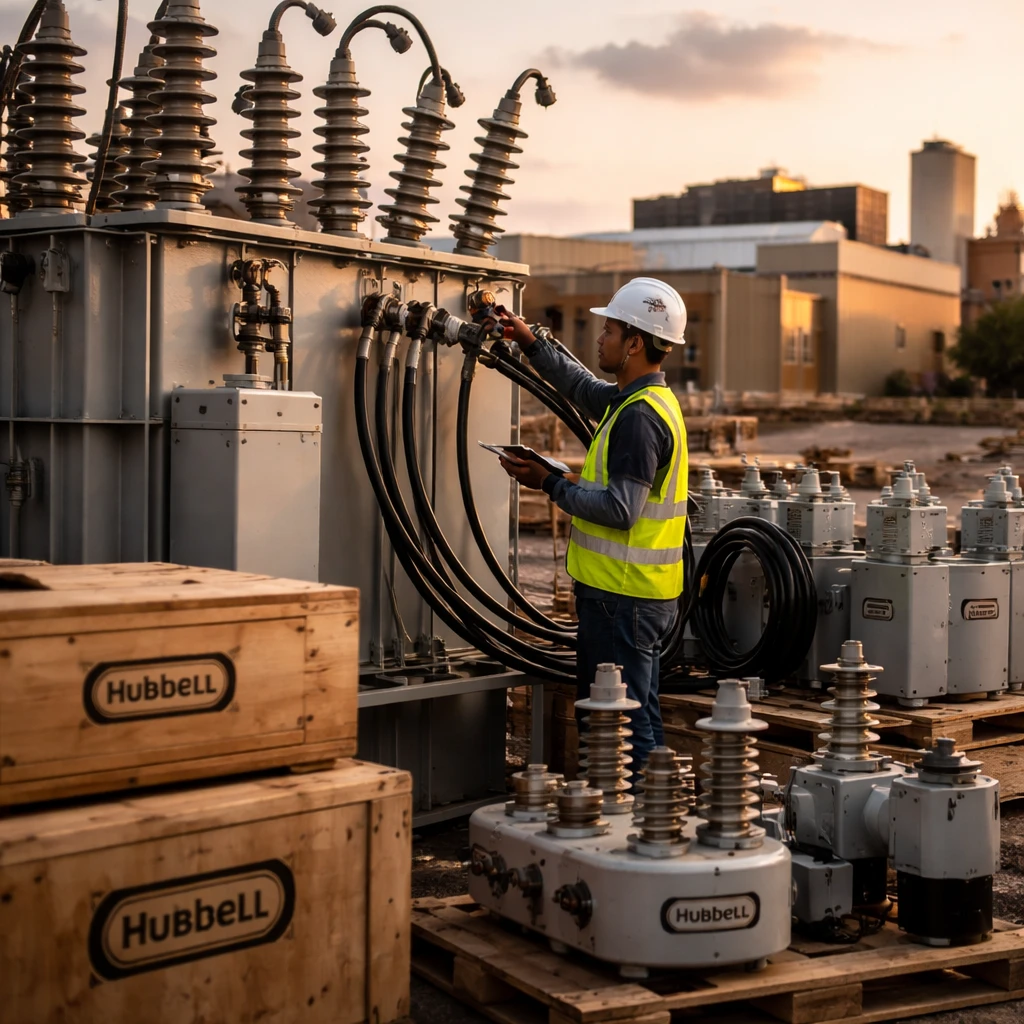
Hook / Thesis
Hubbell is a classic industrial compounder: durable electrical and utility products, steady margins, and free cash flow. On the surface the stock looks like a mature business trading at a premium - price/earnings around 31x and price/book north of 7. Still, the company is actively expanding into high-voltage grid infrastructure and smart lighting adjacencies, and that larger megatrend - grid modernization, electrification, and smarter building controls - is a real growth tailwind that can justify a premium multiple over time.
This is a trade idea that blends the near-term technical setup with the longer-term strategic story. I consider Hubbell a buy here for a long-term trade horizon (180 trading days) with a disciplined stop. The core reasons: strong cash generation ($874.7M free cash flow), an accretive $825M DMC Power acquisition to beef up utility/high-voltage exposure, above-average returns on equity (about 23%), and technical momentum with RSI in the mid-60s.
What the company does and why it matters
Hubbell designs and manufactures electrical and electronic products across two segments: Electrical Solutions (wiring devices, lighting fixtures and controls) and Utility Solutions (distribution, transmission and substation products). The products sit at the intersection of two persistent secular forces: utility grid upgrades and commercial/residential electrification (lighting, EV infrastructure, telecom backhaul). For investors this is attractive because those end markets are large, recurring, and frequently supported by regulated or incentive-driven spending cycles.
Why the market should care now
Two near-term structural drivers matter for Hubbell. First, grid modernization is a multi-year program across utilities and municipalities; Hubbell’s Utility Solutions segment benefits directly from transmission, distribution and substation upgrades. Second, smart lighting and controls adoption (a market projected to expand materially) increases content per install and creates aftermarket service and upgrade cycles. Management’s bolt-on M&A is also material: the $825M DMC Power acquisition, announced in 2025, meaningfully expands high-voltage capabilities and should accelerate revenue mix shift toward utility infrastructure.
Hard numbers that support the story
Hubbell reported 2024 revenues of $5.6B and generates robust free cash flow - about $874.7M. Earnings per share sits around $16.79 and the trailing P/E is approximately 31x. Return on equity is high at roughly 23%, return on assets about 10.8%, and debt/equity is moderate at ~0.6x. Market capitalization is roughly $28B while enterprise value is about $29.3B, giving an EV/EBITDA in the low-20s (about 20.6x) and EV/Sales around 5.0x.
Valuation framing
Yes, Hubbell trades at a premium by these multiples. A decision to own it at ~31x earnings and EV/EBITDA ~20.6x reflects the market pricing in consistent cash generation, capital-light-ish business dynamics, and the strategic importance of its product set to utilities and commercial builders. That premium is supported by ROE ~23% and strong free cash flow, which feed a dividend (most recent quarterly dividend $1.42 per share) and buybacks. If the DMC Power deal executes as planned and is accretive to 2026 adjusted EPS, investors are likely to reward the stock with multiple expansion or at least steady multiples, not contraction. If the market re-rates advantageously as grid-related revenue grows, the valuation could look reasonable versus slower-growing industrials.
| Metric | Value |
|---|---|
| Current Price | $525.98 |
| Market Cap | $27.96B |
| EPS (TTM) | $16.79 |
| P/E | ~31x |
| Free Cash Flow | $874.7M |
| EV/EBITDA | ~20.6x |
| Dividend (quarterly) | $1.42 (payable 03/16/2026) |
| 52-week range | $299.43 - $533.80 |
Catalysts (near to medium-term)
- Integration and revenue contribution from DMC Power (deal announced 08/12/2025) - accretive results or better-than-expected cross-selling would be a clear upside catalyst.
- Quarterly results showing revenue growth or margin expansion in Utility Solutions and smart lighting/controls segments; management commentary on backlog and large project awards.
- Macro-driven utility spending or government incentives for grid upgrades and smart city programs; any pipeline wins tied to those programs.
- Dividend and capital allocation actions (continued or increased buybacks/dividend) that signal cash-flow confidence.
Trade plan (actionable)
Trade direction: Long
Entry price: $526.00
Target price: $600.00
Stop loss: $490.00
Horizon: long term (180 trading days) - I expect the trade to play out over multiple quarters as acquisition synergies and grid-driven orders compound. The 180 trading day horizon gives time for one or two quarterly reports and material integration updates from DMC Power. If you prefer a shorter duration, a mid-term plan (45 trading days) could be used to capture earnings-driven momentum, but that shortens the runway for acquisition-related upside.
Rationale: entry near the current price captures ongoing technical momentum (EMA and SMA trends are supportive, RSI ~65) while the stop at $490 sits below a visible consolidation band and provides a disciplined risk control point. The $600 target is a conservative projection that assumes modest multiple expansion or better-than-expected contribution from high-voltage contracts and lighting controls growth; it represents roughly a ~14% upside from the entry.
Position sizing and risk control
Because valuation is rich, this should not be a full-portfolio allocation. Limit position size so that a stop-hit loss equates to a tolerable portion of portfolio risk (for many retail traders, that means sizing to risk 1-2% of portfolio on the stop distance). Consider scaling into the position if the price drifts down to the low $500s and technical support holds.
Risks and counterarguments
- Valuation risk - At ~31x P/E and EV/EBITDA ~20.6x, the stock is priced for good execution. Any disappointment on margin recovery, integration costs from DMC Power, or slower end-market demand could force multiple compression.
- Execution risk on the acquisition - M&A always carries integration, timing, and cultural risk. If the DMC Power deal underdelivers or requires unexpected capital, EPS accretion could slip and the stock could underperform.
- Cyclicality in commercial construction and utilities spending timing - While grid modernization is secular, individual contracts can be lumpy and linked to public budgets. A pause or delay in large utility projects would hit Utility Solutions revenue growth.
- Input-cost and supply-chain pressure - Higher commodity or logistics costs can compress margins if Hubbell cannot pass those costs to customers quickly.
- Re-rating risk if macro turns - In a risk-off environment investors can punish premium industrials; given Hubbell’s relatively high multiple, it’s sensitive to broader multiple contraction.
Counterargument: You could argue the stock is fully priced and risky near a 52-week high, with slower upside than other industrial names. If you prioritize valuation safety, alternatives with lower P/E or lower EV/EBITDA may offer better asymmetric upside. In that view, waiting for a dip toward the $480-$500 band or for confirmed integration progress from DMC Power before initiating might be preferable.
What would change my mind
I would become more bullish (raise target or add exposure) if quarterly results show: (1) clear, accelerating revenue contribution from mid-to-high-voltage product wins tied to DMC Power, (2) margin expansion above expectations, and (3) management guidance lift for 2026 with concrete backlog conversion timelines. Conversely, I would exit or reduce exposure if: (1) the company guides materially below consensus, (2) integration costs from the acquisition materially depress cash flow or require meaningful incremental debt, or (3) large contract cancellations/delays in the utility pipeline appear.
Conclusion
Hubbell is not a deep-value turnaround—it's a premium industrial with strong cash flow, above-average returns, and a focused strategy to capture grid modernization spend. That megatrend is real, and the DMC Power deal puts Hubbell in a better position to benefit. For disciplined traders willing to accept a mid-sized valuation premium, the trade plan above offers a logical entry, clear stop, and an attainable target over a 180 trading day horizon. Monitor acquisition execution and utility project cadence closely; those are the key variables that will determine whether this premium multiple holds or re-rates.