
Hook / Thesis
Grocery Outlet (GO) is a beaten-up, cash-starved discounter that could be setting up for a mid-term rebound. The stock changed hands near $9.55 today, roughly 50% below its 52-week high of $19.41 and sitting on valuation multiples that read cheap on several conventional metrics: market cap around $937M and EV/EBITDA roughly 7.1. For active traders willing to accept headline risk, a disciplined long with a clear stop and a mid-term target offers an asymmetric risk/reward.
Why now? The sector tailwind for discounters remains intact, Grocery Outlet is expanding into new states (including its first Virginia store opening planned for 02/12/2026), and the stock’s technicals show a modest reset — 10-day and 20-day SMAs just under current price and a rising MACD histogram pointing to nascent bullish momentum. Combine that with a large short interest and you have the profile of a stock that can move quickly if a string of decent operational updates arrives.
What the company does and why the market should care
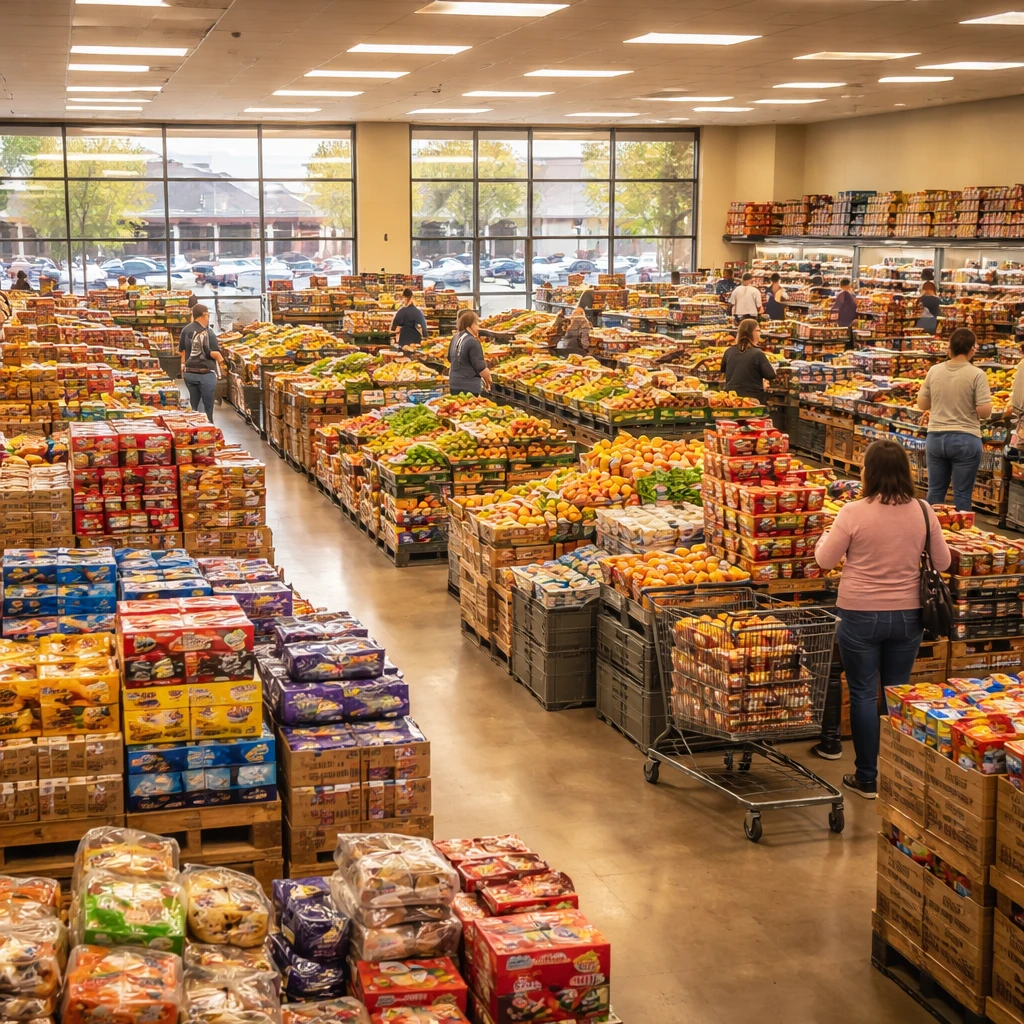
Grocery Outlet operates a network of independently operated grocery stores selling name-brand consumables and fresh products at steep discounts (commonly 40-70% below conventional retail prices). The business model is asset-light on real estate relative to traditional grocers, leverages opportunistic buying and closeouts, and caters to value-conscious consumers. In an environment where grocery inflation and consumer thrift persist, discounters have taken share and remain one of the structurally advantaged formats.
Investors should care because Grocery Outlet is small enough to re-rate quickly if: (a) same-store sales stabilize, (b) margins recover after its systems transition issues, and (c) the company demonstrates free cash flow improvement. At roughly $937M market cap, even modest operational gains can translate into meaningful percent returns.
Key fundamentals and valuation snapshot
| Metric | Value |
|---|---|
| Current Price | $9.55 |
| Market Cap | $937M |
| Enterprise Value | $1.374B |
| Price / Sales | 0.20 |
| EV / Sales | 0.30 |
| EV / EBITDA | 7.07 |
| Price / Book | 0.77 |
| Earnings Per Share (TTM) | -$0.05 |
| Free Cash Flow (most recent) | -$28.3M |
| Debt / Equity | 0.42 |
The headline valuation is cheap: P/S of 0.2 and EV/EBITDA around 7 suggest the market is pricing in a material earnings recovery before assigning a meaningful premium. Price-to-cash-flow sits near 4.9, implying that if the company can steady cash generation, the market could re-rate quickly. That said, the company reported negative free cash flow in the most recent period (-$28.3M) and reported a small negative EPS, so operational recovery is required.
Support for the bullish case - concrete datapoints
- Valuation buffer: market cap near $937M and EV about $1.374B with EV/EBITDA ~7.1 — a reasonable multiple for a turnaround if EBITDA normalizes.
- Store expansion catalyst: Grocery Outlet announced entry into Virginia with a store opening planned for 02/12/2026, signaling continued brick-and-mortar growth.
- Discounters structurally advantaged: industry research continues to show discounters capturing share as consumers seek lower-price alternatives, a secular tailwind that benefits Grocery Outlet.
- Short interest is meaningful: ~25.25M shares short as of 01/15/2026 (days to cover ~9.66), a setup that can amplify upside on positive prints or news flow.
- Technical setup: MACD histogram has turned positive and the stock is sitting around its 10- and 20-day SMAs, allowing for a disciplined pullback entry without fighting a long-term downtrend.
Catalysts to monitor
- Operational cadence and same-store sales: any evidence of traffic recovery or margin improvement on upcoming updates would be a direct catalyst.
- Virginia expansion and new market openings: confirmation of additional store openings after 02/12/2026 would validate growth runway.
- Resolution or progress on litigation and system transition claims: positive legal developments would remove a headline overhang.
- Quarterly free cash flow trajectory: a move from negative to breakeven or positive FCF would materially alter the valuation story.
- Short-covering squeeze possibility: spikes in positive volume or strong results could force covering given elevated short interest and frequent high short-volume days recently.
Trade plan (actionable)
Entry: Buy at $9.55
Stop loss: $8.50
Target: $13.50
This is a mid-term swing: target horizon is mid term (45 trading days). The rationale is practical: 45 trading days gives time for at least one operational update or market-moving headline (new-store cadence, legal updates, or a positive same-store-sales print) while not tying up capital through a full fiscal cycle. The stop at $8.50 protects downside below the 52-week low area and limits the position to a predefined loss. The $13.50 target represents a re-rating toward a healthier multiple and captures about 40%+ upside versus entry, reflecting partial mean reversion given the stock’s prior highs and the cheap starting valuations.
If the thesis accelerates (clear margin recovery and positive FCF), consider layering up and shifting the stop to breakeven. If the company posts a disappointing quarter or new negative developments on system transition litigation, exit immediately at the stop.
Risks and counterarguments
- Legal overhang: Several active investigations and class action notices in 2025 around the company’s systems transition are non-trivial. Adverse litigation outcomes could result in cash and management distraction.
- Negative cash flow and earnings: Most recent free cash flow was -$28.3M and EPS was negative (-$0.05). If cash burn continues, valuation multiples are not meaningful.
- Competitive pressure: Discounters such as Aldi and dollar formats remain aggressive. Sustained pricing or assortment pressure could limit Grocery Outlet’s margin recovery.
- Liquidity and volatility risk: High short interest and frequent days with heavy short volume can lead to violent swings in either direction; you can be stopped out on a gap if volatility spikes.
- Balance sheet and working capital: Current ratio ~1.3 and a quick ratio of 0.25 imply tighter near-term liquidity; inventory or payables swings could stress operations.
Counterargument: The market has punished Grocery Outlet for more than just macro noise. Structural execution issues related to a systems transition materially dented profitability and led to multiple law firm investigations. If management cannot demonstrate a credible fix and sustained cash generation, the valuation is cheap for a reason and the stock could underperform further.
What would change my mind
I would upgrade this from a tactical swing to a position trade if Grocery Outlet posts two consecutive quarters of improving EBITDA and positive free cash flow, reduces outstanding short interest materially, and shows consistent same-store-sales stabilization. Conversely, if the company reports another material miss in profitability or a damaging legal ruling, I would close the position and reassess the longer-term thesis.
Conclusion
Grocery Outlet presents a classic small-cap turnaround trade: cheap headline valuation, clear operational issues that are at least partly fixable, industry tailwinds for discount formats, and a technical/short-interest profile that can accelerate moves. The trade is not for passive investors — headline risk, negative FCF, and litigation make this high risk. For active traders who can size appropriately, enter at $9.55 with a stop at $8.50 and a mid-term target of $13.50 over ~45 trading days. Keep catalysts and quarterly cash generation front and center; those datapoints will determine whether this setup resolves as a meaningful rebound or a longer grind lower.