
Hook / Thesis
Granite Ridge Resources (GRNT) offers a classic small-cap energy trade: depressed free cash flow today, a low valuation on fundamental multiples, and a high dividend that markets are pricing as risky. At roughly $5.02 a share, the stock sits near its short-term moving averages and trades at an enterprise value of about $989 million and an EV/EBITDA of ~3.1. If management can convert higher production and modest cost improvements into operational cash flow, Granite Ridge can flip to positive free cash flow in 2027 — and that eventual shift is what this trade targets.
My stance is a directional long: buy an entry at $5.00 with a stop at $4.30 and a multi-stage upside target that captures a re-rating as FCF turns positive. The risk/reward is asymmetric — downside is capped near prior recent lows while upside captures both a move back toward the 52-week high and a premium for sustainable cash generation.
What the company does and why it matters
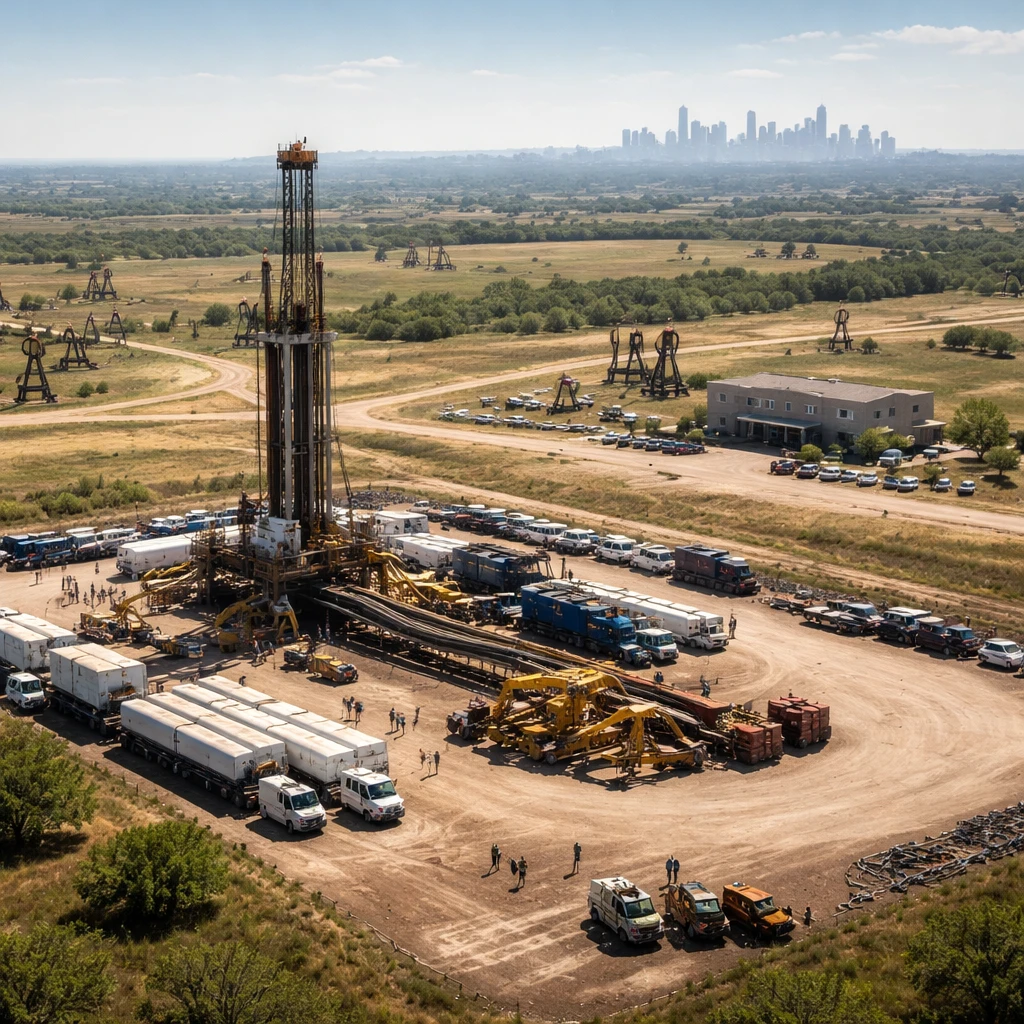
Granite Ridge is an upstream oil & gas producer focused on exploration, development and production. The business model is straightforward: drill and produce; convert hydrocarbon volumes into revenue; reinvest selectively to grow production and generate cash. For an E&P at this scale, the two primary variables that determine valuation and shareholder returns are commodity prices and operational efficiency (lifting costs and capital intensity).
The market should care because Granite Ridge combines an elevated dividend yield (about 8.2%) with a valuation that appears defensive on multiples: price-to-book near 1.09 and price-to-sales around 1.55. Yet the company reported negative free cash flow in the most recently reported period (-$91.7 million). The investment case depends on closing that gap between negative FCF and the expected 2027 inflection.
Data points that support the setup
| Metric | Value |
|---|---|
| Current price | $5.02 |
| Market cap | $658,881,454 |
| Enterprise value | $989,049,825 |
| EV / EBITDA | ~3.1 |
| Free cash flow (last reported) | -$91,695,000 |
| EPS (trailing) | $0.29 |
| P/E (trailing) | ~18.5 |
| Dividend yield | ~8.2% |
| Shares outstanding | ~131.25 million |
| Float | ~63.4 million |
Those numbers paint a mixed picture: valuation multiples look inexpensive relative to many sectors, enterprise value is reasonable against EBITDA, and the market is implicitly skeptical given the negative FCF. The key lever for upside is converting EBITDA into positive free cash flow by 2027 — either through higher production/realized prices, cost-control, or one-time balance sheet fixes (asset sales or liability management).
Technical and market context
Volume has been healthy for a small-cap: recent average daily volume is in the 600k range, and short interest totals suggest roughly 5-6 days to cover in recent settlements. The 10- and 20-day moving averages sit slightly above current price, while the 50-day average is near $4.84; RSI around 49 signals neutral momentum. That technicals profile supports taking a disciplined long entry with a defined stop rather than averaging in aggressively.
Valuation framing
On surface multiples Granite Ridge doesn't look expensive: price-to-book ~1.09, price-to-sales ~1.55 and EV/EBITDA ~3.1. Those multiples imply the market is valuing Granite Ridge conservatively — pricing in continued cash flow stress or a meaningful risk to the dividend. The counterpoint is negative free cash flow (-$91.7M) that must be repaired for the dividend and valuation to be sustainable. If management gets to positive FCF in 2027, those low multiples offer room for re-rating even without multiple expansion, simply through higher numerator cash flows and earnings.
Catalysts (what could make this trade work)
- Production ramp or stabilization: higher realized production volumes in coming quarters would directly improve operating cash flow.
- Improved commodity pricing: even modest increases in realized oil and gas prices materially lift cash flow for a company of this scale.
- Cost reduction / operating leverage: sustained lower lifting costs or capex efficiency initiatives would compress the FCF gap faster.
- Balance sheet moves: asset sales or targeted debt reduction could lower interest and improve free cash flow conversion.
- Dividend clarity: a management statement tying the dividend to sustainable FCF or laying out a path to that target would reduce the risk premium.
Trade plan (actionable)
Direction: Long GRNT
Entry: $5.00
Stop loss: $4.30
Target 1 (near-term): $6.72 (52-week high) — actionable for partial profit taking
Target 2 (full): $7.20 — captures upside if the market begins to price a 2027 FCF inflection
Horizon: long term (180 trading days). I expect the operational and commodity drivers that flip FCF to unfold over multiple quarters; 180 trading days gives time for production reports, quarterly earnings and at least one full capital-budget cycle to show progress.
Why this sizing and horizon: the entry at $5.00 picks up shares close to recent trade levels while the stop at $4.30 limits downside to roughly 14% from entry. The first target offers a clear technical exit at the 52-week high, while the $7.20 full target captures a valuation rerating that rewards demonstrable FCF progress. If catalysts materialize earlier, trim into strength; if the story stalls but does not break, consider tightening the stop or reducing position size.
Risks and counterarguments
- Commodity risk: A sustained drop in oil and gas prices would directly reduce revenue and delay any FCF turnaround; Granite Ridge is not immune to macro-driven cash flow swings.
- Free-cash-flow execution risk: Management must convert EBITDA into cash flow; cost control, capex discipline and timing of production are operational execution items that can fail or be slower than investors hope.
- Dividend sustainability: The roughly 8.2% yield is attractive but could be cut if cash flow remains negative, which would pressure the stock and investor confidence.
- Balance sheet and liquidity: Enterprise value near $989M and negative FCF raise questions about the company’s ability to fund growth or dividends without dilution, asset sales or additional debt.
- Oilfield service and capex inflation: If input costs rise, expected production economics could deteriorate, pushing out any FCF inflection.
Counterargument to the bullish thesis: It is plausible management cannot sustainably close the FCF gap without resorting to asset sales, equity raises, or dividend cuts. If capital markets tighten or drilling productivity disappoints, the valuation multiple could compress further and dividend yield expectations could rise — a scenario where price falls despite modest operational improvement.
What would change my mind
I would reduce or abandon the long thesis if any of the following occur: 1) a sustained commodity downcycle that materially lowers realized prices; 2) a quarter or two of continued negative free cash flow with no credible remediation plan; 3) an unforeseen material dilution or large asset sale that signals the company cannot grow organically; 4) management explicitly pivots to a cash-preservation stance that includes a dividend cut. Conversely, I would add to the position if the company posts two consecutive quarters of positive free cash flow, raises guidance for 2027 FCF, or announces structural cost reductions that materially improve conversion.
Conclusion
Granite Ridge is a classic small-cap energy trade: cheap on multiples, paying a high yield, and currently negative on FCF. That gap between earnings and cash creates opportunity if management can execute. The trade outlined here is a disciplined long: entry at $5.00, stop at $4.30, and staged targets that reward both technical strength and a fundamental rerating tied to a 2027 FCF inflection. Maintain strict position sizing and monitor commodity and operational updates — this is a conditional trade that pays off only if execution and/or commodity tailwinds arrive.
Key monitoring events: quarterly production and cost releases, capital budget announcements, any comment from management on dividend policy, and commodity price trends. Use those data points to judge whether to hold, trim or stop out.