
Hook & thesis
Garrett Motion (GTX) is a core supplier to global OEMs sitting at an interesting inflection: the business is generating solid free cash flow today while investing in electric powertrain and variable-geometry turbo technologies that underpin engine efficiency and hybridization. Recent quarterly sales have been high-single-digit hundreds of millions, EBITDA multiples are reasonable and a partial exit by a distressed-debt investor suggests both realized returns and continued conviction in upside.
We think the market’s caution around a modest light-vehicle production decline in 2026 is overdone relative to Garrett’s balance-sheet progress and end-market positioning. The company can fund R&D and return cash while still trading at an attractive valuation. That argues for a tactical long position: enter at $18.31, stop $15.75, target $24.45 over a long-term horizon (180 trading days).
What Garrett does and why the market should care
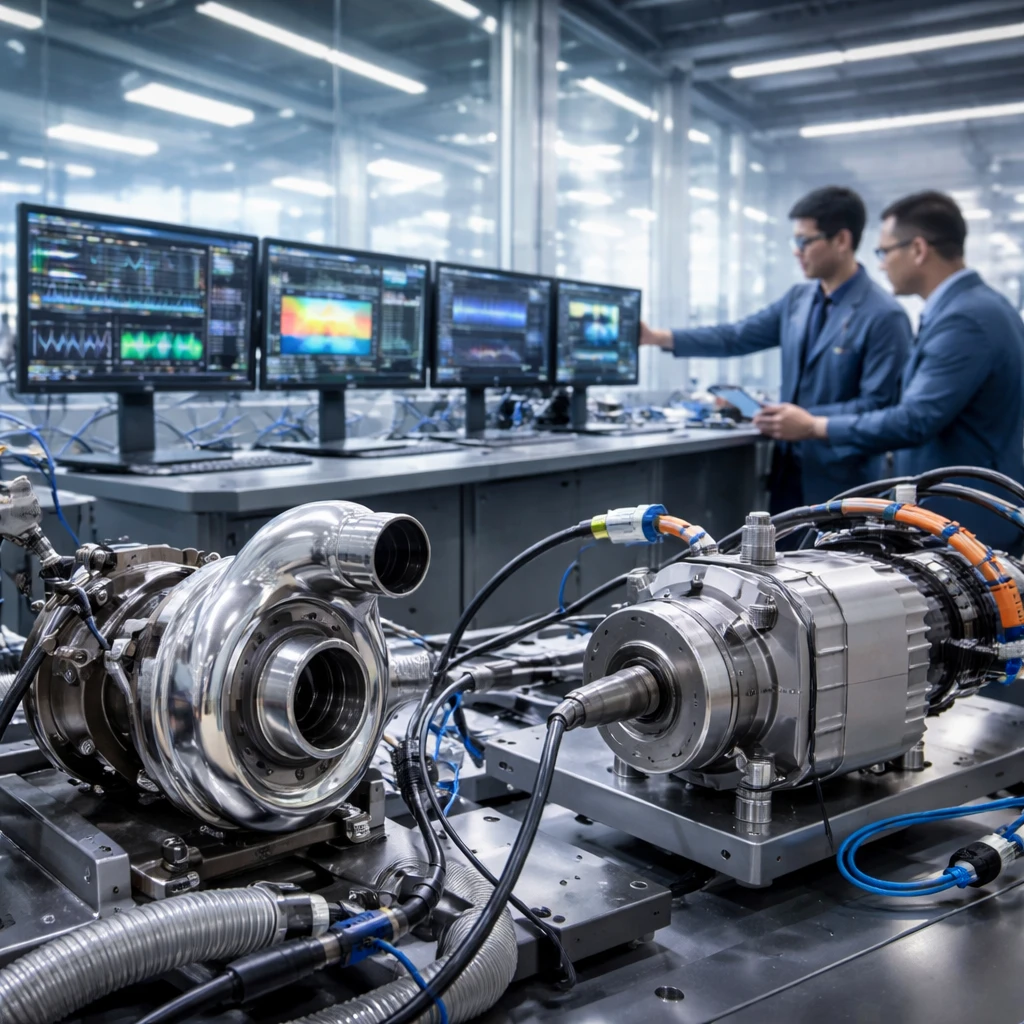
Garrett Motion designs, manufactures and sells turbochargers and electric motor technologies for light- and commercial-vehicle OEMs and distributors. Its product set addresses two market drivers that matter to automakers: tighter emissions standards and the shift to electrified powertrains. Turbochargers remain a high-adoption technology for internal-combustion downsizing and hybrid systems, while Garrett’s investments in high-speed e-powertrain systems position it to participate in EV and hybrid powertrains.
How the business is performing - the numbers
The company has been delivering near-$900M quarterly sales throughout recent quarters: Q2 2025 GAAP revenue was $913M, a later quarter showed $902M and Q4 reported $891M in net sales (reported 02/19/2026). That sequence shows scale and reasonable stability at the top line in the low-$900M neighborhood despite cyclical softness in light-vehicle production.
Key financials and valuation context:
| Metric | Value |
|---|---|
| Current price | $18.31 |
| Market cap | $3.48B |
| Enterprise value | $4.725B |
| Trailing EPS (annual) | $1.63 |
| P/E | ~11.2x |
| EV/EBITDA | ~8.0x |
| Free cash flow (trailing) | $341M |
| Price to free cash flow | ~10.2x |
| 52-week range | $7.02 - $21.42 |
Those numbers matter because they show Garrett is not a speculative story priced for perfection. At ~11x earnings and ~8x EV/EBITDA, the stock already trades at a multiple that leaves room for multiple expansion if execution continues and 2026 end-markets normalize. Free cash flow of $341M gives the company flexibility to fund R&D and manage leverage; the company also repriced a $690M term loan in 2025 to shave 25 bps off interest costs, which modestly improves interest expense and liquidity.
Valuation framing
At a $3.48B market cap and $4.725B EV, Garrett sits at neutral valuation for a supplier with recurring OEM contracts and predictable aftermarket exposure. Price-to-sales is ~0.97, and price-to-free-cash-flow ~10.2x. Those multiples are not expensive for a supplier generating mid-single-digit operating margins that can expand with higher content per vehicle and improved mix from electrified offerings.
Put simply: if Garrett sustains its current FCF profile and either returns to the mid-teens P/E that cyclical auto suppliers sometimes trade at on normalization, the equity has clear upside. For example, using trailing EPS of $1.63, a re-rating to 15x yields a price near $24.45 - this is our target and the basis for the trade thesis.
Catalysts to watch
- OEM content wins and ramp of electric turbo/e-powertrain systems - product wins drive higher average selling price and margin expansion.
- Improvements in light-vehicle production forecasts - the company guided conservatively for 2026 production (-1% to -3%), so any positive revision would support the stock.
- Further debt optimization - additional refinancing or pay-down of the $690M term loan would lower interest expense and improve free cash flow conversion.
- Geographic expansion and R&D outputs from new centers (e.g., the Wuhan innovation center) that lead to new program awards.
- Institutional signals - Oaktree's partial sale (reported 03/20/2026) but continued large stake suggests both realized returns and retained upside; continued buying or reduced selling by large holders would help sentiment.
Trade plan (actionable)
Direction: Long GTX
Entry: $18.31 (current price)
Stop loss: $15.75
Target: $24.45
Horizon: Long term (180 trading days) - allow time for FY26 production updates, program ramps and potential re-rating. This is not a quick scalp; the thesis depends on execution across multiple quarters.
Rationale: enter at $18.31 to participate immediately in any positive fundamental developments and sentiment improvements. The stop at $15.75 sits meaningfully below recent moving averages and the lower bound of the consolidation range, limiting downside if OEM demand deteriorates or execution falters. The target of $24.45 maps to a 15x P/E re-rating on trailing EPS of $1.63, a realistic outcome if free cash flow stays strong and margins expand.
Risks and counterarguments
- Macro and production risk: Garrett is exposed to light-vehicle production cycles. Management warned of a 1-3% decline in light-vehicle production for 2026 (reported 02/19/2026). A deeper-than-expected decline would compress revenue and margins.
- OEM timing and program risk: Content ramps can slip. New product awards (e.g., electric powertrain components) may take longer to contribute meaningfully to revenue, delaying margin expansion.
- Balance-sheet and leverage dynamics: While the term loan repricing is constructive, high leverage or higher-than-expected interest rates could pressure cash flow if automotive demand weakens.
- Customer concentration: As an OEM supplier, revenue is sensitive to a small set of large customers. Contract renewals or pricing pressure can materially affect the top line.
- Sentiment and ownership changes: Large stake adjustments by major shareholders can create volatility. Oaktree’s partial sale (03/20/2026) shows how institutional moves influence liquidity and sentiment.
Counterargument: The bear case is that the market is correctly pricing a structural decline in internal combustion engine content as EV adoption accelerates. If electrification removes demand for traditional turbocharger content faster than Garrett can convert to e-powertrain offerings, revenue and margins could structurally decline. That scenario would argue for a materially lower valuation multiple and justify a lower price target.
Why I still prefer the long here
Two practical points favor a constructive stance: 1) the global turbocharger market still shows healthy growth forecasts and remains relevant as hybridization and engine downsizing continue to be OEM strategies; 2) Garrett already generates significant free cash flow ($341M) and has taken steps to lower interest costs and improve liquidity. Those facts give the company runway to invest in electrified technologies and to weather short-term production softness.
What would change my mind
- Material downward revisions in guidance or a multi-quarter drop in revenue below the ~$900M quarterly run-rate would force reassessment.
- Evidence that electric powertrain initiatives are failing to secure OEM programs or that program ramps are slipping materially behind schedule.
- Significant deterioration in balance-sheet metrics (higher net leverage or covenant stress) despite apparent refinancing progress.
Conclusion
Garrett Motion is a medium-risk, actionable long at $18.31. The company combines durable cash generation and a meaningful role in powertrain efficiency trends with a valuation that leaves room for upside if production and product mix normalize or improve. The trade plan is explicit: enter at $18.31, stop $15.75, target $24.45 over ~180 trading days. This gives the investment enough time for program ramps and macro visibility to improve while protecting downside if the cyclical backdrop weakens.
Key monitoring checklist: watch quarterly sales and margins, FY26 production updates, program award announcements for e-powertrain systems, debt refinancing moves, and changes in major institutional ownership.