
Hook & Thesis
Carnival is back in the buy zone. The shares are hovering around $23.99 with a market capitalization of roughly $33.2 billion and an EV/EBITDA under 8. That combination - cheap relative to earnings and enterprise value, plus $2.6 billion of free cash flow last year - sets up a trade with a favorable risk-reward despite headline risks around fuel and geopolitics.
My thesis is simple: the market has overreacted to short-term fuel volatility and geopolitical uncertainty. Carnival's operational recovery and meaningful free cash flow provide an earnings and balance-sheet cushion that the price isn't reflecting. I am doubling down with a defined entry, stop and target because the valuation math plus technical oversold signals offer a tangible upside while capping downside with a tight stop.
What Carnival Does and Why Investors Should Care
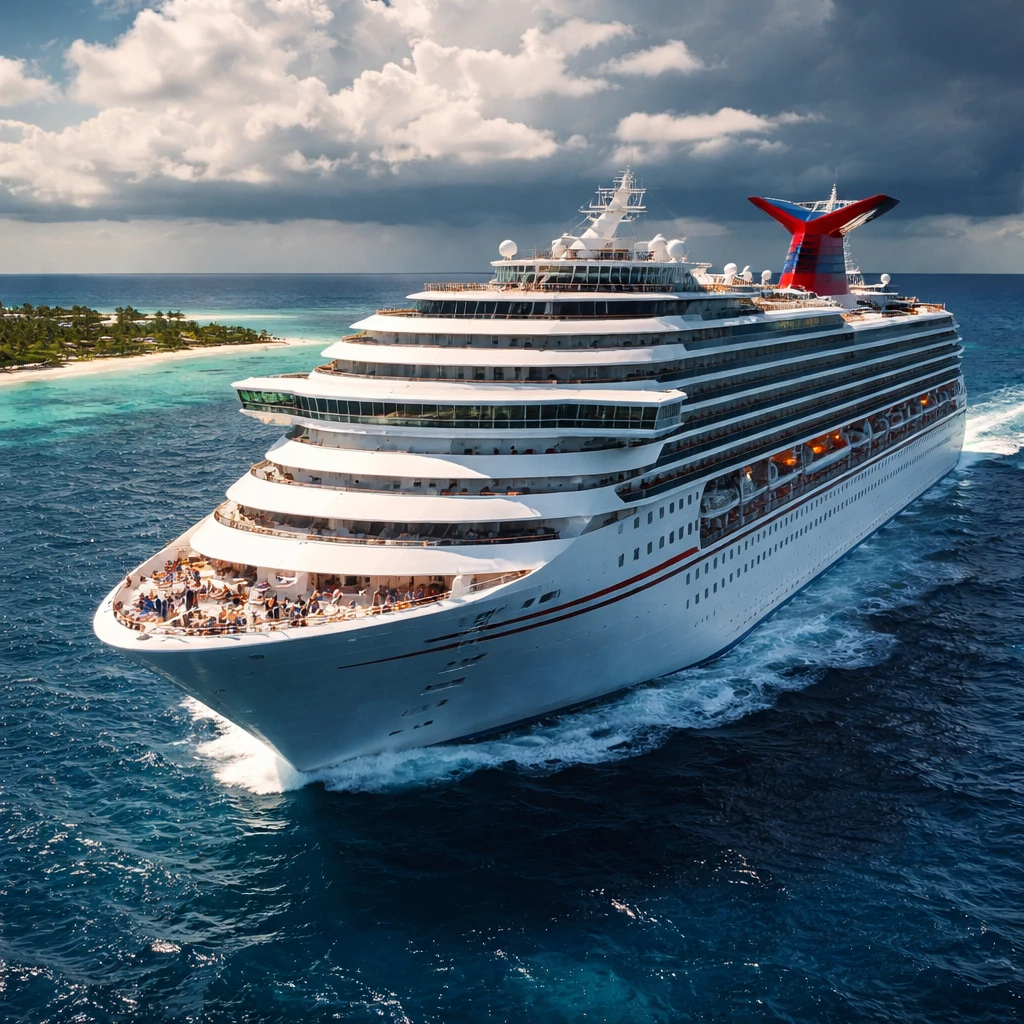
Carnival Corporation operates cruise brands across North America and Europe, including Carnival Cruise Line, Princess, Holland America, Seabourn, AIDA, Costa and P&O Cruises (UK). Its business model combines ticket revenue, onboard spend and destination/port assets - a mix that delivers meaningful operating leverage as load factors and onboard spend recover.
Why market participants should care: leisure demand has rebounded post-pandemic and pricing power on many routes has allowed cruise companies to convert higher occupancy into better margins and cash flow. Carnival reported free cash flow of $2.607 billion, and at current prices the stock trades at roughly 12x reported earnings per share (~$2.00 EPS) and an EV/EBITDA near 8 - valuation levels consistent with cyclically depressed but fundamentally profitable scenarios.
Hard Numbers That Support the Trade
| Metric | Value |
|---|---|
| Current Price | $23.99 |
| Market Cap | $33.23B |
| P/E | ~12 |
| EV/EBITDA | ~7.97 |
| Free Cash Flow (last yr) | $2.607B |
| Debt to Equity | 2.17 |
| RSI (momentum) | ~28 (oversold) |
| 52-Week Range | $15.07 - $34.03 |
Those numbers matter. A P/E near 12 and an EV/EBITDA under 8 are not typical for a company with structurally impaired demand; they are valuation multiples associated with cyclical businesses that have cleared the worst of their decline but still trade at a discount to normalized earnings. Carnival's free cash flow of $2.6 billion is a real buffer against temporary margin compression and supports debt servicing even if fuel spikes persist for a quarter or two.
Technicals & Market Structure
From a technical standpoint the stock is deeply oversold: the 10/20/50 day moving averages are all well above the current price and the RSI sits at ~27.99. Short interest and recent short-volume data show active bearish positioning (days to cover roughly 2 and sizable short-volume shares), which can amplify both downside and reversal dynamics. In other words, forced shorts plus any positive catalyst can produce rapid squeezes.
Valuation Framing
At a market cap of ~$33.2 billion and an enterprise value near $57.94 billion, Carnival is trading at multiples that imply recovery to a modestly normalized operating environment rather than full cyclical re-rating. EV/EBITDA under 8 and P/E ~12 are consistent with a scenario where EBITDA returns to near-peak levels over the next 12-24 months. Compared to a 52-week high of $34.03, today's price leaves meaningful upside if the sector calms and bookings remain resilient.
Catalysts
- Booking momentum and seasonal demand - continued strength in core markets will underpin revenue and onboard spend.
- Fuel price stabilization - a retreat from recent oil spikes would directly restore margin assumptions (fuel is a material cost and recent headlines cited a 10-15% revenue equivalent impact for cruise lines).
- Re-rating on cash flow - sustained free cash flow could accelerate debt reduction and lower perceived leverage risk.
- Short-covering events - an earnings beat or positive booking update could trigger short covering given the high short-volume share and low days-to-cover.
- Sector-level catalysts - activist moves or operational improvements at peers often lift the group; recent activist interest in other cruise names shows investor appetite for operational fixes.
Trade Plan (Actionable)
Entry: $24.00
Stop loss: $19.00
Target: $34.00
Time horizon: long term (180 trading days). I expect this position to take up to 180 trading days to work as fuel volatility calms, seasonal demand becomes clearer and Carnival converts bookings into higher-margin revenue. There are scheduled re-eval points: short term (10 trading days) to monitor immediate headline risk and intraday shocks; mid term (45 trading days) to assess booking cadence and any signs of margin stabilization; and long term (180 trading days) to see balance-sheet repair and normalized earnings translate into a rerating.
Rationale: the entry near $24 buys the stock around its current price where valuation is compelling and technicals are oversold. The $19 stop is below the recent swing lows and gives room for volatility while limiting capital at risk to a level that keeps risk/reward attractive relative to the $34 target, which is near the recent 52-week high and represents a realistic multi-quarter recovery outcome.
Risks and Counterarguments
- Fuel cost shock: Recent headlines show oil surged into the $70s and reports indicate fuel can represent 10-15% of cruise revenue. Carnival's margins could compress sharply if fuel remains elevated and the company has limited short-term hedges.
- Leverage and liquidity: Debt-to-equity sits at roughly 2.17 and current/quick ratios (0.32/0.28) indicate limited near-term liquidity flexibility. A prolonged downturn or higher rates would magnify refinancing and interest costs.
- Geopolitical/travel disruptions: Cancellations (for example in exposed Gulf routes) can quickly erase revenue and onboard spend, producing headline volatility that can push the stock well below the stop.
- Competitive dynamics: Peers like Royal Caribbean have shown stronger margin expansion; if Carnival lags operationally, the market could further discount the company.
- Macro risk: Higher-for-longer yields and weaker consumer discretionary spending would reduce demand for discretionary travel and could delay Carnival's hoped-for earnings normalization.
Counterargument: If oil remains persistently high and geopolitical risks continue to expand, Carnival could face multiple quarters of margin pressure that erode free cash flow and force capital raises or deeper cost-cutting measures. That scenario would justify lower multiples and would likely send the stock below the $19 stop. The market’s focus on short-term fuel pain is rational and could persist longer than expected.
What Would Change My Mind
I would step back from this trade if any of the following occur: (1) Carnival publicly discloses no feasible plan to mitigate sustained fuel cost increases (e.g., lacks hedging strategy or pricing levers), (2) a material downgrade in booking trends or forward pricing emerges over two consecutive booking cycles, or (3) signs of acute liquidity stress appear (missed covenants, accelerated debt maturities without clear refinancing). Conversely, I would add to the position if Carnival reports continued free cash flow generation while fuel costs show signs of falling and booking momentum remains intact.
Conclusion
This is a calibrated, value-driven long. Carnival's balance of cheap valuation (P/E ~12, EV/EBITDA ~8), meaningful free cash flow and oversold technicals creates an asymmetric opportunity. The trade is not without real risks - fuel volatility and leverage are the twin hazards - but those are quantifiable and managed through a strict stop at $19 and a staged time horizon that allows for booking cycles and fuel normalization. I am doubling down here because the upside to $34 is a credible path while the downside is limited by the stop and the company’s demonstrated ability to generate cash.
Key monitoring items: weekly booking updates, fuel-cost trajectory, short-interest evolution and any balance-sheet actions (debt paydowns or refinancing announcements).
Trade idea: enter $24.00, stop $19.00, target $34.00. Timeframe: re-evaluate at 10 trading days and 45 trading days; primary target set for long term (180 trading days).