
Hook and thesis
Clean Harbors (CLH) is a classic industrial-services story: predictable, contract-driven cash flows, a portfolio of hazardous and non-hazardous waste infrastructure, and a sustainability-focused services arm that benefits when companies outsource environmental work. The stock is trading at $285.89, near its 52-week high of $298.12, while the business shows healthy free cash flow and double-digit return on equity. That mix creates a tradeable setup rather than a pure value or growth call.
My thesis is a pragmatic one: CLH can grind higher if waste volumes stay robust and pricing holds, but the margin for error is slim because the valuation already assumes continued solid execution. For traders willing to stomach headline risk (regulatory, environmental incidents) and possible multiple compression, there is asymmetric reward in a mid-term swing. I propose a structured long with a clear entry, stop, and target to capture upside while limiting downside.
Why the market should care - the business and fundamental drivers
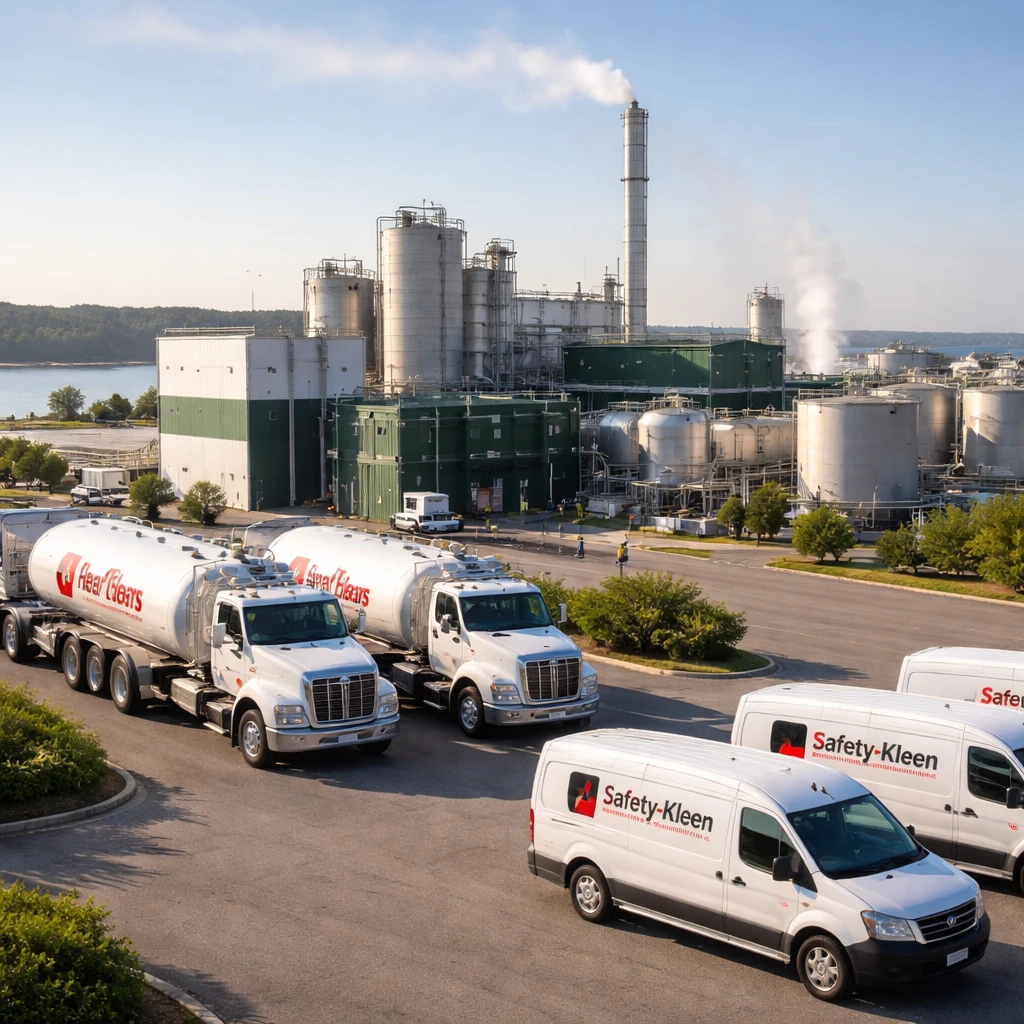
Clean Harbors operates two main segments: Environmental Services (collection, transportation, treatment, disposal, and incineration) and Safety-Kleen Sustainability Solutions (parts-washer services, used oil collection, containerized waste, and sale of base and blended oils). The business benefits from several secular and cyclical drivers:
- Regulatory tightening and waste volumes. Global and U.S. spend on waste treatment is rising; research cited shows the incinerator market expanding and healthcare/medical waste treatment growing, all of which favor companies with integrated disposal networks.
- Sustainability-led outsourcing. Companies seeking to improve compliance or reduce capex are more likely to outsource environmental services, which supports recurring revenue in Safety-Kleen services.
- Price and contract leverage. Clean Harbors can pass through some cost inflation and win contracted work from municipalities and industrial customers, translating into margin stability if execution holds.
What the numbers say
Concrete metrics underpin the trade thesis:
| Metric | Value |
|---|---|
| Current stock price | $285.89 |
| Market cap | $15.13B |
| Enterprise value | $17.08B |
| P/E | ~38.7 |
| EV/EBITDA | 15.2 |
| Free cash flow | $441.8M |
| Debt / Equity | ~1.01 |
| Return on equity | ~14.2% |
| 52-week range | $178.29 - $298.12 |
Those numbers tell a mixed story: solid underlying profitability and FCF ($441.8M) but a valuation that already prices continued growth. EV/EBITDA of 15.2 and a trailing P/E near 39 are not cheap for a services business that still carries meaningful execution and environmental risk.
Technicals and positioning
Technically, CLH is above key moving averages: the 20-day SMA is $282.27 and the 50-day SMA is $265.27, while the 10-day sits at $290.22. Momentum indicators are mildly mixed - RSI is 58, suggesting room to run but not extreme overbought, while MACD shows a small bearish histogram. Short interest has been trending lower through early 2026, with days to cover around 2.2 as of 02/13/2026, which reduces the likelihood of a painful short-squeeze reversal but still leaves the stock vulnerable to headline-driven squeezes.
Valuation framing
Without a peer table in front of us, interpret valuation qualitatively. A 15.2x EV/EBITDA multiple sits in the middle of the market: not bargain-basement but also not frothy like high-margin software. Given Clean Harbors' capital intensity (incinerators, treatment facilities) and environmental liabilities, the market generally assigns a premium only when revenue growth and margin expansion are visible. The company's ROE of 14.2% and positive free cash flow profile justify a mid-teens EV/EBITDA multiple; anything above that implies sustained margin expansion or tuck-in M&A that meaningfully increases profitable cash flows.
Trade plan (actionable)
Stance: Long
Entry: $285.00
Stop loss: $270.00
Target: $320.00
Horizon: mid term (45 trading days)
Rationale: Entry at $285 is near current levels and allows participation in upside while preserving a defined downside. The stop at $270 limits risk to about $15 per share (~5.3% from entry) and sits below the 50-day SMA, which provides a technical support buffer. The target of $320 is a ~12% upside from entry and represents a reasonable multiple re-rating if the company posts solid operational results or lands meaningful contracts. The 45-trading-day horizon gives enough runway for quarterly catalysts (earnings, large contract announcements) to influence price while keeping capital at work for a manageable period.
Catalysts to watch
- Quarterly results showing continued pricing or volume growth and FCF conversion above recent levels.
- Large municipal or industrial contract awards that validate demand for incineration and treatment services.
- Improvements in Safety-Kleen margins from higher utilization or better oil product spreads.
- Positive industry headlines - for example, expanded market forecasts for incinerators or medical waste treatment (an example: industry research on 01/26/2026 noted incinerator market growth) - that change investor sentiment toward industrial waste names.
Risks and counterarguments
- Valuation compresses: At ~39x earnings and 15.2x EV/EBITDA, any small miss in growth or margin guidance could trigger multiple contraction. If earnings fail to meet expectations, downside can be swift because the current multiple leaves less room for error.
- Operational or environmental incidents: The company operates hazardous waste facilities. A significant incident, regulatory fine, or public backlash would hurt revenues, escalate costs, and increase liability concerns.
- Cycle sensitivity: Industrial volumes and hazardous waste generation are partly cyclical. A downturn in manufacturing or oil-and-gas activity could reduce volumes and pressure pricing.
- Leverage and interest rate risk: Debt-to-equity is roughly 1.01. If rates spike or refinancing conditions tighten, interest expense could increase and constrain free cash flow available for reinvestment or M&A.
- M&A execution: Growth often comes through acquisitions. Poorly executed M&A could dilute returns and increase leverage.
Counterargument: One could reasonably argue CLH is already priced for perfection. The stock's ascent from a $178 low to near $298 and the current multiples suggest investors expect both continued volume growth and margin improvement. If the macro or regulatory backdrop weakens, the valuation could be trimmed quickly. That is a valid and important counterpoint; it argues for either waiting for a pullback or using a smaller position size with a tight stop.
What would change my mind
I would become more bullish if the company reports sequential margin expansion, raises full-year guidance, or materially reduces net debt such that EV/EBITDA re-rates upward with less leverage risk. Conversely, a string of misses on revenue growth or any material environmental incident would push me to close the position and reassess longer-term ownership.
Bottom line: CLH is a quality industrial services franchise exposed to secular waste and sustainability tailwinds. For traders, the mid-term swing outlined here balances upside potential with explicit downside protection. For longer-term investors, valuation and event risk argue for a patient entry or staged purchases on weakness.
Key monitoring checklist while in the trade
- Quarterly revenue and adjusted EBITDA vs. consensus.
- Free cash flow conversion and any changes to capex guidance.
- Newsflow on contract awards or regulatory developments.
- Movement of EV/EBITDA and whether peers (if any) show similar re-rating.
If the trade reaches $320 within the 45-trading-day window, consider trimming for profits and resetting a tighter stop on remaining exposure. If the stop at $270 triggers, respect it and reassess on the next setup rather than averaging down into fresh weakness.