
Hook & Thesis
Carlisle Companies is not a fashion stock; it is a workhorse supplier to commercial and residential construction providing single-ply roof systems, spray polyurethane foam, insulation and below-grade waterproofing. The combination of meaningful free cash flow, a long history of shareholder returns, and secular tailwinds in energy-efficiency codes and climate-driven demand for more resilient building envelopes makes CSL an attractive trade for investors who want cyclical exposure with a defensive tilt.
My thesis: buy a disciplined position in CSL to capture steady cash-flow-driven upside as the company converts revenue into free cash flow and buys back shares, while also benefiting from structural demand for higher-performance roofs and insulation. The company is attractively priced for what it delivers: a market capitalization near $14.24B, free cash flow around $958.5M and a reasonable P/E of ~18.3. Execute the plan with a clear entry, stop and target to manage execution risk.
The business and why the market should care
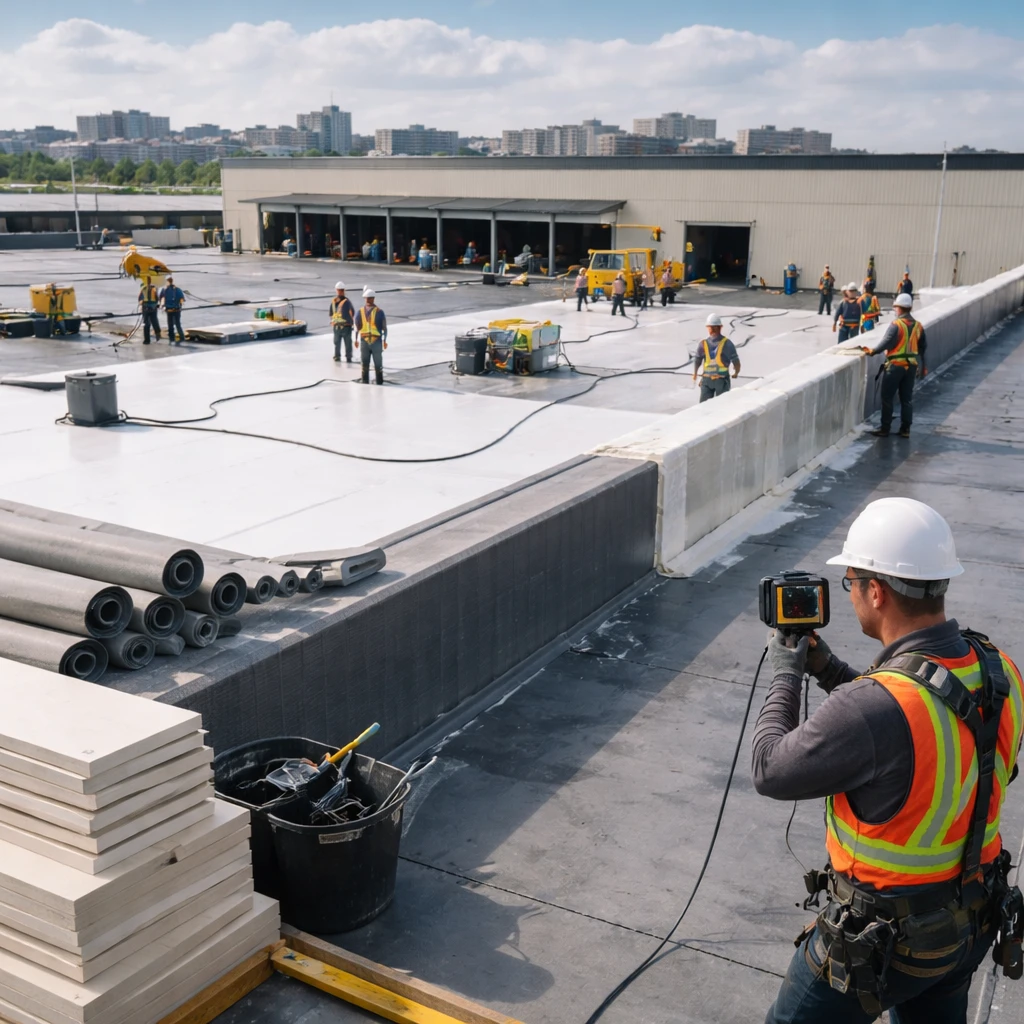
Carlisle operates two segments: Carlisle Construction Materials (CCM) and Carlisle Weatherproofing Technologies (CWT). CCM makes single-ply roofing membranes (EPDM, TPO, PVC), polyiso insulation and metal roofing systems for commercial buildings. CWT supplies spray polyurethane foam, air and vapor barriers, below-grade waterproofing and HVAC hardware. Together these lines focus on the building envelope - a portion of construction that benefits from building-code-driven efficiency upgrades and replacement driven by storm damage and aging infrastructure.
Why the market should pay attention:
- Structural demand: Updated building codes and energy-efficiency targets push higher-spec insulation and longer-lasting roof systems.
- Weather resilience premium: More frequent severe weather increases warranty-driven replacement cycles and demand for higher-performance materials.
- Financial muscle: Strong free cash flow and a history of returning capital to shareholders matter in a higher-rate environment where balance-sheet strength reduces financing risk.
Backing the argument with numbers
Put simply, Carlisle converts scale into cash. Key financials that support the buy case:
- Market cap: approximately $14.24B.
- Free cash flow: approximately $958.5M - a clear cash engine to fund buybacks, dividends and M&A.
- P/E: roughly 18.3 based on reported EPS near $18.60 - reasonable for a high-quality industrial with consistent margins.
- P/FCF: around 14.9 and EV/EBITDA near 12.9 - valuations that reflect solid cash conversion rather than speculative growth.
- Profitability: return on equity near 39% and return on assets about 12% indicate strong returns on invested capital.
Operationally, the company has a track record of margin improvement: reported EBITDA margins have nearly doubled over the last decade while revenue expanded materially through the 2010-2024 period, per recent company and industry coverage. Management has used the cash to buy back roughly $3.5B of stock over three years and has increased dividends for 50 consecutive years, underscoring capital allocation discipline.
Valuation framing
At roughly $340.89 today, CSL sits below its 52-week high of $435.92 and well above its 52-week low of $293.43. That range reflects risk-on/risk-off swings around construction cycles and the market’s view on margins. On headline multiples the stock is neither cheap nor outrageously expensive: a P/E near 18.3 and a P/FCF near 14.9 imply investors are paying for steady cash flow and durable margins rather than hypergrowth.
Relative to history the multiple is modest given a 39% ROE and near-billion-dollar FCF — both argue the business is high quality. Carrying leverage (debt-to-equity ~1.45) increases financial sensitivity but also amplifies returns when volumes and margins hold. In short: valuation looks fair for a well-run, cash-generative industrial with structural demand tailwinds.
Catalysts (what will drive the stock higher)
- Margin re-acceleration from CCM and CWT as pricing, mix and back-office efficiencies translate into higher EBITDA.
- Continued buybacks reducing share count - management repurchased ~$3.5B over a recent three-year stretch and remains active on the capital-return front.
- Regulatory and building-code changes that force upgrades to higher-performance roofing and insulation materials.
- Weather-driven replacement cycles following severe storm seasons, which accelerate commercial roof repairs and replacements.
- Dividend cadence: an upcoming ex-dividend date on 02/17/2026 and payable date 03/02/2026 provide near-term income support for the share price.
Trade plan (actionable entry, stop, targets and horizon)
This is a directional long trade with defined risk. Trade specifics:
- Entry: buy at $341.00.
- Target: $385.00 (first take-profit level tied to margin improvement and multiple expansion).
- Stop loss: $320.00 (protects capital if construction demand weakens or guidance is cut).
- Trade horizon: long term (180 trading days). Expect to hold the position through at least one full set of quarterly results and to capture the benefit of buybacks and any margin recovery.
How to manage the position across timeframes:
- Short term (10 trading days): Avoid trying to scalp large moves. The near-term market is driven by macro headlines and volatility; only trade intraday if you are nimble and size accordingly.
- Mid term (45 trading days): Watch for an earnings or guidance update; if the company reports accelerating margins and positive commentary on end-market demand, consider adding to the position on strength.
- Long term (180 trading days): Hold to capture FCF generation, buyback impact and potential re-rating. Re-assess on results that materially change FCF outlook, leverage, or end-market health.
Risks and counterarguments
No trade is without risk. Consider these scenarios and why they could derail the thesis:
- Construction cyclicality: A broad slowdown in commercial construction or a housing market slump would reduce demand for roofing and insulation, pressuring sales and margins.
- Commodity and input-cost risk: Raw-material price spikes (polymer resins, petrochemical-based inputs) can compress margins if Carlisle cannot pass costs through to customers quickly.
- Leverage sensitivity: Debt-to-equity sits near 1.45; higher interest rates or refinancing stress could increase interest expense and reduce free cash flow available for buybacks or dividends.
- Warranty and execution risk: Roofing and waterproofing are technical businesses; product failures, warranty claims or installation issues can create reputational damage and unexpected costs.
- Valuation counterargument: While P/E ~18 and P/FCF ~14.9 look reasonable, these multiples do not price in a large cyclical downturn. Investors who favor lower leverage or higher dividend yields may prefer other defensive names.
Counterargument summary: the bear case is credible — if construction activity meaningfully softens or input costs spike and management must slow buybacks, the stock can re-rate lower. Strong free cash flow and buybacks help, but they do not immunize the company from macro-driven revenue declines.
What would change my mind
I would downgrade the trade if any of the following occurs: a sustained guidance cut or quarterly miss that reduces FCF materially below the ~$1B run-rate, an increase in net leverage (measured by debt-to-equity moving substantially above 1.45 without a clear plan to reduce it), or an observable shift in end-market demand where commercial roofing activity contracts for multiple quarters. Conversely, faster-than-expected margin expansion, accelerated buybacks beyond current cadence, or clearer evidence of structural demand from code changes would make me more bullish.
Conclusion
Carlisle is a classic example of an industrial compounder: strong returns on capital, persistent free cash flow and a business that benefits from secular forces like energy-efficiency codes and climate-driven demand for better building envelopes. The numbers - near-$14.24B market cap, ~ $958.5M FCF, P/E ~18.3 and EV/EBITDA ~12.9 - support a pragmatic long position. Execute with an entry at $341.00, a stop at $320.00 and a target of $385.00 on a long-term horizon of 180 trading days while monitoring the key risks described above.
Trade summary: Long CSL at $341.00, stop $320.00, target $385.00, long term (180 trading days). Risk level: medium.