
Hook & thesis
CF Industries has already bounced from its 2025 lows and briefly cleared its 52-week high, but the rally has not priced in several durable positives: strong free cash flow, improving balance-sheet metrics, a material low-carbon ammonia JV and a commodity backdrop that can tighten quickly. At roughly $132, CF still looks underpriced relative to its cash generation and reasonable leverage. This is a trade to own into strength with strict risk management.
The thesis is straightforward: fertilizer economics are cyclical, but CF's current valuation - supported by roughly $1.8 billion in free cash flow and an EV/EBITDA around 6.5 - leaves a margin of safety for upside if commodity prices or volumes normalize higher or if projects driving low-carbon ammonia begin to de-risk. We'll lay out exact entries, stops and targets for three horizons and explain why this remains a buy despite a recent rally.
What the company does and why the market should care
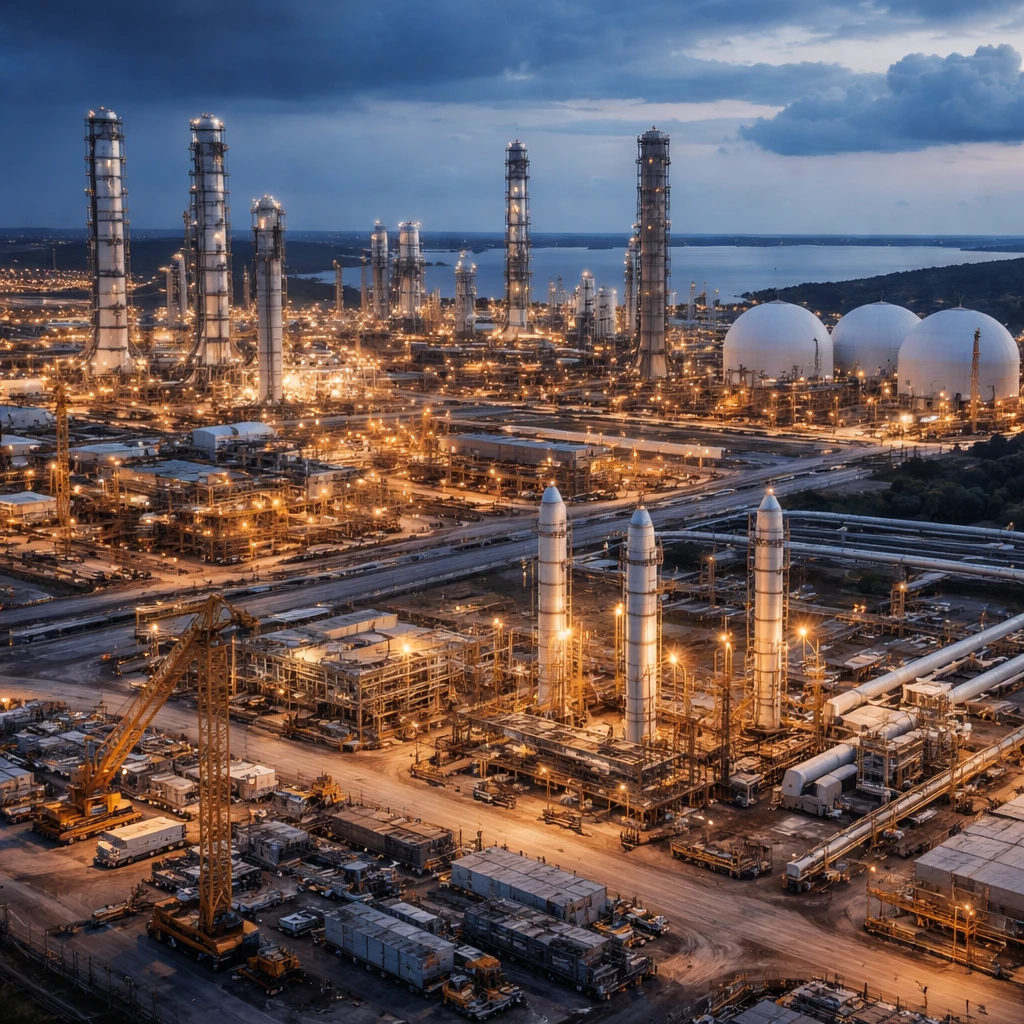
CF Industries is a large nitrogen fertilizer manufacturer supplying ammonia, granular urea, UAN and ammonium nitrate to agricultural and industrial customers. The firm operates several integrated plants and a distribution network that gives it scale advantages in production cost and logistics. Fertilizer producers are levered to both crop prices and input costs - especially natural gas - which creates cyclical returns but also periods of strong free cash flow when conditions turn in the industry's favor.
Why investors should care now: two structural items are in play. First, the commodity cycle is susceptible to supply shocks. Recent geopolitical tensions and broader commodity tightness have historically lifted fertilizer pricing quickly. Second, CF is moving into low-carbon ammonia at scale through a $4 billion JV announced with JERA and Mitsui to build a 1.4 million metric ton per year plant in Louisiana that aims to capture over 95% of CO2 emissions. If this project derisks, it meaningfully rerates CF's growth optionality and ESG profile relative to peers.
Hard numbers that support the bull case
| Metric | Value |
|---|---|
| Market cap | $19.9 billion |
| Enterprise value | $21.14 billion |
| Free cash flow (latest) | $1.802 billion |
| EV / EBITDA | 6.5x |
| P / E | ~13.7 - 14.4x (depending on series) |
| EPS (ttm) | $9.47 |
| Debt / Equity | 0.66 |
| ROE | ~30% |
Two points stand out from these numbers. First, CF generates meaningful free cash flow - roughly $1.8 billion - against a market cap of $19.9 billion and enterprise value of $21.1 billion. That yields a free-cash-flow yield that is attractive for a capital-intensive industrial with durable distribution. Second, valuation multiples remain reasonable: EV/EBITDA of 6.5x is modest for a company with high return-on-equity (about 30%) and improving liquidity (current ratio 3.37, quick ratio 2.93).
Operationally, revenue momentum exists: management reported a quarter where revenue rose 20% year-over-year ($1.89 billion in Q2 2025), even though margin pressure from natural gas costs was noted. Margin sensitivity to gas is a live risk, but the firm has shown an ability to convert sales into cash and is investing in projects with strong long-term optionality.
Technical and position context
From a technical angle, the stock has strong recent momentum: the 10-day and 20-day SMAs sit well below the current price and the MACD is signaling bullish momentum. RSI is elevated (~72), which suggests the stock is extended in the very short run and argues for a disciplined entry rather than chasing. Short interest has been sizable but trending down, which creates a mixed dynamic - a tighter short base can accelerate rallies but also adds volatility on negative news.
Valuation framing
CF's valuation looks attractive on a cash-flow basis. With enterprise value around $21.14 billion and free cash flow near $1.8 billion, the rough EV / FCF multiple is around 11.7x. Compare that to the cyclicality and payout optionality: CF is returning capital, investing in decarbonization projects and has leverage under 1.0x debt/equity. Even if natural gas costs compress margins, a return to normalized fertilizer prices or improved operational efficiency would push returns materially higher from here.
There is no peer table in this note, but qualitatively CF sits as one of the larger, lower-cost producers in nitrogen. That scale and a pivot into low-carbon ammonia should be worth a premium to smaller peers if execution goes well. The market has priced some of that in, but the multiples implied by current cash flow still leave room for appreciation.
Catalysts (2-5)
- Progress updates or construction milestones on the $4 billion Louisiana low-carbon ammonia JV with JERA and Mitsui - any de-risking will materially change the narrative.
- Commodity tightening from geopolitical disruptions or adverse growing conditions that lift fertilizer prices and volumes.
- Quarterly results that show margin expansion or better-than-expected conversion to free cash flow, particularly if natural gas exposure is hedged or reduced.
- Share buybacks or improved capital return policy announcements supported by strong FCF.
Trade plan - entry, stops, targets and horizons
This is a directional, risk-managed long. Primary signal: buy into pullbacks and manage position size given elevated short-volume activity and an RSI that suggests short-term extension.
- Entry: Buy at $132.04. Consider a staggered entry: half position at $132.04 and add on a dip toward $125 if that level appears.
- Stop loss: $120.00. Stop should be mental/TTY and executed if shares break below structural support and the 50-day EMA range, which would indicate a change in intermediate trend.
- Targets:
- Short term (10 trading days): target $138.00 - near the 52-week high and a reasonable take-profit if momentum cools.
- Mid term (45 trading days): target $150.00 - reflects multiple expansion toward mid-teens P/E and better sentiment if catalysts materialize.
- Long term (180 trading days): target $160.00 - captures a fuller re-rating if the low-carbon ammonia project derisks and fertilizer markets firm.
- Position sizing & risk management: Keep position to a size where a stop at $120 represents no more than 2-3% of portfolio risk. Trim into strength at the short-term target and re-evaluate as catalysts develop.
Risks and counterarguments
Below are the primary risks to the thesis and one counterargument to owning the name right now.
- Natural gas cost volatility: Nitrogen production is gas-intensive. A sustained spike in natural gas could erase margin gains and push guidance lower; this is the single largest operational risk.
- Commodity cyclicality: Fertilizer demand is tied to crop economics and end-market inventories. A global demand slowdown or a big crop year that rebuilds inventories could depress prices and volumes.
- Execution risk on JV: The $4 billion low-carbon ammonia JV is transformative on paper, but large greenfield projects carry schedule, cost and permitting risk. Delays or cost overruns would mute the rerating potential.
- Regulatory / ESG risk: Political pressure or regulatory changes around fertilizer production or agricultural inputs could change cost dynamics or require additional capital to comply with new standards.
- Market sentiment and technical unwind: Elevated RSI and recent rally make CF vulnerable to profit-taking or a broader risk-off move that hits cyclicals.
Counterargument: One could argue the stock is already richly valued because the recent rally has pushed it near the 52-week high and technical indicators are stretched. In that view, it’s better to wait for a clear pullback to the 50-day EMA or a significant catalyst (e.g., JV construction milestones or guidance raise) before initiating a position.
I acknowledge that counterargument: if you are strictly momentum-based and unwilling to tolerate some short-term volatility, waiting for a pullback toward $115-$120 or a breakout on improving fundamentals is defensible. My trade plan accommodates this by suggesting staggered entries and a tight stop.
Conclusion and what would change my mind
CF Industries trades at an attractive intersection of cash flow generation, reasonable leverage and concrete strategic catalysts. Even after a rally, valuation metrics such as EV/EBITDA (~6.5x) and free-cash-flow generation (~$1.8 billion) support further upside if fertilizer markets firm or the low-carbon ammonia JV derisks. My stance: long with disciplined risk control.
What would change my mind? I would reduce exposure or flip neutral if any of the following occur: a sustained spike in natural gas that cuts margins by more than expected and is not offset by pricing; a material miss in quarterly results that forces downward guidance; a major setback or cancellation of the JV; or if macro indicators show a sharp, sustained drop in agricultural demand that materially lowers volume expectations. Conversely, successful de-risking of the Louisiana project or a step-up in buybacks/returns would make me more aggressively bullish.
Actionable summary
Buy CF at $132.04, initial stop $120.00, targets: $138 (10 trading days), $150 (45 trading days), $160 (180 trading days). Risk level: medium. Keep position size limited so the stop represents no more than 2-3% portfolio risk, and scale in on weakness or callouts that de-risk the long-term projects.