
Hook / Thesis
i-80 Gold (IAUX) is at an inflection point. The macro setup for gold is constructive - 2025 saw record demand and continued central bank accumulation - while i-80 is executing an infrastructure-first pivot that should push all-in sustaining costs lower and unlock production growth from South Arturo, Getchell and McCoy-Cove. With a market capitalization near $1.55 billion and a recent balance-sheet top up, the path to a multiple re-rating this year is credible if the company hits operational milestones and gold prices hold.
My trade idea is a long position at an entry of $1.85, targeting $2.75 within a long-term horizon of 180 trading days, and a protective stop at $1.30. This plan captures upside from a re-rating while respecting the execution and cash-flow risks that justify a firm stop.
What i-80 does and why the market should care
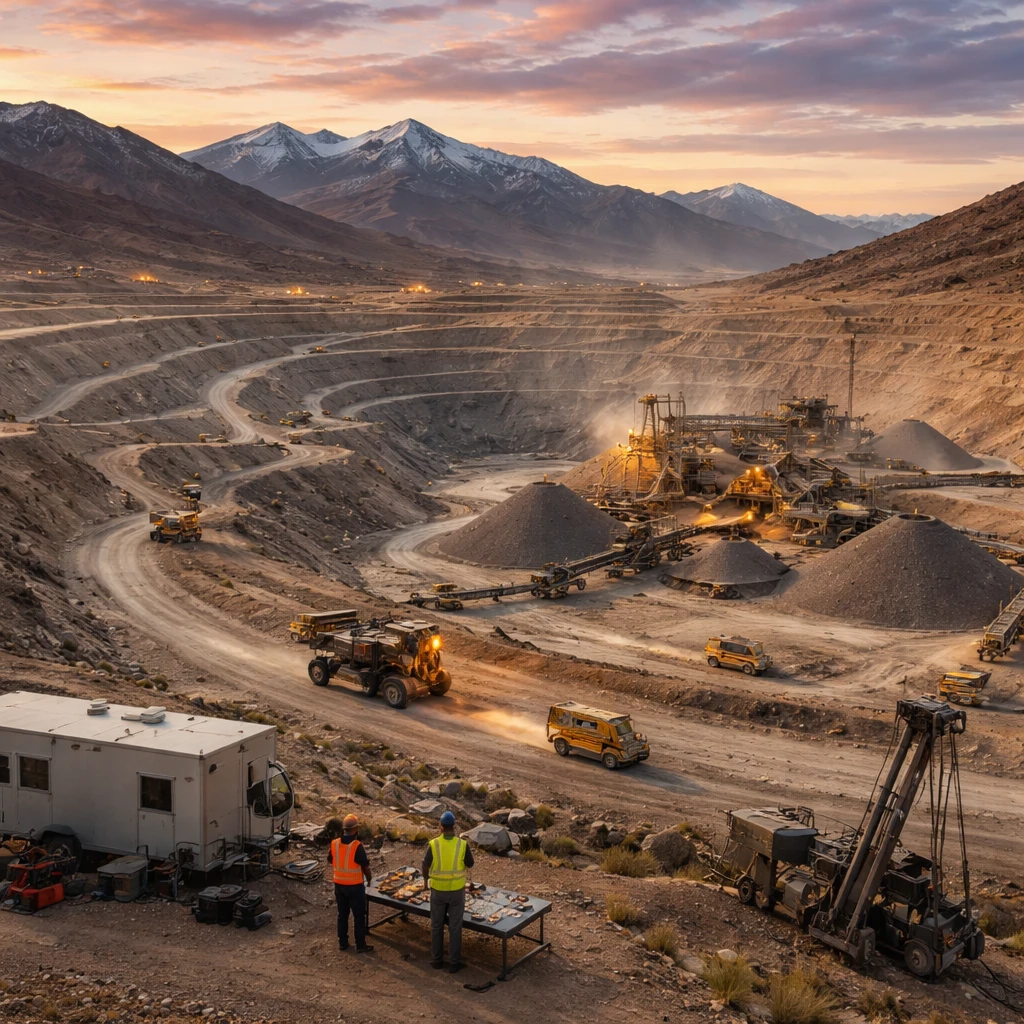
i-80 Gold is a mid-tier focused gold producer and developer headquartered in Reno, Nevada. The company is pursuing production growth via expansion at South Arturo (Phases 1 & 3) and advancing development at Getchell and McCoy-Cove. Management has been explicit about an infrastructure-first approach designed to lower processing costs and reduce AISC - a strategy that fits the current sector trend of margin optimization.
The broader market cares because gold fundamentals are strong: 2025 recorded record demand with ETF inflows and central-bank buying accelerating. That macro backdrop amplifies the impact of any operational progress at a growth-stage miner: a modest decline in AISC alongside a meaningful production ramp can shift a sub-$2 stock into the $2-plus range quickly when sentiment and flows turn.
Hard numbers that matter
- Share price: trading at $1.85 today with a 52-week range of $0.4822 to $2.24.
- Market capitalization: approximately $1.55 billion.
- Enterprise value: roughly $1.60 billion.
- Shares outstanding: about 840.1 million; float around 730.6 million.
- Price-to-book roughly 4.2x; price-to-sales about 15.6x - both reflective of a company priced for growth rather than current cash-flow generation.
- Earnings per share: -$0.24; free cash flow is negative, roughly -$93.2 million in the latest period reported.
- Balance-sheet and liquidity signals: cash per share is about $0.46, current ratio ~0.73, and debt-to-equity ~0.5. The company completed a bought-deal financing of roughly $160 million in 2025, which meaningfully reduces immediate financing risk for project execution.
Valuation framing
The headline multiples look rich if you judge i-80 purely on last twelve months cash generation: EV/sales ~16.8x and negative EV/EBITDA. Those numbers reflect investors pricing in successful execution of the company’s development pipeline and a re-rating to a mid-tier producer multiple. Put differently, the market is valuing future production rather than current earnings.
That is reasonable only if two things happen: gold prices remain constructive, and i-80 delivers on the cost and production improvements it promises. If both occur, a move back toward higher historical multiples (and toward the stock’s 52-week high of $2.24 and above) is a realistic path. If not, the current valuation becomes vulnerable to downside.
Catalysts to watch (2-5)
- Operational updates from South Arturo - any confirmation of Phase 1 ramping or clear timelines for Phase 3 will be a near-term positive.
- Quarterly cost disclosures showing AISC trending toward the sub-$1,500/oz zone touted by peers and analysts.
- Drilling and resource updates at Getchell and McCoy-Cove that convert regional potential into measurable reserves.
- Gold price momentum and ETF inflows - sustained strength in the underlying metal will materially improve free cash flow prospects and reduce perceived execution risk.
- Further improvements to the balance sheet - reductions in net debt or successful capital allocation (e.g., accretive buybacks or targeted M&A) would accelerate a re-rate.
Trade plan
Entry: $1.85 (current bid). Target: $2.75. Stop-loss: $1.30. Time horizon: long term (180 trading days) because the trade depends on multi-quarter execution: project milestones, margin improvement, and the macro cycle for gold. This horizon gives the company time to post meaningful operating results and for markets to re-price the story.
Position sizing should reflect the high-risk nature of a development-stage miner: consider allocating a modest portion of risk capital and scaling in as milestones are met. If milestones come early (e.g., clear Phase 1 production ramp), add to the position; if the company misses key updates, reduce exposure or exit at the stop.
Technical and flow context
Liquidity is adequate for a retail-size trade: two-week average volume sits in the multi-million share range (roughly 8 million), and average 30-day volume has been similarly robust. Technicals are neutral-to-cautious: the price is near the 9-day EMA and slightly below short-term SMAs, while RSI sits near 50. Short interest sits in the mid-double-digit millions with days-to-cover low (around 2-3 days), meaning that short-squeeze dynamics can emerge rapidly but are not the defining story here.
Risks and counterarguments
- Execution risk: mining projects routinely experience delays and cost overruns. If Phases at South Arturo or development at Getchell/McCoy-Cove slip materially, the valuation premium will be difficult to justify.
- Cash-flow and dilution risk: free cash flow was negative recently (~-$93.2M) and the company tapped the equity markets in 2025 for ~$160M. Further dilution is possible if projects require more capital or gold stays weak.
- Commodity price risk: a reversal in gold prices would erase the macro support for re-rating and pressure margins and cash flow.
- Balance-sheet and liquidity metrics: current ratio ~0.73 and modest cash per share (~$0.46) indicate limited short-term liquidity cushion absent the proceeds from recent financings.
- High valuation vs. current earnings: price-to-sales ~15.6x and P/B >4x means the stock is priced for success; any miss is likely to provoke outsized downside.
Counterargument: The market is already valuing i-80 for future growth, and that premium is justified only by consistent execution. If you believe development risk is higher than management suggests or that the company will need additional dilution to reach mid-tier production, the prudent stance is to avoid buying into elevated multiples and instead wait for clearer production evidence or a pullback closer to the low end of the 52-week range.
What would change my mind
My constructive stance would be undermined if: (1) the company misses operational milestones on South Arturo or Getchell, (2) AISC fails to show a credible path below $1,500/oz, (3) free cash flow remains deeply negative without a clear path to breakeven, or (4) gold prices materially decline from current levels. Conversely, earlier-than-expected production ramps, sustainably lower costs, or incremental balance-sheet improvements would strengthen the bullish case and justify revising the target higher.
Conclusion
i-80 Gold is a high-risk, high-reward trade that makes sense for investors who believe 2026 will be the year of execution and re-rating. The company has the assets, a recent capital infusion and a sector tailwind from record gold demand. Those ingredients are the basis for a credible run to ~$2.75 within 180 trading days if operations and metal prices cooperate. Use disciplined position sizing, the specific entry/stop/target outlined above, and monitor execution milestones closely. This is not a passive buy-and-forget name; it requires active monitoring of operating results and the gold market.