
Hook and thesis
Green Brick Partners (GRBK) is a homebuilder that often flies under the radar but deserves more attention now. The company pairs industry-leading profitability with low leverage and a realistic land strategy. At the current price of $65.58 the stock looks materially undervalued: trailing earnings imply a P/E in the high single digits and enterprise multiples around 6.8x EV/EBITDA. That combination - strong returns on equity, steady free cash flow, and conservative debt - argues for an upgrade to Strong Buy.
Our trade thesis is straightforward: buy GRBK on the constructive mix of cash generation and capital discipline, with a catalyst set that includes lot monetization, potential buyback or dividend optionality, and institutional interest following favorable media and hedge fund ownership. We outline a clear entry, stop, and target and explain why this is a pragmatic, asymmetric risk-reward trade for patient investors.
What Green Brick does and why the market should care
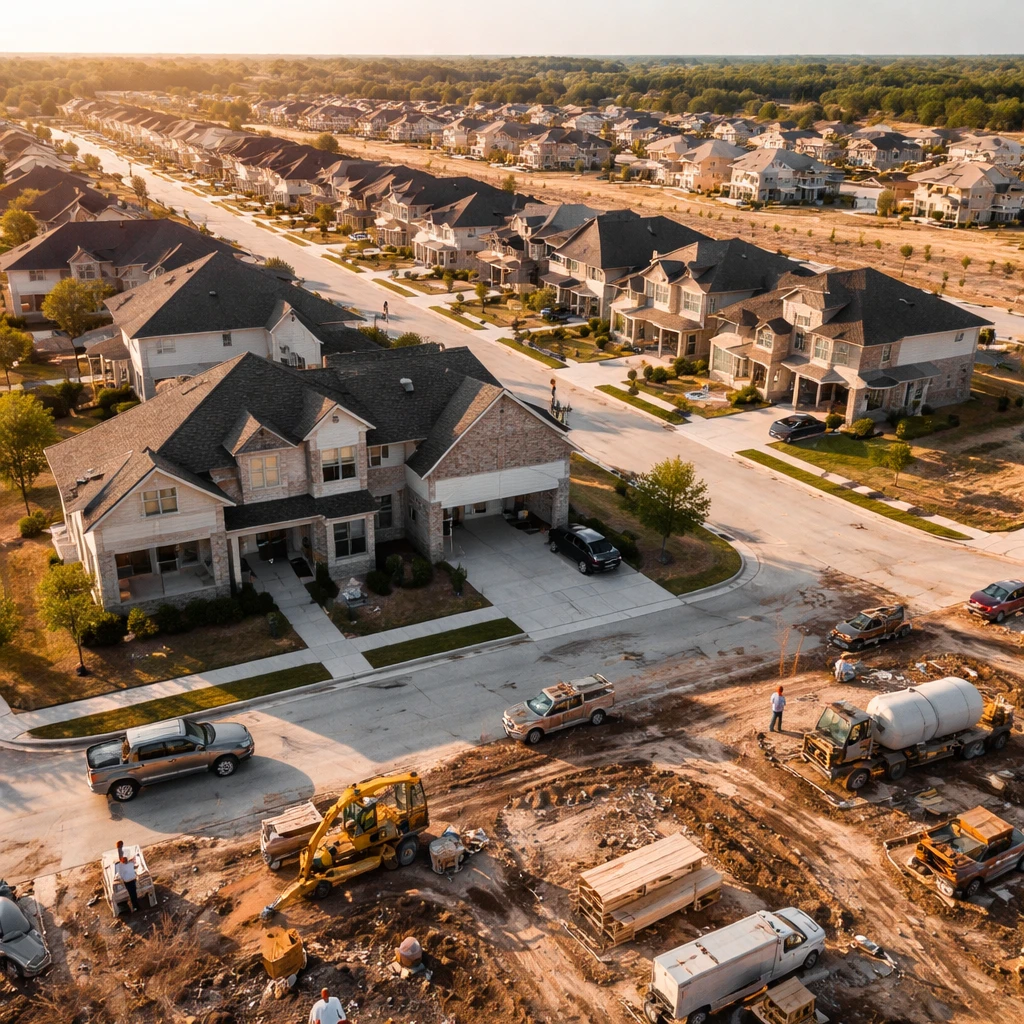
Green Brick Partners is a homebuilding and land development company operating through builder operations in Texas, Georgia, and Florida plus a land development segment that supplies finished and option lots and construction financing to controlled builders. Management emphasizes delivering homes efficiently while monetizing owned and controlled lot inventories. The key reason the market should care is simple: GRBK converts land and construction into free cash flow at attractive margins and runs with a conservative capital structure that limits downside in housing cycles.
Hard numbers that back the case
| Metric | Value |
|---|---|
| Last trade | $65.58 |
| Market cap | $2.83B |
| Price / Earnings (trailing) | ~8.4x |
| Price / Book | ~1.57x |
| EV / EBITDA | ~6.8x |
| Free cash flow (trailing) | $155.1M |
| Return on Equity | ~18.8% |
| Debt / Equity | ~0.19x |
| RSI (technical) | 31 (near oversold) |
Those numbers tell a consistent story: GRBK is profitable, generates meaningful free cash flow ($155.1M), and carries little leverage. A debt-to-equity ratio near 0.19x provides downside protection should housing demand cool, while ROE near 19% shows management can earn attractive returns on invested capital. Valuation is reasonable: market participants are paying roughly 6.8x for enterprise cash earnings and under 1.6x book - not demanding for a company with meaningful FCF and capital-light lot monetization potential.
Valuation framing
At a market cap of roughly $2.83B and an enterprise value near $3.03B, GRBK trades at an EV/EBITDA multiple of about 6.8x and a P/E in the high single digits. Historically, high-quality homebuilders trade at a premium to peers during expansion cycles and compress into single-digit multiples during dislocation. Given Green Brick's stronger-than-average margins and low leverage, the current multiple appears conservative. If GRBK can sustain margins and modestly expand volumes or accelerate lot sales, a re-rating to low-teens EV/EBITDA or a P/E in the mid-teens would be justified - implying material upside from here.
Catalysts
- Lot monetization acceleration - converting option lots and finished lots into sales would drive top-line growth and improve FCF visibility.
- Institutional repositioning - media attention and endorsement from high-profile investors has previously triggered re-rates; renewed interest could increase the multiple.
- Share repurchases or dividend optionality - strong cash flow and low leverage create financial flexibility to return capital.
- Operational leverage from higher starts in Texas and Southeast markets as demand normalizes.
- Macro tailwind if mortgage rates decline and affordability improves, lifting order activity and pricing power.
Trade plan - actionable and specific
Entry: $65.58 (current price).
Stop loss: $59.00.
Target: $78.00.
Trade direction: Long.
Horizon: long term (180 trading days).
Rationale: We choose entry at the current $65.58 because the technicals show near-oversold conditions (RSI ~31) and the valuation is already low. The stop at $59.00 limits downside to a modest but real capital preservation threshold - a break below $59 would indicate either a broader housing weakness or a company-specific issue that merits exiting. The target of $78 is a practical stretch that sits below the 52-week high of $80.97 and implies a healthy multiple expansion from current levels if the stock re-rates modestly and execution continues. Expect the trade to play out over the next 180 trading days as catalysts materialize and the market re-assesses GRBK's earnings quality.
Note: For more active traders, a mid-term objective at $72.00 over 45 trading days is reasonable to lock in partial gains if volatility spikes or newsflow proves positive sooner than expected.
Risks and counterarguments
- Housing slowdown or mortgage rate shock. A rapid rise in rates or a sharp deterioration in mortgage availability would directly hit orders and pricing, pressuring revenue and margins.
- Lot valuation and inventory risk. If land values or finished lot realizations decline, margins compress and cash conversion suffers; that would reduce the case for a multiple re-rating.
- Construction cost inflation and labor constraints. Higher input costs or labor shortages could squeeze gross margins and extend build times, harming profitability even with stable demand.
- Execution risk in new markets. Expansion into new geographies or product lines can erode profitability if absorption is slower than projected.
- Short interest / volatile flows. Short interest has been meaningful historically and short-volume prints show regular activity; this can increase day-to-day volatility and create downside surprises on amplified negative sentiment.
Counterargument: Critics will say homebuilders remain exposed to macro swings and that even high-ROE builders are not immune to cyclical downturns. It is reasonable to argue the market is pricing in cyclical risk and that multiples should remain compressed until a durable improvement in housing demand is visible. If new-home sales slip materially and lot monetization stalls, the stock could trade lower despite the company’s balance-sheet strength.
Why we still favor a Strong Buy
Despite the cyclical risks, Green Brick’s balance sheet and profitability shift the expected outcome distribution in investors' favor. Low leverage (debt/equity ~0.19x) and strong return on equity (~18.8%) mean the company can both survive a downturn and gain market share through disciplined capital deployment. Free cash flow of about $155M provides optionality to buy back shares, pay down debt, or invest in higher-return lots. Those characteristics make the downside more protected than peers that run higher leverage.
What would change our mind
- Evidence of sustained margin deterioration driven by construction cost pressures that management cannot offset with price or operational improvements.
- Material increases in leverage or aggressive land-acquisition that degrade the conservative capital structure.
- Clear signs that lot sales have stalled and option lots cannot be monetized at expected prices, materially reducing free cash flow visibility.
- A sustained macro shock to mortgage credit that meaningfully reduces buyer demand across GRBK’s core markets.
Conclusion
Green Brick Partners offers a high-quality risk-reward profile today: attractive valuation, strong returns, healthy free cash flow, and low leverage. These attributes make GRBK a good candidate for a Strong Buy upgrade for investors comfortable with housing cyclicality and willing to hold through event-driven catalysts. Our trade is straightforward: enter at $65.58, protect capital with a $59 stop, and aim for $78 over a long-term horizon (180 trading days), with a mid-term partial-take at $72 if appreciation comes sooner. The thesis will be reassessed if margins degrade, leverage increases, or lot monetization materially disappoints. For investors seeking an asymmetric homebuilder exposure backed by conservative balance-sheet fundamentals, GRBK is a compelling buy here.
Trade plan recap: Long GRBK at $65.58. Stop loss $59.00. Target $78.00. Horizon: long term (180 trading days).