
Hook & Thesis
Bloom Energy is no longer a speculative cleantech name; it has become a go-to vendor for data centers that need fast, resilient, on-site power in the race to host AI workloads. The market has noticed: the stock has rallied materially off last year's lows and currently trades at $150.32. That price reflects a narrative the market is willing to pay for — namely, the ability to deliver dispatchable, low‑emissions power at scale to hyperscalers and colo operators that are scrambling to add capacity without the delays of grid interconnection.
My thesis is straightforward: near-term revenue and backlog visibility give Bloom a credible path to meaningful top‑line growth, and the company’s partnership financing mitigates upfront capital constraints for customers. That combination should support further multiple expansion as AI data centers scale. However, the valuation is elevated and execution must remain clean; this trade is a tactical long sized to capture upside while respecting those risks.
What Bloom Does and Why the Market Should Care
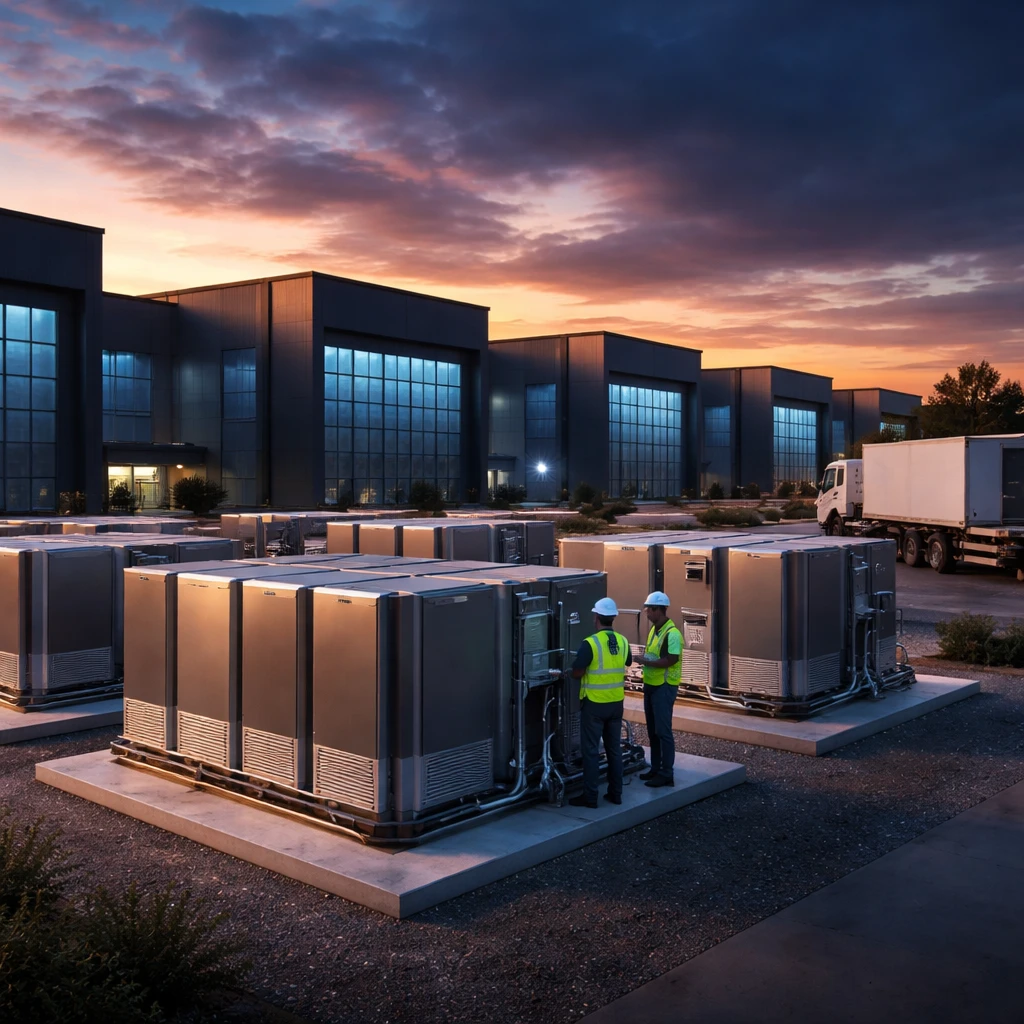
Bloom Energy manufactures and installs solid oxide fuel cell systems - the Bloom Energy Server - which convert natural gas or biogas into electricity through an electrochemical process without combustion. For data centers, the core selling points are speed of deployment (can be operational in months rather than years waiting for grid upgrades), high reliability, and the ability to pair with hydrogen or biogas to lower carbon intensity.
The fundamental driver here is simple: AI infrastructure is electricity‑hungry and time‑sensitive. When a hyperscaler needs tens to hundreds of megawatts quickly, the traditional path of building new transmission and distribution infrastructure is slow and uncertain. On‑site fuel cells and microgrids are an attractive alternative. Public commentary on 03/25/2026 highlighted that the next phase of AI growth stresses power supply and named Bloom among the beneficiaries.
Hard Numbers Supporting the Thesis
- Current market price: $150.32; market capitalization roughly $42.17 billion.
- Reported recent quarterly revenue cited in coverage: approximately $777 million, with net income of about $1.1 million for that period.
- Backlog: public reporting and coverage reference a backlog near $20 billion for product systems, providing several years of visible demand.
- Financing: a $5 billion Brookfield financing facility is cited to help accelerate deployments and smooth customer capex needs.
- Financials and ratios: price to sales sits in the high teens to low twenties (reported ~20.2), price to book is above 50x, and reported free cash flow in the latest snapshot was about $57.2 million.
- Valuation context: the company has surged multiple hundred percent over the past year, which explains why multiples look stretched versus traditional industrial or utility peers.
Valuation Framing
Bloom currently sits at a market cap of roughly $42.2 billion and is trading around 20x trailing or near‑trailing sales depending on which quarter you use. That valuation presumes strong top‑line growth and meaningful margin expansion over the coming years. The company’s gross opportunity is visible via the $20 billion backlog and large anchor customers, but margins today remain compressed: recent quarters show close to breakeven net income despite record revenue, and balance sheet measures show leverage metrics investors should watch (debt to equity near 3.72 in recent metrics).
Put plainly: the market is pricing a growth story, not current profits. That can work if Bloom converts backlog into profitable, high‑margin deployments and scales manufacturing efficiency. But any slippage in delivery timelines, margin compression from supply chain or commodity inputs, or a slowdown in AI capex would force a re‑rating.
Catalysts (events that could move the stock)
- Quarterly earnings beat or materially better margins on the next report - sustained free cash flow growth beyond the ~$57M reported would be a strong positive.
- Large announced deals or multi‑GW contracts with hyperscalers or colo providers that convert backlog into near‑term revenue.
- Operational updates showing pace of manufacturing scale-up and shorter delivery times (reducing backlog lead times).
- Additional financings or JV announcements that lower customer capex hurdles and accelerate installs (Brookfield financing is already a positive example).
- Macro: continued healthy AI hardware buildout and strong data‑center capex cycles would support demand for Bloom’s product set.
Trade Plan (actionable)
Thesis: Buy into AI/data‑center-driven demand for on‑site power and monetize upon further visible conversion of the $20B backlog into revenue and margin improvement.
| Action | Price | Horizon |
|---|---|---|
| Entry | $150.00 | Long term (180 trading days) - allow time for at least one quarterly report and any large contract announcements to flow through |
| Target | $200.00 | |
| Stop Loss | $130.00 |
Rationale for timing: long‑term (180 trading days) gives the position enough time to benefit from an earnings cycle, potential incremental contract announcements, and clearer evidence of margin expansion as manufacturing scales. This is not a quick momentum flip; the key catalysts are operational and contractual and require quarters to materialize.
Sizing & Risk Management
This trade should be sized as a tactical portion of a growth-oriented portfolio. Given elevated valuation and execution risk, limit allocation — for many retail portfolios that will be single‑digit percentage exposure at entry. Use the $130 stop to keep downside defined; if the stop hits, reassess whether delivery timelines or demand drivers have meaningfully deteriorated before adding back.
Risks and Counterarguments
- Execution risk: Converting a large backlog into profitable, on‑time installs requires manufacturing scale, supply‑chain stability, and installation capacity. Missed timelines or cost overruns would pressure the stock.
- Valuation sensitivity: At ~20x sales and a market cap north of $40B, the stock is priced for execution and growth. Any slowdown in AI capex or hesitation from large customers can drive a sharp multiple contraction.
- Customer concentration and financing dynamics: While Brookfield’s $5B facility helps, the business will rely on customer decisions and financing structures. If customers delay builds or choose alternative solutions (battery + grid upgrades, gas gensets, or competitors), backlog conversion could stall.
- Commodity and regulatory risks: Feedstock prices (natural gas, hydrogen) and regional permitting or emissions rules can affect operating economics and project attractiveness.
- Balance sheet and leverage: Debt/equity and financing terms matter. Although free cash flow is positive in recent data (~$57M), continued capex needs could reintroduce funding risk or dilution if management opts to raise capital under stress.
Counterargument: A skeptical view holds that Bloom’s valuation already prices a near‑perfect execution path — high backlog, fast conversion, and margin expansion. If the company only achieves modest growth or continues to operate at low net margins, the current multiple will be hard to justify and the stock could give back large gains even absent a collapse in demand.
Conclusion & What Would Change My Mind
The trade here is a calculated bet: Bloom Energy is positioned to capture incremental demand from the AI data‑center boom, and visible backlog plus financing support are real advantages. For traders willing to manage risk with a firm stop and modest sizing, a long entry at $150.00 targets material upside to $200.00 over a 180 trading‑day window while keeping downside controlled at $130.00.
What would change my mind: any of the following would make me reduce conviction or flip bearish - a Q2/Q3 report showing persistent negative gross‑to‑operating margin trends while backlog lead times lengthen; signs that major customers are pulling back or deferring installs; or evidence that alternative power strategies (rapid grid upgrades, cheaper battery+genset hybrids) are displacing the on‑site fuel cell value proposition. Conversely, faster-than-expected margin expansion, larger multi‑GW contracts, or additional non‑dilutive financing would increase my conviction and justify adding to the position.
Bottom line: Bloom has the narrative and the contract visibility to justify a tactical long, but the combination of high valuation and execution risk means this should be a disciplined trade — clear entry, target and stop, and a horizon that allows the company to prove its ability to scale.