
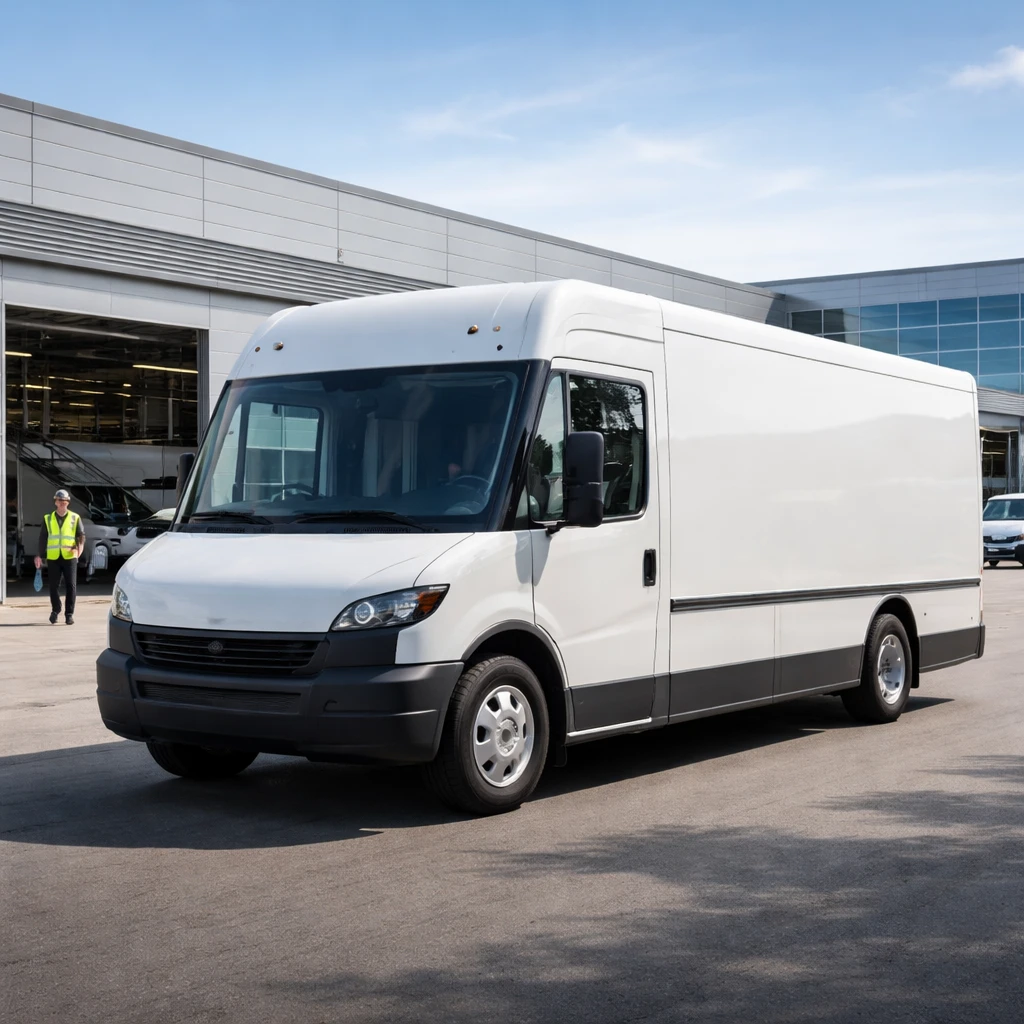
Shares of Workhorse Group Inc. (NASDAQ:WKHS) climbed 5.7% in after-hours trading Wednesday after the company unveiled a new, lower-priced electric step van configuration.
The new W56 Step Van comes equipped with a 140 kWh battery and will be offered at a starting price of $169,000. Workhorse said this configuration delivers an estimated range of 100 miles per charge at full payload, in contrast to its current 210 kWh model.
Workhorse is offering the W56 in two wheelbase variants. The Standard 178" Wheelbase model provides 1,000 cubic feet of cargo volume and supports an 11,000 lb payload. The Extended 208" Wheelbase maintains the same cargo capacity but is rated for a 10,000 lb payload. Both versions include a fully-integrated, purpose-built composite body.
According to the company, the new model’s development was driven by customer feedback. Workhorse CEO Scott Griffith said fleet operators have told the company that daily routes for many vehicles rarely require more than 100 miles of range, and that a lower entry price strengthens the business case for electrification.
The announcement arrived against a backdrop of oil prices trading above $100 per barrel following geopolitical disruptions in the Middle East. Workhorse said the W56 gives fleet operators a way to hedge against fuel-price volatility, noting that electricity costs remain more stable than global oil prices.
Workhorse attributed the new pricing to cost reductions achieved after its December 2025 merger with Motiv Electric Trucks. The company said synergies from that merger produced economies of scale and supply chain efficiencies that enabled the lower starting price for the 140 kWh configuration.
Production of the W56 is based at Workhorse’s Union City, Indiana facility. The company reported that this factory has capacity to manufacture over 5,000 vehicles per year on a single shift. Sales are conducted through a national dealer network with support from regionally deployed technicians.
Summary
Workhorse launched a lower-priced W56 Step Van with a 140 kWh battery and a $169,000 starting price, targeting fleet routes that require about 100 miles of daily range. The move followed customer feedback, leverages merger-related cost synergies, and coincided with an after-hours stock uptick.
Key points
- Workhorse introduced the W56 Step Van with a 140 kWh battery, starting at $169,000, and an estimated 100-mile range at full payload - impacts transportation and commercial vehicle markets.
- The Standard 178" and Extended 208" wheelbase options offer 1,000 cubic feet of cargo volume with 11,000 lb and 10,000 lb payloads, respectively - relevant to logistics and last-mile delivery fleets.
- Company cited merger synergies from December 2025 with Motiv Electric Trucks and a backdrop of oil above $100 per barrel as supporting factors - affecting energy and manufacturing sectors.
Risks and uncertainties
- Range limitation - the 100-mile estimated range at full payload may not meet the needs of fleets operating longer routes, which could limit addressable customers in some segments.
- Reliance on merger synergies - the lower pricing is presented as a result of economies of scale and supply chain efficiencies from the December 2025 merger with Motiv Electric Trucks; if those synergies do not materialize as expected, pricing and margins could be affected.
- Geopolitical and fuel-price volatility - the company cited oil trading above $100 per barrel following disruptions in the Middle East, creating an uncertain backdrop for operating costs and fleet investment decisions.