
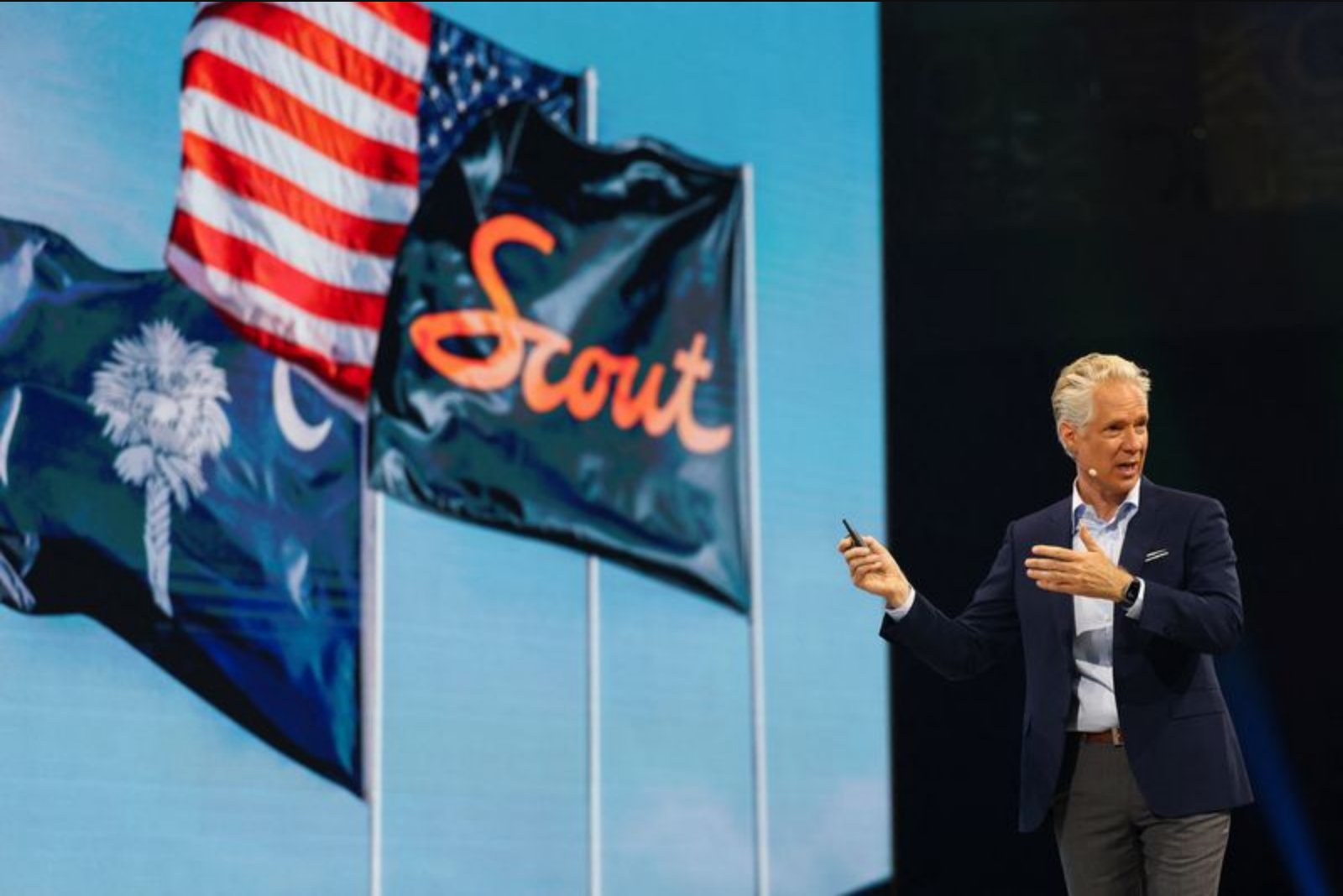
BERLIN, May 11 - Volkswagen’s Scout operation in the United States was structured from its inception to allow for the possibility of a stock market listing or for strategic third-party investors to take a stake, CEO Scott Keogh told the German business paper Handelsblatt.
Keogh said Scout was deliberately established as a stand-alone entity - a setup intended to keep financing and ownership options flexible as the business develops. In the interview, he described outside capital as "an option that is on the table" while the unit explores different ways to fund its growth.
Addressing potential sources of capital, Keogh pointed to U.S. investment funds that are concentrated on what he called the country’s "industrial renaissance," though he did not name any specific investors. The comment indicates Scout is examining American capital providers as part of its funding strategy, while retaining the ability to pursue a public listing if that pathway becomes appropriate.
Volkswagen aims to use Scout to raise its relatively small share of the U.S. automotive market. However, the paper reported that there are growing internal doubts within Volkswagen about the timing of launching a new electric vehicle unit amid signs of weakening demand for EVs and related products.
Keogh defended Scout’s product approach, saying the company’s focus on robust trucks and sport-utility vehicles equipped with so-called range extenders has proven successful. According to the interview, 87% of more than 170,000 pre-orders placed with Scout were for vehicles with that drive configuration.
Keogh also left the door open to further platform uses, telling the paper that production of a new Audi model on Scout’s flexible vehicle architecture would be possible. That comment underscores Scout’s role not just as a standalone brand but also as a potential manufacturing and platform resource within the broader Volkswagen group.
Context and operational implications
From an operational standpoint, Scout’s stand-alone setup gives Volkswagen latitude over capital structure, manufacturing allocation and platform sharing. The high share of pre-orders for trucks and SUVs with range extenders signals early market preference within Scout’s order book, while the suggestion of platform sharing with Audi points to potential internal production synergies.