
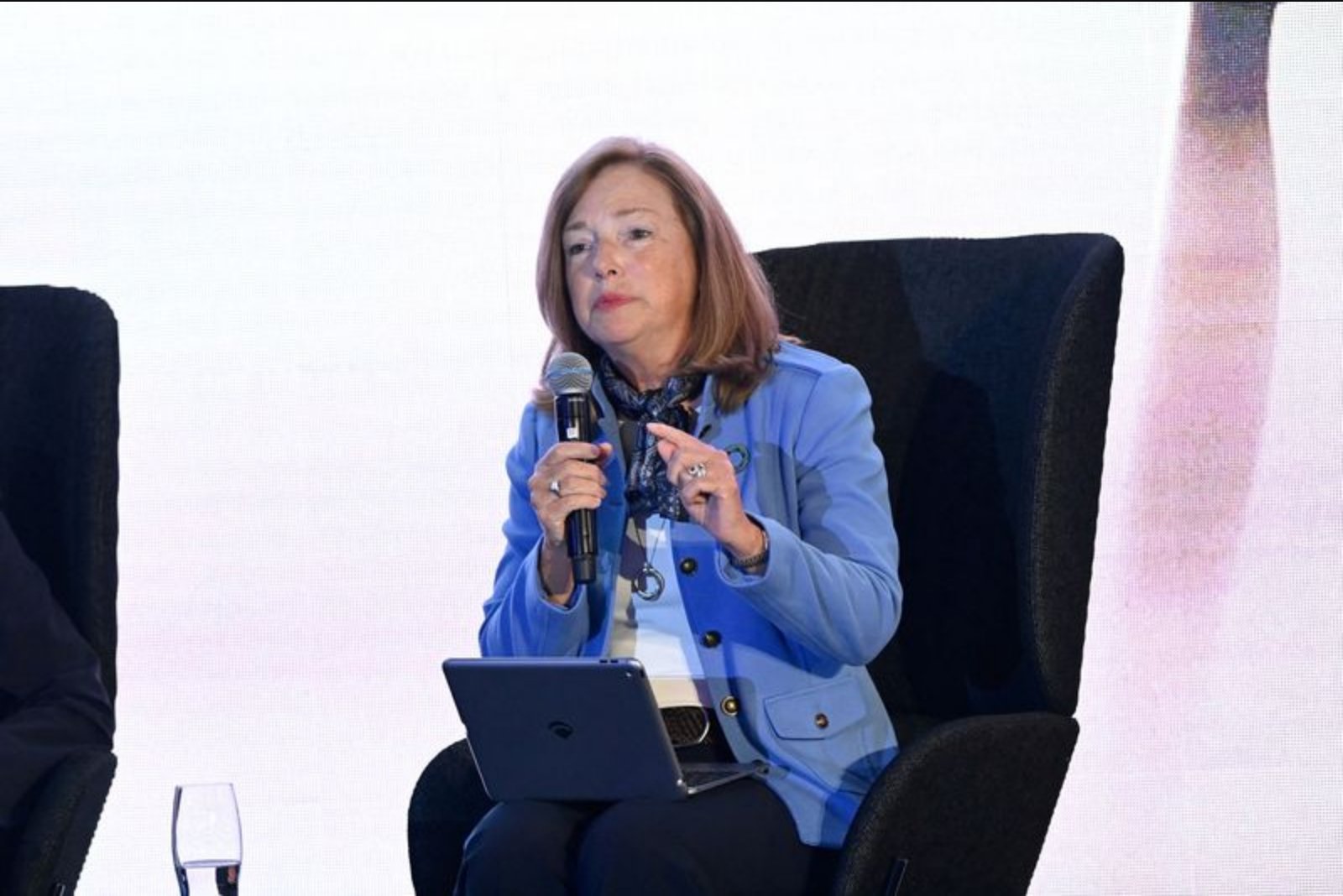
USA Rare Earth's chief executive said investors need not worry about the structure of a pending investment from the U.S. Commerce Department that would give the government equity in the company even if financing is not fully delivered or is clawed back. CEO Barbara Humpton made the comments while responding to lawmakers' questions about how the $1.58 billion debt-and-equity package was negotiated.
The financing, announced in January, is part of a broader administration effort to ramp up domestic production of materials used in electronics and defense applications. But aspects of the agreement - including the government's ability to retain equity under certain funding outcomes - have prompted concern among some members of Congress.
One element attracting attention is USA Rare Earth's relationship with Cantor Fitzgerald, the financial firm formerly led by Commerce Secretary Howard Lutnick and now run by his sons. In a letter to Secretary Lutnick last month, a leading House Democrat described the arrangement as "highly concerning" and characterized it as "deeply strange" that the government would keep an ownership stake even if it does not fund the deal or if funding is later reversed.
Asked directly whether shareholders should be worried about that structure, Humpton replied: "Not at all." She pointed to the company's outreach to investors and the path to value creation the board and management have presented, saying shareholders would be "delighted" by the engagement with the Commerce Department. These remarks represented Humpton's first public response to Democrats' objections to the transaction, which is scheduled to close by the end of the month.
Humpton declined to comment on the congressional letter itself and referred questions about the correspondence back to Secretary Lutnick. The Commerce Department did not respond to requests for comment.
Observers in Washington have read the congressional inquiry as a signal of potential investigations should Democrats regain control of the House after the November midterm elections. Lawmakers have indicated they may scrutinize the administration's use of federal financing and equity arrangements intended to reconfigure mineral supply chains.
The Commerce Department's proposed financing is intended to support two core projects for USA Rare Earth: a mine at Sierra Blanca, Texas, and a magnet manufacturing plant in Stillwater, Oklahoma. The Oklahoma facility is due to begin production this year, while the Sierra Blanca mine is projected to come online by 2028.
Humpton defended USA Rare Earth's decision to work with Cantor Fitzgerald during negotiations with the Commerce Department and emphasized that the firm assisted the company in going public in March 2025. "Our best move was to go with the team who knew us," she said, framing the relationship in operational terms.
At the same time, the company has acknowledged that the Texas deposit carries a lower total rare-earth grade compared with some industry peers. That geological reality has been flagged by some as an economic risk, despite the deposit's composition favoring heavy rare earths. Heavy rare earth elements are attractive for certain high-heat and specialized applications, which can make them desirable to particular industrial customers.
A full preliminary feasibility study for the Sierra Blanca project - a document typically used by investors to assess project economics - is not expected until the end of the year. The absence of that study has contributed to questions about the mine's eventual economic profile.
When asked about criticism of the company's Texas plans, Humpton quoted a popular cultural refrain: "Haters gonna hate." She argued that simple grade metrics do not tell the whole story, saying, "Sheer grade is not the determining factor. The true factor is the recoverable heavy-rare-earth components."
The mine is expected to produce yttrium, which the company notes is used in specialty alloys and is among the heavier rare earths on which China has at times imposed export restrictions. Humpton said the need for yttrium as a component for semiconductors became apparent through USA Rare Earth's engagement with the Commerce Department. "Commerce made it clear that this is the number-one demand from the semiconductor field," she said.
Summary
USA Rare Earth's CEO insists shareholders should not be alarmed by the proposed $1.58 billion investment from the Commerce Department, defending both the deal's structure and the company's ties to Cantor Fitzgerald. Lawmakers have raised concerns about the government's ability to retain equity if funding is not delivered, while questions persist about the economic viability of the company's lower-grade Texas mine and the timing of a preliminary feasibility study. The financing is meant to advance a Texas mine and an Oklahoma magnet plant, with the deal targeted to close by the end of the month.
Key points
- The Commerce Department has proposed a $1.58 billion debt-and-equity package to USA Rare Earth intended to support a Texas mine and an Oklahoma magnet plant.
- Members of Congress are scrutinizing the deal's terms, including the government's retained equity stake if funding fails or is clawed back, and close ties to Cantor Fitzgerald.
- Company executives note the Sierra Blanca deposit leans toward heavy rare earths such as yttrium, but a preliminary feasibility study is not expected until year-end, leaving some economic questions open.
Risks and uncertainties
- Political and regulatory risk: Congressional scrutiny could lead to investigations or oversight that affect the implementation or perception of the Commerce Department financing - this impacts public financing and mineral supply chain sectors.
- Technical and economic risk: The Sierra Blanca project has a relatively lower rare-earth grade compared to peers and lacks a completed preliminary feasibility study, creating uncertainty for mining economics and downstream manufacturing.
- Reputational and governance risk: Close ties between the company and Cantor Fitzgerald have raised questions among lawmakers about the negotiation process and potential conflicts, which could influence investor sentiment in the metals and financial advisory sectors.