
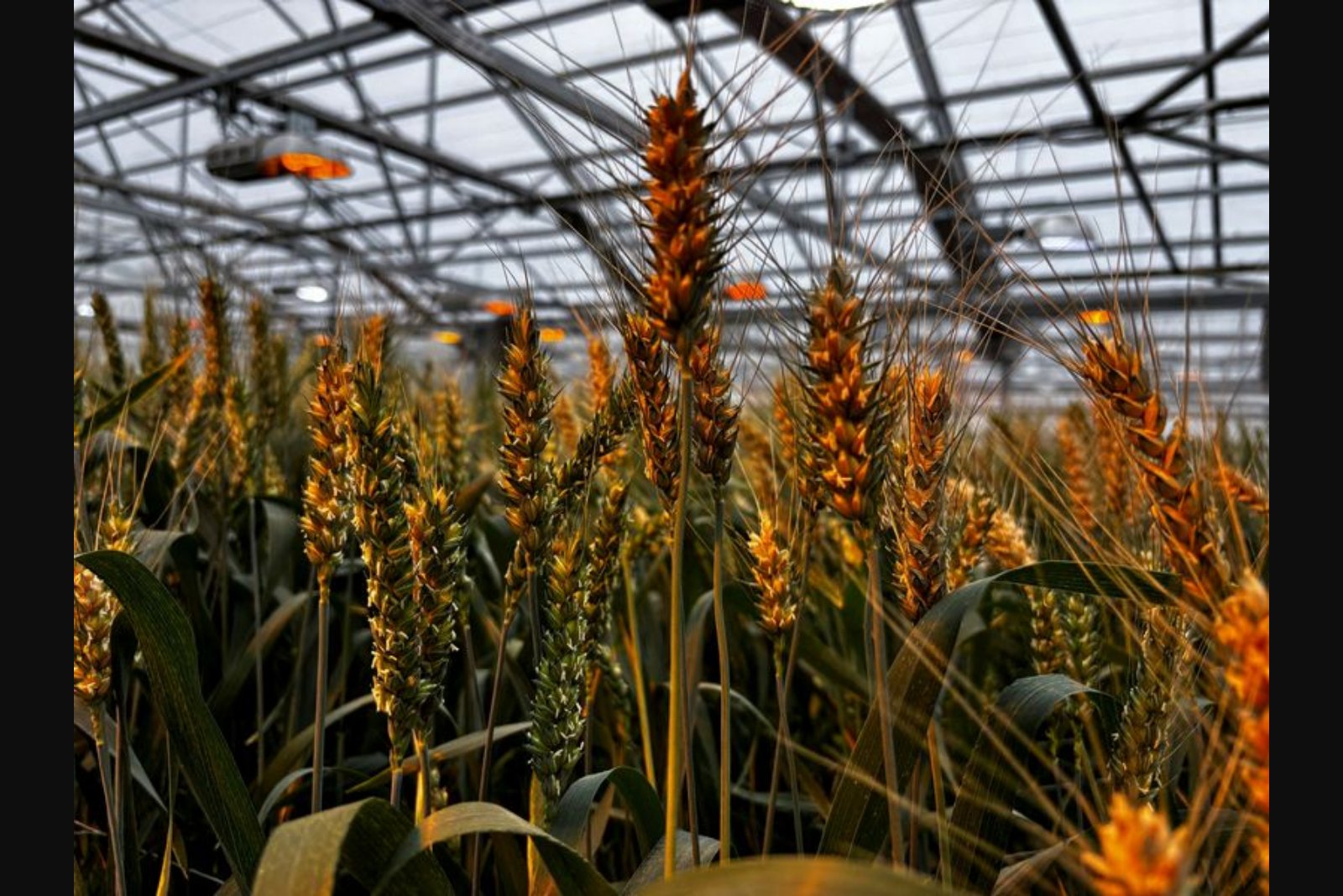
Inside a temperature-controlled chamber roughly the size of a walk-in freezer at a research facility in Manhattan, Kansas, scientists are modifying wheat with a sunflower-derived gene intended to improve drought tolerance. Under bright LED lighting, a few dozen plants are being tested to determine whether that trait - known as HB4 and developed by Argentina's Bioceres Crop Solutions - can deliver resilience in U.S. environments.
A short drive away in Junction City, researchers are focused on a separate avenue: hybrid wheat seed. The work there aims to produce hybrid varieties that deliver higher and more consistent yields as drought becomes a more frequent threat across the Plains. Taken together, the two paths - hybridization and genetic modification - represent a concerted attempt to restore wheat to a position of greater profitability for U.S. farmers.
For much of modern agricultural history, wheat has trailed other major row crops when it comes to technological adoption. Corn and soybeans have incorporated innovations - including widely used hybrid varieties and genetically modified seed traits - that have raised yields and created consistently higher output under stress. Wheat, by contrast, has often been treated more conservatively on technology, planted in rotation and sometimes minimized in farm plans to preserve soil health rather than relied upon as a primary profit driver.
That technological lag is one reason seed and chemical companies are investing heavily now. Syngenta and Corteva, among others, are increasing research and commercialization efforts in wheat. Jon Rich, who leads hybrid wheat operations at Syngenta and has worked on the product for years, described wheat as a crop that historically has not been "technified" to the same extent as corn and soybeans.
Corteva's chief executive, Chuck Magro, has said the company believes it has "cracked the code" on hybrid hard red winter wheat used for bread, projecting potential yield increases of 20 percent. Corteva has announced plans to commercially release that hybrid seed in the United States in 2027. Syngenta, which is part of the Swiss agrichemicals and seeds group affiliated with China's Sinochem, began selling hybrid spring wheat seed in the northern Plains states in 2023 and reached 12,000 to 15,000 acres by 2025.
Those acreage figures, while notable, still represent a very small share of the roughly 45 million acres of wheat sown annually in the United States. Seed costs are another complication; hybrid wheat seed can cost up to twice as much as conventional seed, and it remains a question whether farmers will adopt the pricier option at scale.
Beyond hybrids, genetically modified wheat carries its own promise and set of challenges. The majority of U.S. corn and soybeans are planted from GMO seed that provides built-in traits such as herbicide tolerance and pest resistance - benefits that helped make those crops dominant in modern U.S. row-crop production. Researchers and industry officials say similar traits could offer advantages in wheat, including improved yield stability and perhaps enhancements in nutrition or grain quality.
The HB4 trait, bred into the experimental wheat plants in Manhattan, has been approved for U.S. production by the U.S. Department of Agriculture in 2024. However, none of that grain has been planted in U.S. fields. Scientists note that wheat varieties and genetic responses vary by region, so university researchers are running tests to determine whether HB4 performs effectively in Plains wheat. Brad Erker of the Colorado Wheat Research Foundation, a farmer-governed trade group partnering with Bioceres on commercialization efforts, said field trials are still at least two years away.
Erker also cautioned that commercial availability of GMO wheat seed is further off, estimating a potential earliest release in 2030 or 2032. A key caveat to any rollout is market acceptance among major overseas buyers of U.S. wheat - nations such as Japan and Mexico would need to permit purchases of GMO wheat for a commercial market to develop.
Those buyer considerations reflect a broader standoff between technological possibility and market realities. Wheat buyers have historically shown more resistance to GMO wheat, influenced in part by consumer skepticism over genetically modified food. That contrasts with corn and soybean markets, where much of the crop goes to animal feed and buyer acceptance of GM traits has been more routine.
At the same time, demand headwinds are weighing on U.S. wheat prospects. Once the world's largest wheat exporter, the United States has not held that top position since 2017. Domestic consumption also has softened over decades - a three-decade decline in per-capita flour consumption has coincided with changing dietary guidelines and the rise of gluten-free diets. Leaders in the milling industry and researchers noted at an annual meeting in Olathe, Kansas, that federal dietary guidance promulgated during the Trump administration stigmatized grain-based foods, which they say has further reduced demand.
"The fact that we are having to say 'bread is real food' - it's unfortunate," said Jane DeMarchi, president of the North American Millers' Association, expressing frustration with how dietary messaging has affected consumer behavior.
Researchers and industry advocates argue that technological advances could help make wheat a more attractive option for growers - by improving yields and therefore profitability. "Anything that gives our producers an advantage can improve profitability - that would be welcome," said Allan Fritz, a long-serving wheat breeder with Kansas State University.
Even with advances, several steps must align before hybrid and GMO wheat can materially change the U.S. wheat landscape: additional field testing across diverse growing regions; regulatory and marketplace acceptance; and farmer willingness to pay for higher-priced seed. Erker framed the work with Bioceres as part of a larger goal to give U.S. farmers access to GMO technology in wheat, noting that other crops - corn, soybeans, sunflowers, sugar beets and cotton - already employ genetic modification.
The coming years will reveal whether these scientific and commercial bets pay off. Seed companies are projecting eventual billion-dollar returns from successful hybrid wheat products, but adoption curves, regulatory timelines and buyer acceptance will determine how quickly - and whether - the technology translates into widespread acreage and improved fortunes for the U.S. wheat sector.
Summary
Researchers and seed companies are advancing hybrid wheat and genetically modified varieties with a drought-resistance trait to help raise yields and revive U.S. wheat profitability. Trials and limited commercial sales are underway, but large-scale adoption faces hurdles including seed cost, regulatory and buyer approvals, and persistent declines in domestic flour consumption.
Key points
- Hybrid wheat is gaining commercial momentum - Corteva plans a 2027 U.S. release for hybrid hard red winter wheat while Syngenta has sold hybrid spring wheat in northern Plains states since 2023, reaching 12,000 to 15,000 acres in 2025. Sector impact: seeds, crop protection, farm input markets.
- GMO wheat with the HB4 drought-tolerance trait received USDA approval for production in 2024 but has not been planted in U.S. fields; regional field trials remain at least two years away. Sector impact: commodity exports, international grain markets.
- Long-term demand challenges - including a three-decade drop in per-capita flour use and buyer resistance to GMO wheat - complicate prospects for a technology-driven turnaround. Sector impact: milling, food processing, export logistics.
Risks and uncertainties
- Buyer acceptance: Major importers such as Japan and Mexico must agree to purchase GMO wheat before commercial sales can scale - uncertainty here affects export volumes and prices. Markets affected: international grain trade, export logistics.
- Farmer adoption and seed economics: Hybrid seed can cost up to twice conventional seed, creating adoption risk if growers do not see sufficient yield or profit gains. Markets affected: seed and crop input suppliers, farm profitability metrics.
- Regulatory and trial timelines: Field trials are still several years away and commercial GMO seed availability is not expected before 2030 at the earliest, delaying any large-scale market impact. Markets affected: commodity supply forecasts, futures pricing and industry investment plans.