
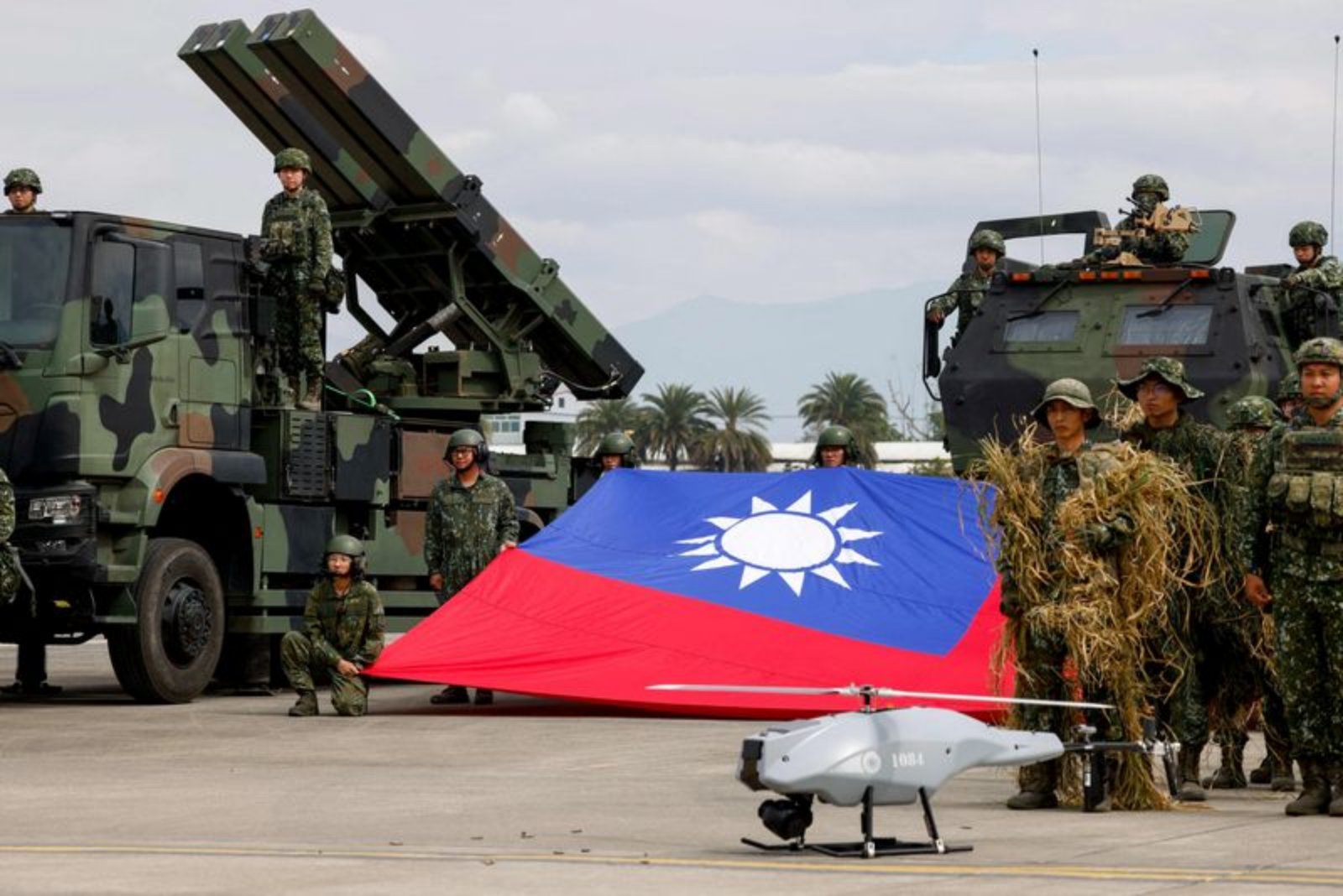
Taipei officials and U.S. diplomats reacted strongly after Taiwan's opposition-controlled legislature approved only part of a supplementary defence request, setting up a debate over capability shortfalls and the island's ability to deter pressure from China.
President Lai Ching-te had asked for $40 billion in additional defence funding to strengthen Taiwan's deterrence. Following delays and detailed scrutiny from opposition parties that hold a parliamentary majority, lawmakers on Friday passed roughly two-thirds of the amount sought. The portion that was approved is earmarked exclusively for purchases of U.S.-made weaponry, while a number of proposed projects, including domestically developed drones and missile systems, were left out.
The opposition caucus defended its actions by saying it backs defence investment but would not provide what it called "blank cheques." Lawmakers argued parts of the original proposal were insufficiently detailed and could create opportunities for corruption if accepted without tighter oversight.
A State Department spokesperson reaffirmed U.S. support for Taiwan's acquisition of defence capabilities "commensurate with the threat it faces" and consistent with longstanding U.S. commitments. The spokesperson said the passage of the special defence appropriation was encouraging after what it described as unhelpful stalling, but added that additional delays in funding the remaining items would amount to a concession to the Chinese Communist Party.
The United States remains Taiwan's principal international backer and primary supplier of arms despite the absence of formal diplomatic relations, the spokesperson said, and has backed higher Taiwanese defence spending even as Beijing repeatedly demands an end to weapons sales.
In a statement issued late on Friday, Taiwan's defence ministry said the items approved under the special appropriation excluded certain commercial purchases and cautioned that those omissions are highly likely to produce "capability gaps." The ministry described the security environment as severe and continuously escalating.
One specific programme removed from the special budget is the Chiang Kung - also known as "Strong Bow" - anti-ballistic missile system, which Taipei has planned to anchor its new "T-Dome" air defence architecture. The ministry warned that without timely procurement of that system, "air defence combat effectiveness will be severely impacted."
Officials also pointed to drone programmes, including sea attack drones, saying the lack of approval will significantly delay development of asymmetric warfare capabilities. The defence ministry further warned that the postponement could affect projected economic growth and employment opportunities for domestic defence industry suppliers.
President Lai welcomed the portion of funding that did pass, noting it enables purchases such as the Lockheed Martin-made HIMARS multiple-launch rocket system to proceed. He cautioned, however, that the approved package represents only the initial step. In a post on social media, Lai said any remaining gaps would undermine the overall integrity of Taiwan's defence network and that delays would increase the security risks shared by the Taiwanese people.
Contextual note: The approved supplementary funding focuses on U.S. weapons acquisitions, while several domestically developed platforms and commercial items were excluded by the legislature.