
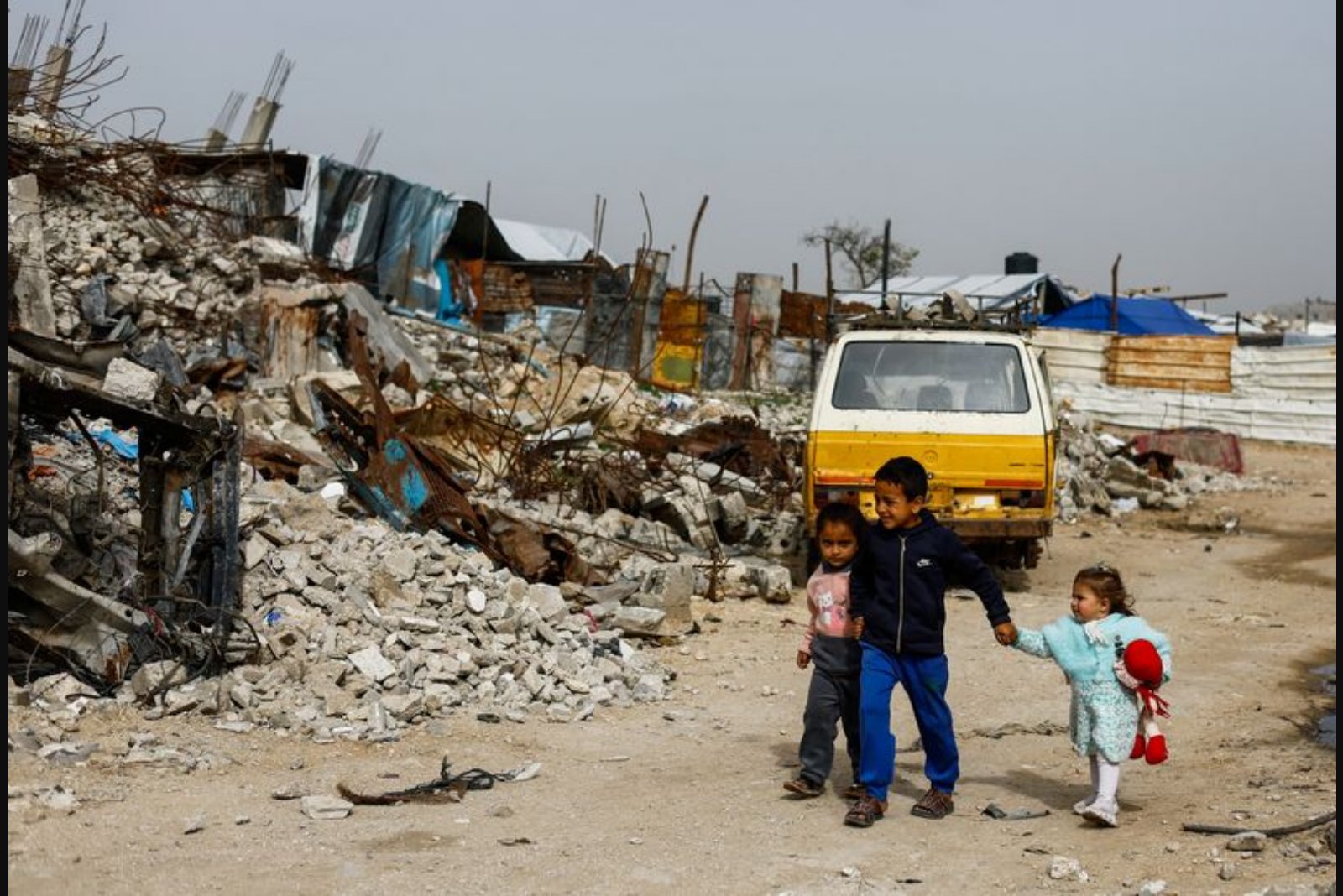
The United States told the U.N. Security Council that a formal process to demilitarize Gaza will include removing weapons from use through decommissioning under "an internationally funded buyback and reintegration program," the U.S. ambassador said on Wednesday.
Speaking to the 15-member council, U.S. Ambassador to the United Nations Mike Waltz stressed that the planned demilitarization will involve international oversight and specific measures to ensure that arms are put permanently beyond use. He said the efforts will be backed by the United States and the 26 countries that have joined what Washington calls the Board of Peace, working in consultation with the Palestinian National Committee the board supervises.
Waltz laid out several core elements of the approach, saying Hamas must not participate in Gaza’s governance in any capacity. "Hamas must not have any role in the governance of Gaza, directly or indirectly, in any form, period," he said. He added that the process will target the destruction and non-rebuilding of "all military terror and offensive infrastructure, including tunnels and weapon production facilities."
On the specifics of weapons removal, Waltz told the council: "International, independent monitors will supervise a process of demilitarization of Gaza to include placing weapons permanently beyond use through an agreed process of decommissioning and supported by an internationally funded buyback and reintegration program."
The ambassador did not provide additional operational details about how independent monitoring would function or how the buyback program would be structured. The U.S. mission to the United Nations did not immediately respond to requests for further clarification.
The announcement comes against the backdrop of an existing ceasefire arrangement brokered in October by U.S. President Donald Trump, under which Hamas retains control of just under half of Gaza. That agreement conditions further Israeli troop withdrawals on Hamas surrendering its weapons.
Sources cited in recent reporting say Hamas has agreed to talks on disarmament with other Palestinian factions and mediators. Two Hamas officials told Reuters that, to date, neither Washington nor mediators have presented the group with a detailed or concrete disarmament proposal.
A U.S. official, speaking on condition of anonymity, said Washington believes any disarmament by Hamas militants would be accompanied by some form of amnesty for the Islamist group. Waltz did not expand on that point during his remarks to the council.
Israel’s U.N. Ambassador Danny Danon addressed the council separately, emphasizing Hamas’s current arsenal. He said the group "still holds thousands of rockets, anti-tank missiles, and tens of thousands of Kalashnikov rifles. In total, Hamas still holds roughly 60,000 assault rifles." Danon argued those arms are used not only against Israel but also against Gazans who oppose Hamas rule.
The Security Council last November authorized the U.S.-backed Board of Peace to operate through 2027 with a focus solely on the Gaza Strip. The U.S.-drafted resolution framed the board as a transitional administration that will "set the framework and coordinate funding for the redevelopment of Gaza" under the Trump peace plan until the Palestinian Authority has satisfactorily reformed, and it authorized deployment of a temporary International Stabilization Force in Gaza.
Waltz praised the countries that have agreed to support the stabilization force, saying, "We salute and thank our friends who have agreed to contribute to the international stabilization force." He also said the United States has not yet announced which nations will provide forces.
According to Waltz, the International Stabilization Force will begin the work of establishing control and stability so Israeli Defense Forces can withdraw in line with agreed standards, milestones and time frames linked to demilitarization. He said those standards and time frames would be agreed by the Israeli military, the ISF, and the guarantors of the ceasefire - the United States, Egypt and Qatar.
The discussion at the U.N. highlights several practical challenges that lie ahead: defining the operational mechanics of monitoring and buyback, securing international funding, coordinating the ISF and Israeli withdrawals, and obtaining a concrete disarmament proposal acceptable to Hamas and mediators. Officials and diplomats at the council outlined the framework and the intended sequence of actions but left many implementation details unresolved.