
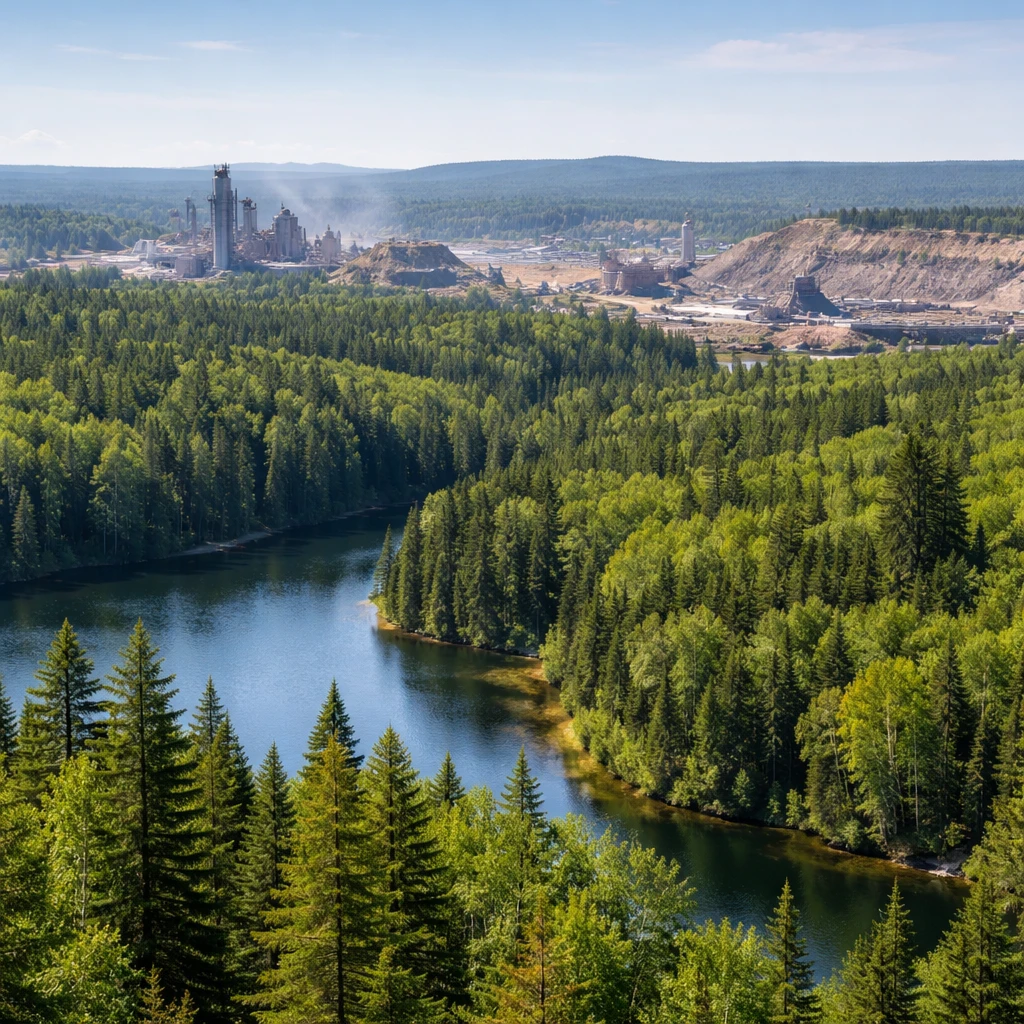
On January 21, the U.S. House of Representatives took a significant step by voting 214 to 208 to overturn the mining prohibition established by former President Joe Biden in northern Minnesota. This prohibition has blocked mining activities across approximately 225,504 mineral-rich acres (91,200 hectares) within the Superior National Forest for two decades.
The legislative effort, led by Congressman Pete Stauber, a Republican representing northern Minnesota, advances a measure that now awaits consideration by the Senate. Should the Senate approve the measure, it would proceed to President Donald Trump for signature. President Trump, campaigning in 2024, has emphasized reversing Biden's mining ban as part of his platform.
Earlier reports revealed a strategic approach by Trump administration officials and legislators to challenge the ban through a novel interpretation: asserting that the Biden administration failed to adequately notify Congress when implementing the prohibition. The Department of the Interior re-submitted the mining ban anticipating Congress would reject it, which, under the 1996 Congressional Review Act (CRA), would prevent future presidents from imposing a similar ban.
The mining ban's repeal has drawn sharp criticism from conservation advocates. These groups dispute claims regarding congressional notification, noting that the ban was clearly outlined in federal documents and correspondence to Congress members. Environmentalists continue to urge the Senate to reject the roll-back, highlighting the importance of protecting the region's unique ecosystem.
If the ban is repealed, the Trump administration would be positioned to resume issuing mining leases to Antofagasta's Twin Metals subsidiary, which has long sought to develop copper, cobalt, and nickel mining operations on federally controlled land there. Development would still require rigorous environmental assessments and permits before proceeding.
Congressman Stauber emphasized the economic and security rationale behind reversing the ban, stating that it would safeguard Northern Minnesota jobs, bolster national security through increased domestic mineral production, and prevent future executive overreach.
The Senate's decision largely hinges on the determination of Elizabeth MacDonough, the Senate Parliamentarian, regarding whether the mining ban qualifies as a rule under the CRA. This classification affects whether the measure can pass with a simple majority or requires a 60-vote supermajority. Presently, Republicans control 53 seats, while Democrats hold 47.
Antofagasta expressed gratitude toward Congress for efforts to dismantle what it called an unnecessary barrier that restricted access to vital domestic critical minerals. Nonetheless, environmental groups warn that repealing the ban sets a dangerous precedent allowing established public land protections to be overturned arbitrarily.
Additionally, lifting the mining ban could also facilitate expansion of helium extraction projects in the Superior National Forest region, further impacting the area's resource landscape.