
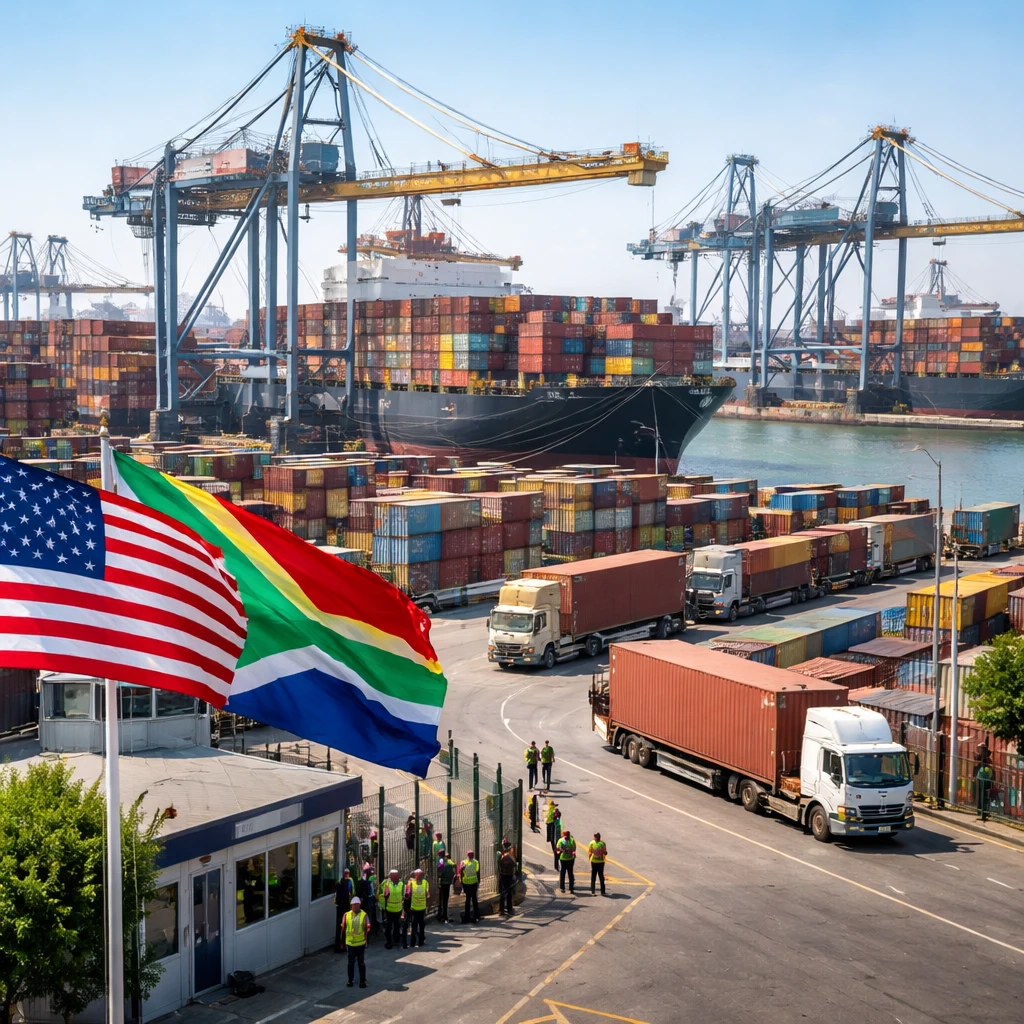
President Donald Trump on Tuesday signed a law extending the African Growth and Opportunity Act (AGOA) through December 31, 2026, with the reauthorization applied retroactively from September 30, 2025. The move preserves duty-free access to the U.S. market for eligible Sub-Saharan African countries under the program while federal agencies and lawmakers plan next steps.
The U.S. Trade Representative, Jamieson Greer, said his office intends to work with Congress during the coming year to pursue updates to AGOA designed to increase market access for U.S. businesses, farmers and ranchers. Greer framed the forthcoming effort as consistent with President Trump's America First trade priorities.
AGOA, originally enacted in 2000, offers duty-free entry to the U.S. for more than 1,800 products from qualifying Sub-Saharan African nations. The program has been credited in the legislation with supporting hundreds of thousands of jobs across the African continent by enabling exporters to reach the U.S. market tariff-free.
The program had lapsed in September, creating a period of uncertainty for exporters and the workers and firms that rely on AGOA preferences. In Congress, the House initially approved a three-year extension but the Senate subsequently reduced the reauthorization to one year; the House then agreed to the shorter term before the final bill reached the president's desk.
The extension arrives amid strained bilateral relations between the United States and South Africa, Africa's largest economy. The article notes that President Trump declined to attend a G20 meeting held in South Africa last year and later indicated that South Africa would not be invited to future U.S.-hosted G20 meetings in 2026. Despite those tensions, South African Trade Minister Parks Tau publicly welcomed the AGOA extension last month, saying it would "provide certainty and predictability for African and American businesses that rely on the program."
Looking ahead to implementation, USTR said it will coordinate with the appropriate agencies to apply any changes to the U.S. Harmonized Tariff Schedule that result from the AGOA reauthorization. Under current AGOA eligibility criteria, countries must establish or show ongoing progress toward a market-based economy, uphold the rule of law and political pluralism, respect due process, remove barriers to U.S. trade and investment, adopt poverty-reduction measures, combat corruption and protect human rights.
The legislation preserves duty-free treatment for qualifying goods while policymakers and agencies prepare to refine program details and tariff classifications. For exporters, agricultural producers and logistics networks tied to AGOA flows, the extension reduces immediate regulatory uncertainty but leaves open questions about the scope of future changes to market access and tariff treatment.