
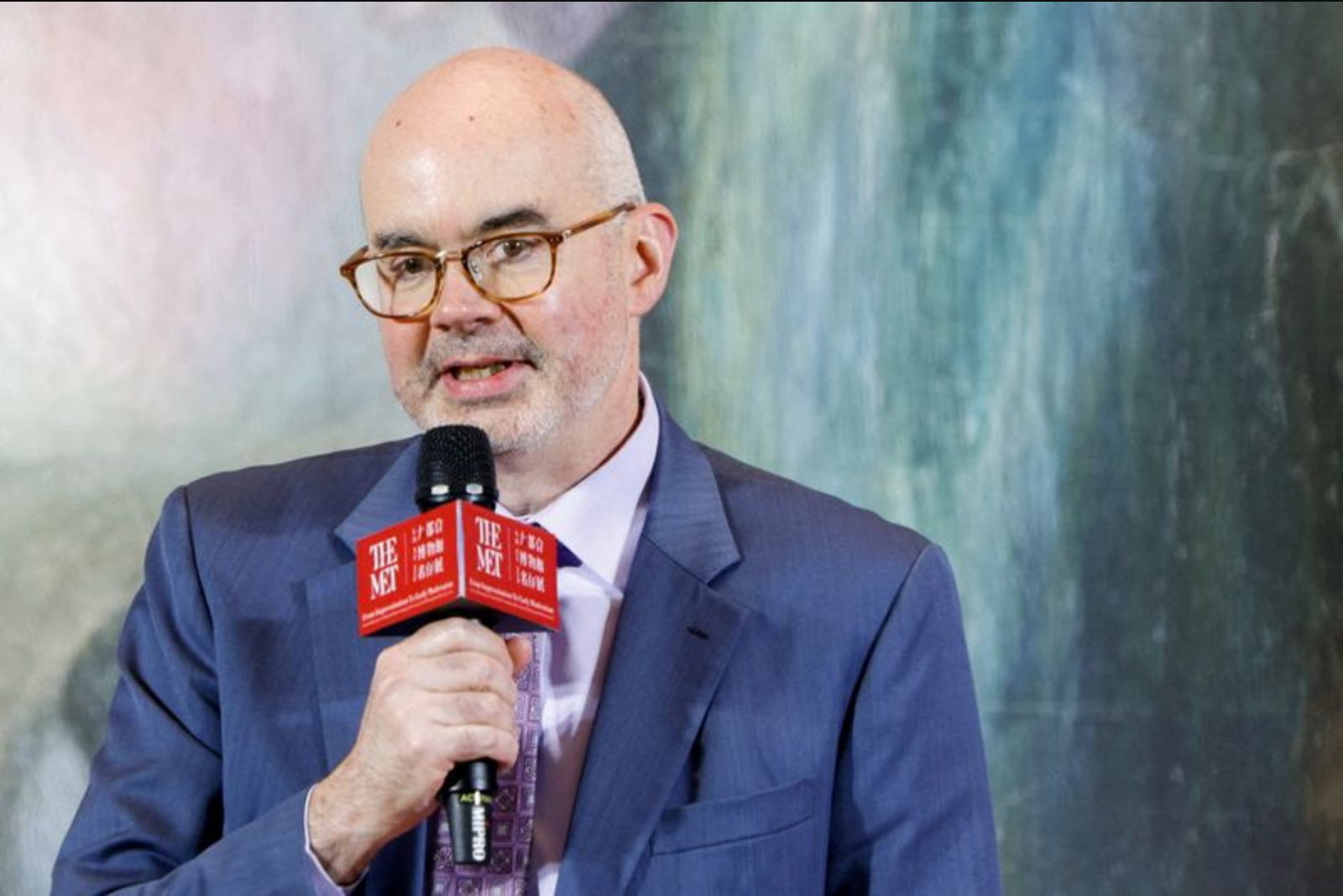
The United States' top diplomatic representative in Taiwan delivered a public assurance to island leaders on Thursday that Washington will continue backing both Taiwan's defensive build-up and its energy security as global supply chains feel pressure from the Iran war.
Raymond Greene, who heads the American Institute in Taiwan - the U.S. entity that manages relations in the absence of formal diplomatic ties - made the remarks at a dinner hosted by the American Chamber of Commerce in Taiwan. President Lai Ching-te and a number of senior Taiwanese officials were in attendance.
Pointing to statutory underpinnings for U.S. policy, Greene said the commitments under the Taiwan Relations Act, which among other provisions mandates U.S. arms sales to the island, remain "rock solid." He framed Washington's approach as seeking conditions that allow disputes across the Taiwan Strait to be resolved peacefully and without coercion, describing dialogue and deterrence as "two sides of the same stable coin."
On defence support, Greene said the United States will continue to back Taiwan's efforts to obtain "critical defence capabilities." He highlighted Taiwan's emphasis on cost-effective systems, specifically citing drones and integrated air and missile defences as areas of focus.
Greene's appearance came a day after U.S. President Donald Trump said he would meet Chinese President Xi Jinping in mid-May - a trip that had been postponed because of the Iran war. The timing underscored a period of active diplomacy even as tensions related to the Middle East impact broader geopolitical schedules.
Beijing, which asserts sovereignty over Taiwan and has not renounced use of force to bring the island under its control, has repeatedly demanded that the United States end arms sales to democratically governed Taiwan. Greene's comments reaffirmed Washington's continuing role as Taiwan's most significant arms supplier and international backer despite the lack of formal diplomatic relations.
In addition to defence commitments, Greene addressed energy. He said the United States aims to "further mitigate the effects of ongoing global commodity supply disruptions" and expressed that Washington looked forward to supplying Taiwan with additional crude oil and natural gas, a pledge framed without an explicit reference to the Iran war.
Greene noted a recent agreement between Taiwan's state-owned refiner CPC and U.S. liquefied natural gas exporter Cheniere Energy under which the U.S. company would double CPC's gas imports to the island. Reinforcing his message, Greene reiterated a prior assurance: "As I said last year, America stands ready to support Taiwan's energy needs across all sources and technologies."
The envoy's remarks combined defence and energy policy commitments in a public setting, signaling the U.S. intent to sustain practical support for Taiwan during a period of elevated global supply uncertainty.