
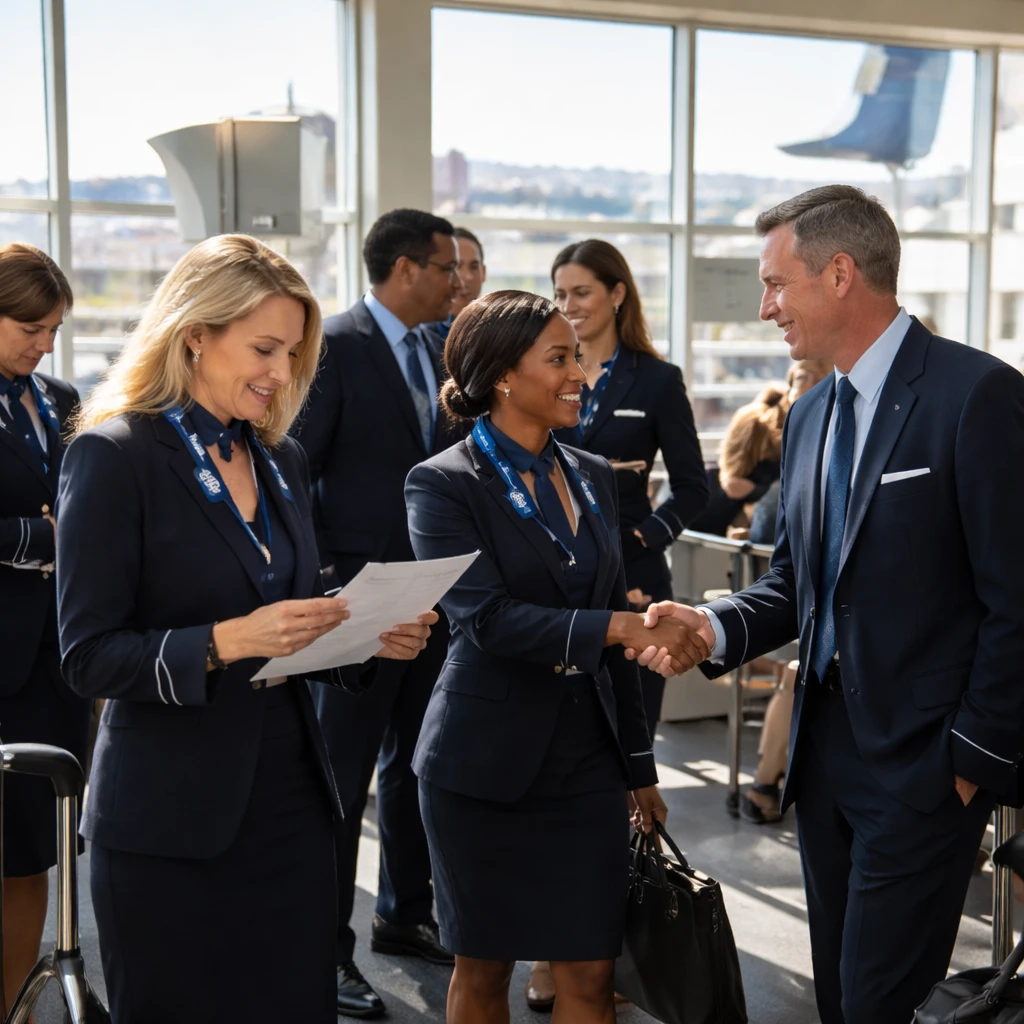
United Airlines flight attendants have voted to accept a new five-year labor contract that raises base wages by an average of 31% by August, the carrier and union said. The contract, which applies to about 30,000 flight attendants, was approved by 82% of voting members with nearly 90% of the union’s membership participating in the balloting.
The ratification delivers the group’s first pay increases in almost six years. The tentative deal had been reached in March after flight crews declined a prior proposal last year; the March agreement moved forward to a ratification vote this week.
New pay and work-rule provisions
Under the terms of the new contract, flight attendants will now receive boarding pay for the period when the aircraft door is open and passengers are boarding. Historically, airline practice had been to begin counting flight attendants’ paid duty time only after the boarding door closed.
Additional elements of the deal include a roughly 7% to 8% rise in total compensation and approximately $741 million in back pay owed to crew members. The agreement also introduces limits on red-eye flights and establishes "sit pay" protections to compensate flight attendants during operational disruptions that last more than 2.5 hours.
Ken Diaz, president of United’s chapter of the Association of Flight Attendants, said the contract will have an immediate impact on members, noting it will be especially meaningful for thousands of flight attendants hired since the pandemic.
Context and vote details
The ballot showed strong engagement from the bargaining unit, with close to nine in 10 eligible crew members casting votes and more than four in five endorsing the agreement. The pact brings the carrier’s unionized flight crews to a post-pandemic settlement and completes the round of major contracts for the industry’s large carriers with unionized cabin crews.
What the agreement delivers
- Average 31% increase to base pay by August for flight attendants.
- Approximately 30,000 flight attendants covered by the five-year contract.
- 82% approval rate on the ratification vote with nearly 90% voter participation.
- New boarding pay for time when the aircraft door is open and boarding occurs.
- Roughly 7% to 8% increase in total compensation and $741 million in retroactive pay.
- Restrictions on red-eye assignments and implementation of sit pay for disruptions over 2.5 hours.
The contract represents a negotiated package of pay increases, retroactive compensation and work-rule adjustments that will alter flight attendants’ pay timing and protections during disruptions. The agreement follows a tentative pact reached earlier in the year and comes after a previous proposal was rejected by the membership last year.