
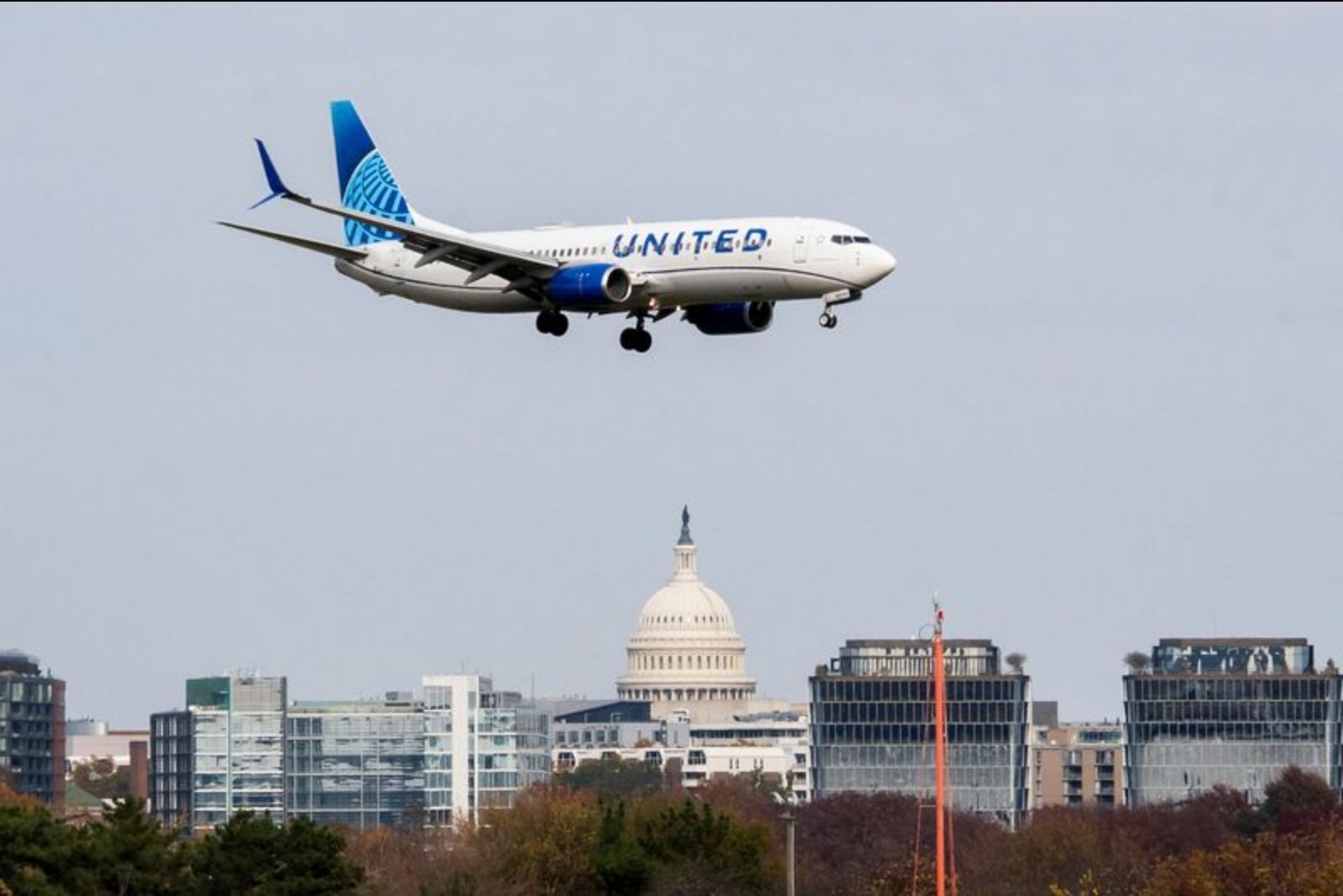
United Airlines on Tuesday rolled out what it said is the largest summer schedule in its history at Chicago O'Hare International Airport, signaling a significant escalation in its competition with American Airlines for gates and higher-fare passengers in the Chicago market.
The carrier said it expects to operate a record 750 daily departures from O'Hare this summer season, an increase of nearly 170 departures compared with the same period a year earlier. The announcement follows a recent commitment from United's chief executive, Scott Kirby, to add "as many flights as are required" to prevent American from securing additional gates at United's expense when gate reassignments occur in 2026.
O'Hare is among the few large U.S. airports where two major carriers still maintain full hub networks alongside one another. Access to gates, along with the most desirable takeoff and landing windows, generally accrues to the airlines that operate the most flights. That operational footprint affects both future growth opportunities and the ability to attract business travelers who value frequency and schedule reliability.
Chicago matters strategically to both airlines. It is the third-largest U.S. air travel market overall and ranks second for corporate traffic, making it a critical connecting point for domestic coast-to-coast itineraries as well as transatlantic and transpacific services.
"We’re going to build a schedule that our passengers want to fly," Patrick Quayle, United's senior vice president of global network planning, told reporters as the carrier outlined its expansion plans.
Details of United's expansion
United said it will offer nonstop flights from O'Hare to 222 destinations in 2026, comprised of 47 international cities and 175 U.S. cities. The carrier described the additions as a mix of routes serving business-oriented markets and leisure destinations. The growth strategy emphasizes a deeper Midwest presence across Illinois, Michigan and Wisconsin while reinforcing service in major coastal and business centers including Boston, Nashville, Los Angeles, San Francisco and Dallas.
Those moves come amid American's own efforts to rebuild and expand its presence at O'Hare after its post-pandemic flying lagged 2019 levels. Over the past year, American expanded its O'Hare network to more than 180 destinations. This week the carrier began selling tickets for new flights to Allentown, Pennsylvania; Columbia, South Carolina; and Kahului, Hawaii.
Industry capacity trends and competitive dynamics
Industry figures cited by the carriers show O'Hare leading major U.S. airports for seat-capacity growth this quarter. Average daily departures in the first quarter are about 25% higher than in early 2024, and summer peaks are projected above 1,300 total flights per day, roughly 250 more daily operations than two years ago.
Such rapid expansion in scheduled seats carries the risk of oversupply if capacity outpaces demand, which can pressure fares and margins. United argues that demand is increasing in step with its capacity additions. The airline estimates it holds about a 19-percentage-point lead over American in local market share at O'Hare and a 38-point advantage among corporate travelers, figures United says represent the widest gaps in decades.
Gate allocation remains central to competitive positioning at O'Hare and to how many and how reliably airlines can schedule flights. Cirium data show United operates roughly half of all scheduled flights at the airport, compared with about a third for American. A city-led gate reallocation late last year awarded United five additional gates while reducing American's total by four. In response, American acquired two gates from Spirit Airlines following Spirit's bankruptcy and is expected to regain additional access as it increases flying.
Financial and operational claims
United's leadership has framed the Chicago operation as a material profit center. Scott Kirby told analysts that United earned about $500 million in Chicago last year, while he said American lost a similar amount. Kirby warned those losses at American could widen to $1 billion in 2026. American has rejected Kirby's characterizations as "inconsistent" and "unsubstantiated," and the carrier says it is growing local market share and signing up more loyalty members.
United points to years of investment at O'Hare as yielding operational improvements, citing better on-time performance and fewer cancellations. The airline also said it plans to hire another 2,500 workers at the airport this year. Executives highlighted fleet and amenity upgrades, including the introduction of Airbus A321neo aircraft at the hub, expanded lounge space, and new Starlink Wi-Fi service on about one-third of flights from O'Hare.
"It’s about serving our customers," Quayle said, summarizing United's public case for the build-out.
Summary
United's announcement of a record 750 daily departures from Chicago O'Hare for the upcoming summer season and plans to serve 222 nonstop destinations in 2026 mark a major intensification of hub competition with American Airlines. The expansion underscores the centrality of gate access, schedule size and flight frequency in securing higher-yield corporate travelers and in shaping future growth at one of the nation’s busiest aviation markets.