
Unilever has reached an agreement to carve out its food division and combine it with McCormick in a transaction described by the companies as a cash-and-stock deal that places a value of roughly $44.8 billion on Unilever’s food business. The arrangement will leave Unilever with a 9% stake in the combined company, which Unilever plans to pare down one year after the transaction is completed.
The move closes a long chapter in Unilever’s corporate history. The company’s ties to food date back to the 19th century and a butter enterprise that began in 1860. Over the decades Unilever grew from a margins-and-soaps firm into one of the world’s largest packaged food companies, second only to Switzerland’s Nestle by the measures cited in the companies’ timeline of events.
A chronology of Unilever’s food roots and evolution
The provenance of Unilever’s food activities is laid out in a timeline of milestones that begins in the mid-19th century and continues into the present corporate reorganization. The timeline records the following events:
- 1860 - The Jurgens family, who had worked as carpenters and received butter as payment for services, moved to Oss in the Netherlands to focus on building a butter business after finding the trade profitable.
- 1869 - French inventor Hippolyte Mège-Mouriès developed margarine, a butter substitute made from beef fat, in response to a government initiative to create an affordable alternative for the working classes and the military.
- 1870 - The Van den Bergh family, butter merchants also based in Oss, expanded their business and began exporting butter to England, which at the time was the largest market for Dutch butter.
- 1871 - The Jurgens family acquired the margarine production patent from Mège-Mouriès. Jan Jurgens introduced margarine to Simon Van den Bergh, who developed a competing product; both businesses prospered through product development and innovation.
- 1922 - Lever Brothers Ltd, a British maker of soap and detergents, bought Wall’s, a sausage maker with ambitions in ice cream. Wall’s began selling factory-made, pre-hardened, wrapped ice cream via salesmen on tricycles, a first in Britain for mass-distributed branded ice cream.
- 1927 - Several margarine companies, including those founded by Jurgens and Van den Bergh, joined to form Margarine Unie, or the Margarine Union. By that time the Jurgens and Van den Bergh businesses had operations in Britain and had diversified into cheese and soft drinks in addition to margarine.
- 1930 - Lever Brothers merged with Margarine Unie to create Unilever, a merger that produced one of Europe’s largest consumer goods conglomerates at the time.
- 1943 - Unilever entered the frozen foods sector by acquiring a controlling stake in Frosted Foods and securing the UK rights to deep freezing, securing the Birds Eye brand in Britain and providing a foundation for expansion into frozen foods. Around the same period Unilever acquired Batchelors, a company specialising in freeze-dried vegetables and canned goods.
- 1946 - Birds Eye launched the first frozen peas in the UK. At that point, meat, fish, ice cream and canned goods represented only 9% of Unilever’s total turnover.
- 1950 - Unilever established a nutrition research group in the Netherlands, which later became the Unilever Food & Health Research Institute.
- 1955 - Birds Eye introduced fish fingers in the UK; within a decade they accounted for 10% of British fish consumption, according to the timeline.
- 1960s - 1980s - Unilever broadened its packaged food portfolio into soups, sauces and ready meals by applying expertise in fats and oils, investing in food processing and cold-chain technology, and scaling brands such as Birds Eye and Batchelors while building distribution across Europe and North America. During this period the company also acquired tea businesses including Lipton International and PG Tips, positioning Unilever as a major tea company.
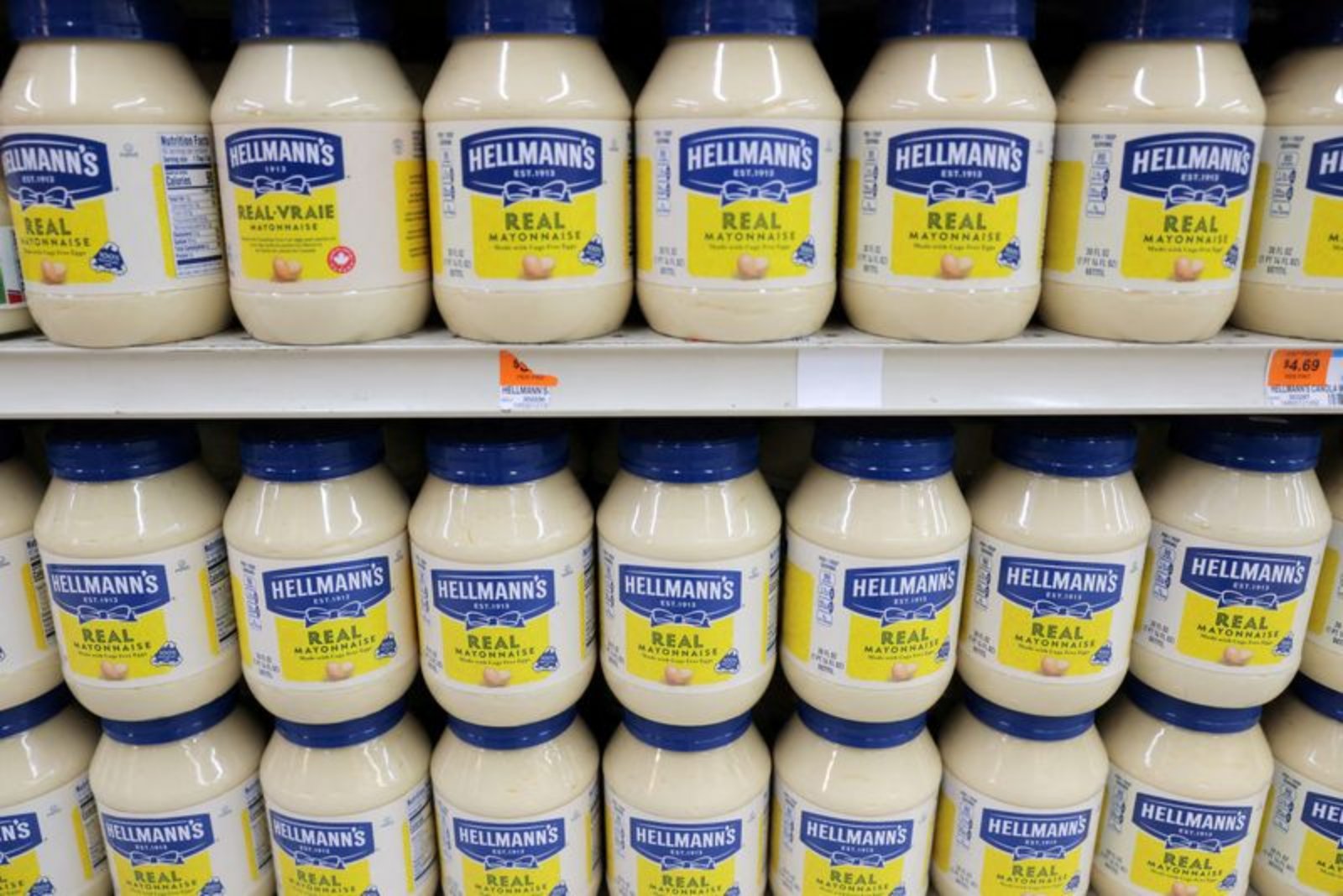
- 2000 - Unilever acquired Ben & Jerry’s and Bestfoods in the same year; Bestfoods owned Hellmann’s mayonnaise and condiments as well as Knorr stock cubes and soup powders. At the time, the Bestfoods purchase was the second-largest cash acquisition in history.
- 2007 - Unilever announced agreements to acquire the Buavita vitality drinks brand in Indonesia and Inmarko, the leading ice cream business in Russia.
- 2016 - In a surprise move, Unilever sold Upfield, its margarine and spreads business that included the Flora and Stork brands, to KKR for 6.8 billion euros.
- 2022 - Unilever sold most of its global tea business, including Lipton, PG Tips and Pukka Herbs, to CVC Capital Partners for 4.5 billion euros.
- 2025 - Under CEO Fernando Fernandez, Unilever spun off its ice cream business that owned brands such as Ben & Jerry’s, Magnum and Cornetto, and sold The Vegetarian Butcher and snack brand Graze.
- 2026 - Unilever confirmed reports that it was in talks with U.S. spice maker McCormick concerning its food business. Following those developments, the companies announced the cash-and-stock agreement valuing the food unit at about $44.8 billion.
Context and immediate details
The companies have described the transaction as a combination of Unilever’s food business with McCormick. Under the terms disclosed, Unilever will retain a minority stake of about 9% in the combined entity after the deal closes, with a stated plan to reduce that holding one year later. The timeline included in the company material emphasizes the historical centrality of food to Unilever’s corporate identity, dating back to butter and margarine operations in the 19th century and continuing through successive acquisitions and divestments in frozen foods, tea, spreads and other packaged products.
Also noted in the source timeline is a currency reference used in past transactions: $1 equals 0.8728 euros, which was provided as a conversion point in the materials.
Summary of market and sector relevance
The deal reshapes the packaged foods landscape by combining Unilever’s long-established food portfolio with McCormick’s spice and seasoning business. The combined business will include legacy brands such as Knorr and Hellmann’s on Unilever’s side and McCormick’s spice portfolio. While the announcement is transactional, the timeline underscores decades of acquisitions, disposals and strategic shifts that have continually redefined Unilever’s relationship with food.
Note: The article references an evaluation question about MKC stock that appears in promotional materials accompanying the original timeline. That question and related promotional content were part of the source material.