
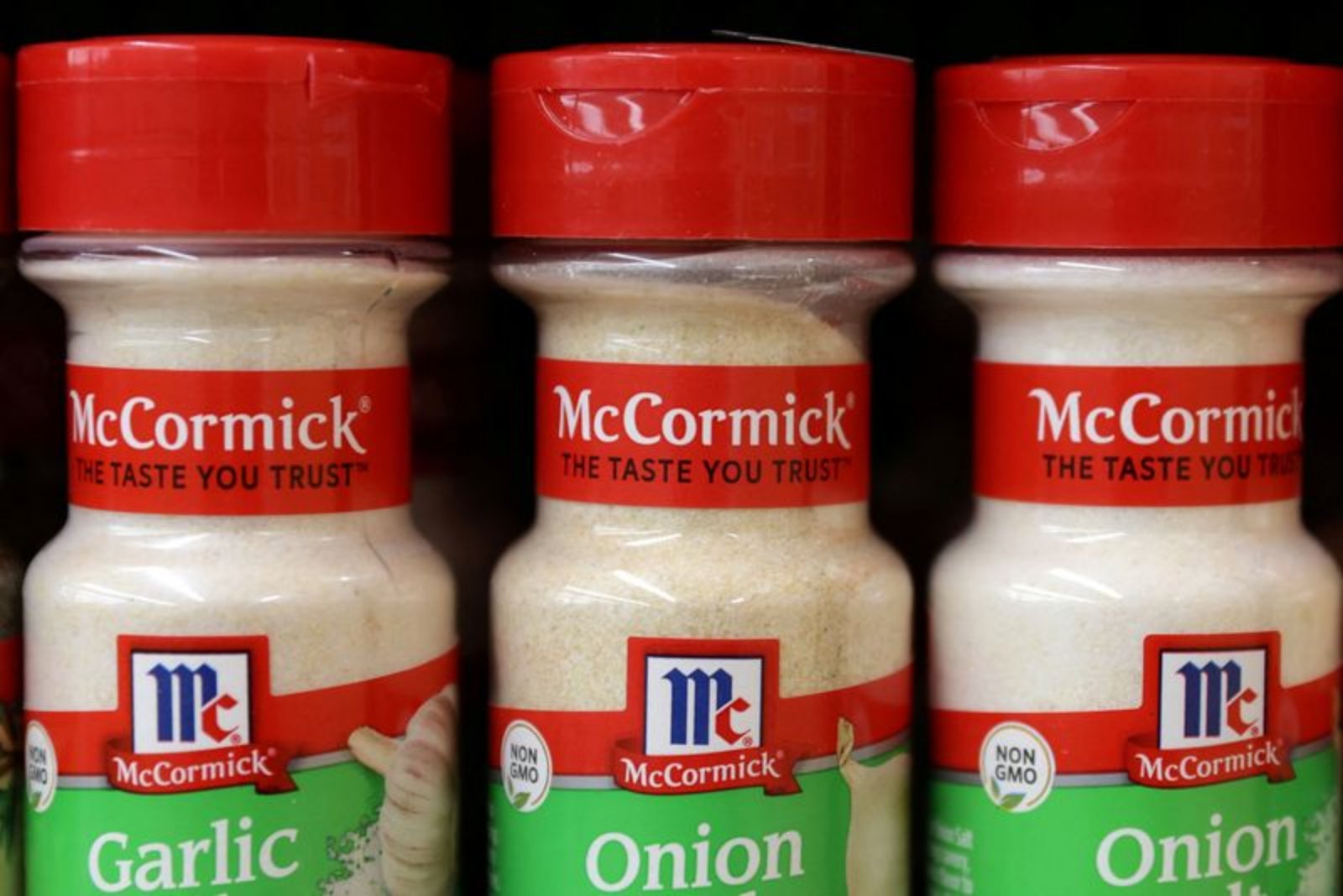
People close to the negotiations said a proposed combination of Unilever's food division with McCormick would be structured so that shareholders of the London-listed consumer goods group would own a majority of the newly formed company. The talks, which were confirmed by McCormick without financial detail, are being arranged to preserve tax advantages and to prevent a so-called change in control that could trigger capital gains taxes.
Unilever, the maker of Hellmann's mayonnaise and Knorr stock cubes and one of the world's largest personal goods companies, disclosed last week that it was in discussions after receiving an approach from the smaller U.S. spice maker. McCormick, which also produces Cholula hot sauce, confirmed it had held talks with Unilever but did not provide numbers. Both companies subsequently declined to comment on the structure of the possible transaction, according to people familiar with the private talks.
Those people said the arrangement under consideration would give holders of Unilever shares more than 50% of the combined enterprise while avoiding a taxable change in control for shareholders. The mechanism being discussed would first spin off Unilever's food business and then transfer it to McCormick in a transaction arranged like a reverse Morris trust - a structure designed to limit capital gains exposure for the seller's shareholders.
Sources described the potential RMT as a large undertaking for Unilever's management. It would be the most significant transaction overseen by Fernando Fernández since he assumed the chief executive role last year. People involved in the talks say discussions are moving quickly, and several declined to be identified because the deliberations remain private.
While the precise ownership percentage that Unilever investors would receive is not confirmed, past RMT-style consumer goods deals provide a range for comparison. Such transactions have historically given the selling firm's shareholders roughly 50% to 60% stakes in the combined company. Two examples cited by people familiar with similar deals include International Flavors & Fragrances' 2021 acquisition of DuPont's Nutrition & Biosciences business, which left DuPont shareholders with a 55.4% stake in the combined group, and the J.M. Smucker purchases of P&G assets in the 2000s that resulted in P&G investors holding about 53% of Smucker.
Valuation comparisons included in discussions point to the size gap between the two groups. Barclays has estimated Unilever's food unit at between 28 billion euros and 31 billion euros including debt. By contrast, London Stock Exchange Group data shows McCormick's enterprise value is nearly $18 billion, which incorporates around $4 billion of net debt. That dynamic - where the effective buyer is materially smaller than the seller - is common in transactions that use an RMT structure.
Advisory teams are reportedly in place on both sides. Unilever has engaged Goldman Sachs and has also worked with Morgan Stanley and PwC on the potential separation, according to people familiar with the matter. McCormick has enlisted Citi and Rothschild for advisory roles. Representatives for Morgan Stanley, Goldman and Citi declined to comment, while PwC and Rothschild did not immediately respond to requests for comment.
People close to McCormick said the company has long admired Unilever's food assets for their global distribution and the opportunity to sharpen under-appreciated brands within a larger conglomerate. McCormick's recent M&A discipline has positioned it to move quickly on an opportunity it views as strategically attractive. The company has pursued other condiment-related deals in recent years, including near-misses for Duke's mayonnaise maker Sauer Brands and Japanese barbecue sauce brand Bachan's, where higher bids prevailed. In 2017, McCormick expanded into consumer food brands by acquiring Reckitt Benckiser's food division, bringing assets such as Frank's RedHot hot sauce and French's mustard into its portfolio.
The potential transaction follows Unilever's multi-month effort to separate its ice cream operations, which culminated in the listing of The Magnum Ice Cream Company in December. As part of that transaction, Unilever retained a 19.9% stake in the newly listed ice cream business, and the listing included tax advantages for shareholders, such as reduced chargeable gains when portions of holdings were converted into Magnum stock.
Several sources emphasized that the current talks are still private and subject to change. Unilever and McCormick have not provided further comment beyond acknowledgments that discussions had occurred. If completed, the deal would stand among the largest corporate restructurings in Unilever's recent history and would represent a significant move in the global food and consumer goods sectors.
Should you be buying MKC right now? ProPicks AI evaluates MKC alongside thousands of other companies every month using more than 100 financial metrics. The tool applies artificial intelligence to identify stock ideas based on fundamentals, momentum and valuation without bias. The service highlights notable past winners, including Super Micro Computer, which it lists as having gained 185%, and AppLovin, listed as having gained 157%. The product also offers comparisons across strategies to suggest where investors might find better opportunities in the same sector.