
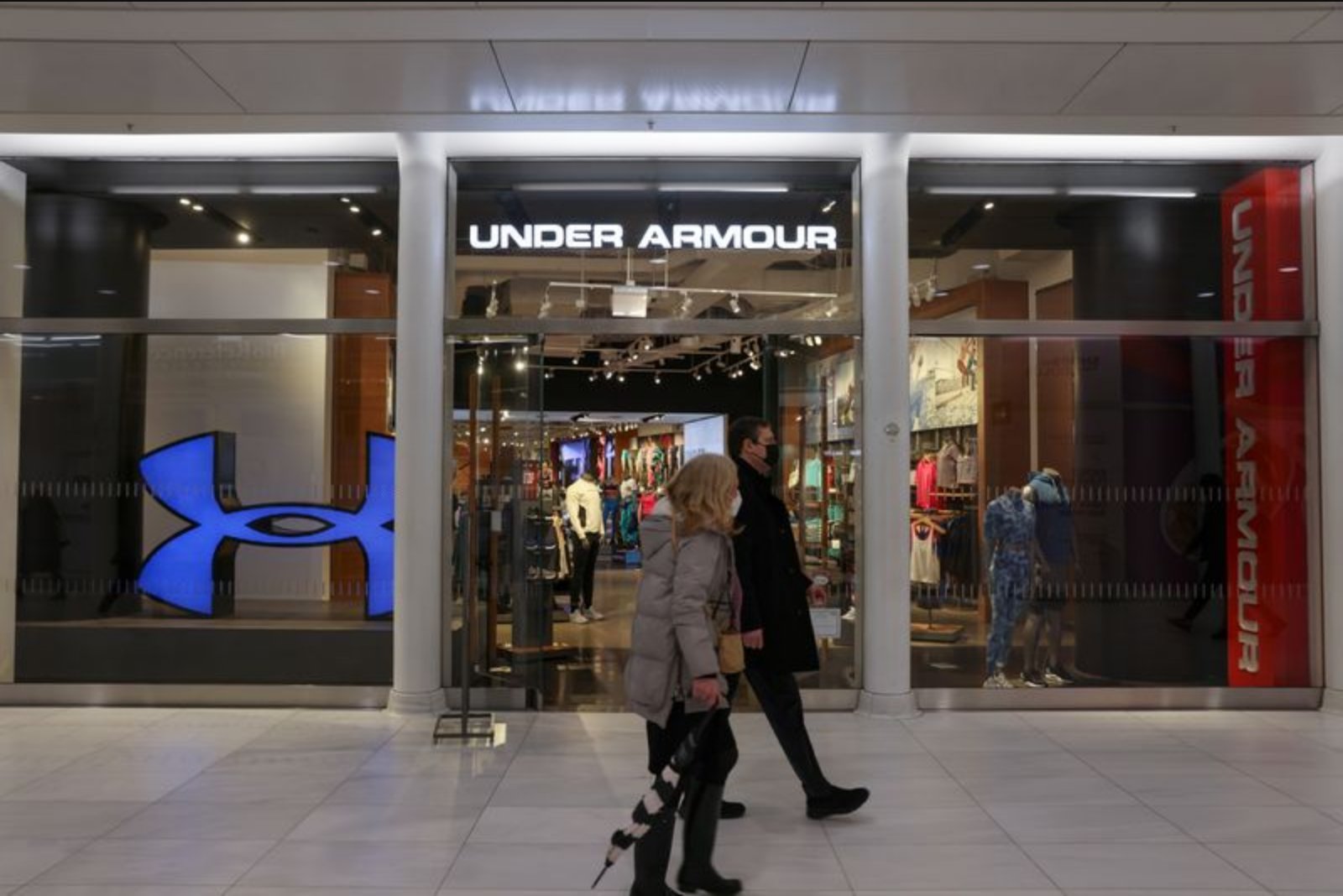
Under Armour on Tuesday said it anticipates another annual decline in revenue for fiscal year 2027 and warned that profit will fall short of Wall Street expectations. The company pointed to weak consumer spending and macroeconomic uncertainty as pressures on demand in its primary North American market.
Shares dropped about 12% in premarket trading following the guidance. The move follows a run of three consecutive years of sales declines as CEO Kevin Plank continues efforts to turn the business around.
The company expects overall revenue for fiscal 2027 to fall slightly, a projection that contrasts with analysts' average forecast of a 1.6% increase to $5.05 billion, based on data compiled by LSEG. Under Armour also said it expects annual adjusted earnings per share in a range of 8 cents to 12 cents, compared with analysts' consensus of 23 cents.
Management singled out the North American market as a particular area of weakness, forecasting that annual sales in that region will decline by a low single-digit percentage. The report underscores challenges the company faces in stabilizing its core business as consumers become more selective and competition from peers such as Nike, Lululemon, Adidas and Puma intensifies.
The guidance and the market reaction add to investor concerns about whether Under Armour can return to growth in a retail environment where spending patterns and competitor positioning are creating headwinds for some athletic apparel brands.
In a separate note within the company release, a promotional reference described a product called ProPicks AI that evaluates stocks, including UAA, across numerous financial metrics and generates investment ideas. That material states the tool assesses fundamentals, momentum, and valuation without bias and mentions past winners it has identified, while inviting readers to explore whether UAA is featured in ProPicks AI strategies.
The company’s outlook and the immediate decline in its share price highlight the ongoing uncertainty surrounding Under Armour’s recovery efforts and the sensitivity of apparel firms to shifts in consumer spending and competitive dynamics in North America.
Sectors impacted: Consumer discretionary, retail apparel, financial markets.