
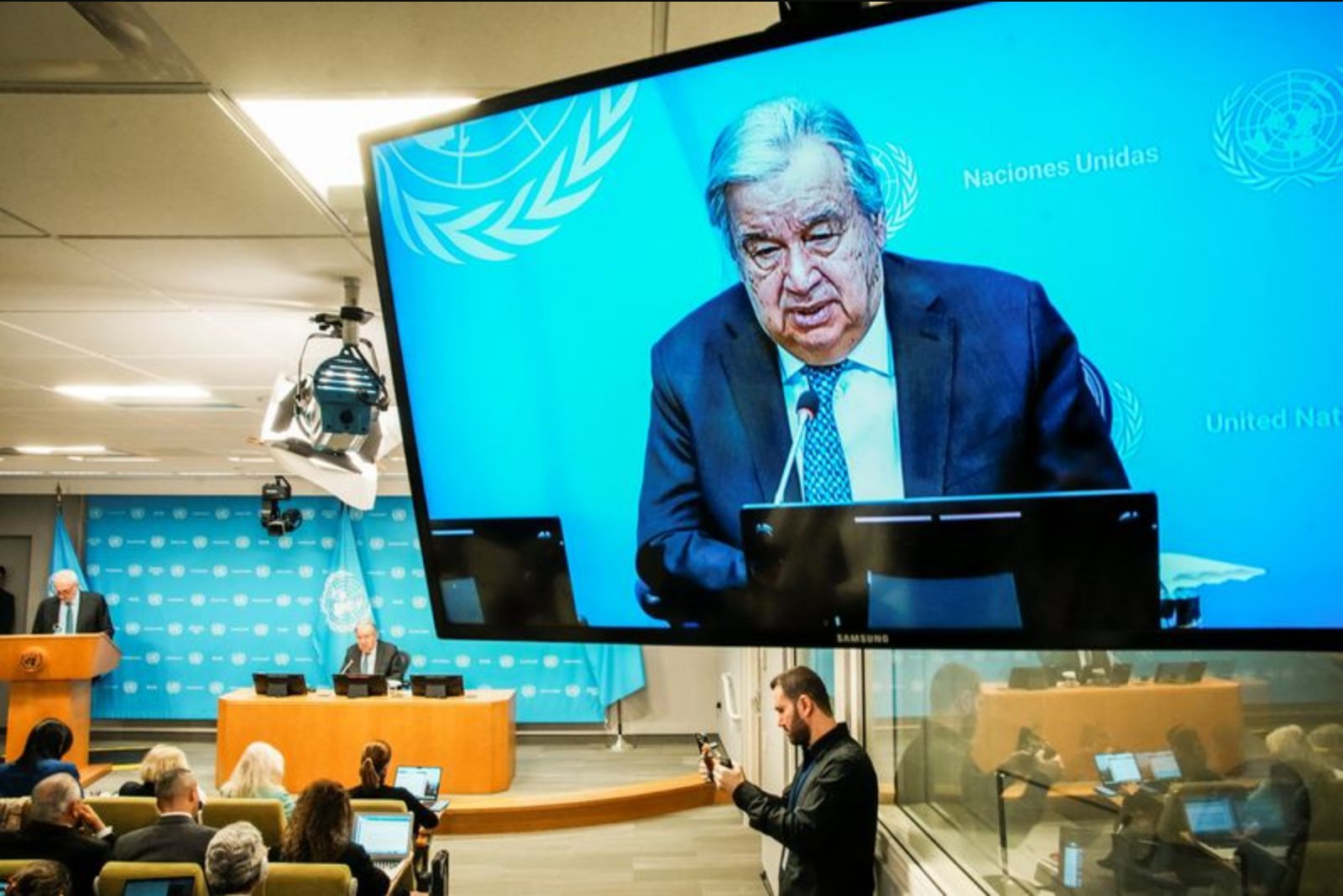
U.N. Secretary-General Antonio Guterres has escalated his warnings about the organization’s finances, stating that the world body faces an "imminent financial collapse" unless unpaid contributions are addressed and a budgetary rule that forces the return of unspent funds is reformed. The appeal coincides with a sharp deterioration in liquidity that U.N. officials say has been building and that could force the U.N. to curtail essential activities or halt meetings and payments.
In a letter circulated to member states last week, Guterres disclosed a record $1.57 billion in outstanding dues for the U.N.’s regular budget, though the letter did not identify which countries were behind the totals. U.N. officials have, however, quantified how much of that shortfall is attributable to the United States: they estimate that more than 95 percent of unpaid regular-budget obligations are owed by the United States - amounting to $2.19 billion by the start of February.
Beyond the regular budget, the U.S. also carries separate arrears. U.N. officials report an additional $2.4 billion owed for current and past peacekeeping missions and $43.6 million in unpaid fees for U.N. tribunals. Those figures sit alongside the General Assembly’s approval, on December 30, of a $3.45 billion regular budget for 2026. That budget is intended to cover the operation of U.N. offices worldwide - including headquarters staffing, salaries, meetings and the organization’s development and human rights work.
U.N. officials say the United States did not make a payment into the regular budget last year and thus owes $827 million for that period, with a further $767 million recorded as due for 2026. After the United States, the next largest reported arrears are substantially smaller - Venezuela and Mexico were cited as owing $38 million and $20 million respectively. Contribution shares reflect member economies: the United States is assessed at 22 percent of the regular budget, followed by China at 20 percent. According to a U.N. document, fees are officially due by Feb. 8 and, so far, 41 states have paid for 2026.
U.N. officials and spokespeople have urged member states to meet their obligations. Without naming any country in his public remarks, U.N. spokesperson Stephane Dujarric said the U.N.'s "cash-flow problem" could be solved "if member states, who have an obligation to pay, pay." The appeal comes amid policy shifts from the United States under President Donald Trump that observers and officials say have reduced U.S. engagement and payments to multilateral bodies.
Under the current U.S. administration, the U.S. has withheld mandatory payments to both the regular and peacekeeping budgets, cut voluntary funding to specialized U.N. agencies, and moved to exit certain international organizations. The U.N. has also flagged a sharp decline in donor funding for humanitarian work: in December it appealed for a 2026 aid budget only about half the size of what it had sought in 2025, a concession that reflects a drop in contributions at a time when humanitarian needs remain large.
In response to mounting fiscal strain, Guterres established a reform task force last year, UN80, aimed at reducing costs and improving efficiency. The approved 2026 regular budget is roughly $200 million higher than the Secretary-General's proposed figure, but it is about 7 percent lower than the 2025 approved budget. Guterres has highlighted a budget rule that requires the U.N. to credit back unspent dues to member states each year even when the organization never actually received the money - a process he has described as "Kafkaesque" and a "race to bankruptcy." U.N. officials say they hope to change this rule, which exacerbates the liquidity squeeze.
Asked about the situation, Guterres warned in his letter that the U.N. could run out of cash by July if the current trajectory continues. The timing of fee deadlines and the concentration of arrears have left the U.N. with narrow options, officials say, because unlike governments the organization cannot borrow or print money to make up shortfalls.
The U.S. administration's stance has been mixed in public accounts. In an interview reported by Politico, President Trump described himself as a potential savior of the U.N. financial situation while declining to commit to immediate payments. According to that account, Trump said he was unaware the U.S. was behind in its commitments but that he could "solve the problem very easily" and get other countries to pay - "if only the U.N. would ask." The White House and the State Department did not provide a response when asked whether the U.S. would make payments or whether Trump’s comment implied that other countries should shoulder the burden instead.
A senior State Department official criticized U.N. management practices in more forceful terms, saying "the U.N. needs to get back to basics" and accusing the organization of waste. The official said, "We have no interest in continuing to spend American tax dollars on such waste, fraud and abuse." Among the complaints listed were that "the U.N. continues to pay its staff far more than for comparable U.S. government positions, provide unacceptable benefits and pensions, and increase the number of high-level bureaucrats in New York - up over 30% - in the last two years alone. The U.N. also spent $340 million just on meetings and conferences last year."
Budget drafts seen by U.N. personnel outlined proposed cost-saving measures that would cut more heavily at lower pay grades than at senior levels. One draft indicated that, among 58 department head posts in the under-secretary-general layer beneath Guterres, just two - or roughly 3 percent - would be eliminated, compared with cuts of about 19 percent across the board and up to 28 percent for a lower-ranking category, based on internal calculations. A U.N. official said the Secretary-General's goal was to implement reform while limiting the impact of reductions on the organization's operations.
U.N. officials have been candid about the operational consequences if large contributors do not make payments. As one U.N. official put it, if the United States does not pay, "at the end of the day, meetings can't be organized, work's not done, staff is not being paid." That stark assessment underscores the practical limits the U.N. faces in responding to both programmatic needs and fixed administrative costs when cash is constrained.
As the deadline for assessed contributions approaches, the U.N. is pressing member states for timely payments and seeking internal changes to reduce the strain of concentrated arrears and an obligation to refund unreceived funds. The outcome will determine the organization's ability to sustain routine operations, convene meetings and carry out its development, human rights and peacekeeping mandates in the months ahead.