
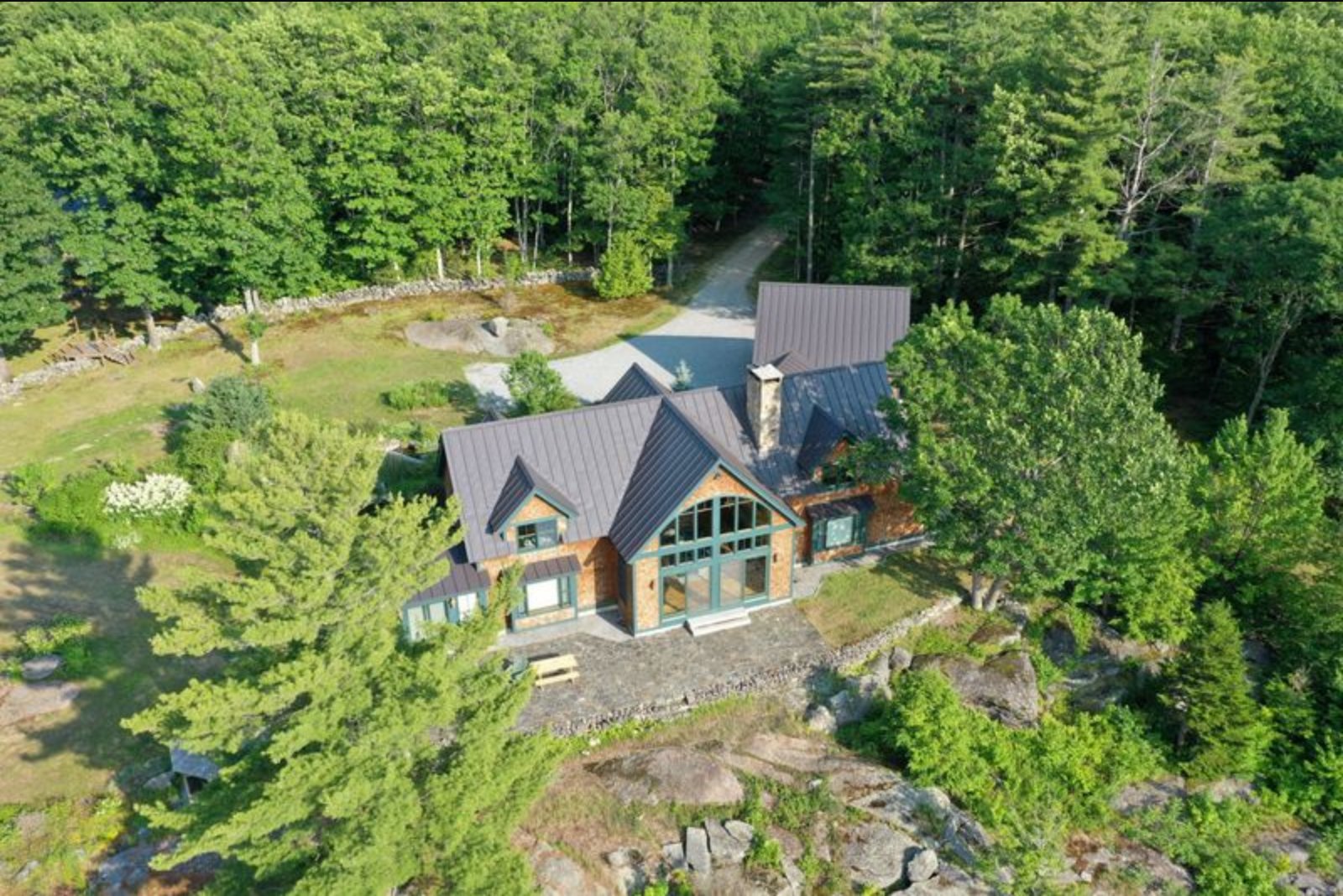
In the rural reaches of Bradford, New Hampshire, a 156-acre parcel known locally as "Tucked Away" became the final private residence of Ghislaine Maxwell before her arrest in July 2020. Federal files released in connection with the prosecution of associates of Jeffrey Epstein show that money used to buy the $1.1 million home in December 2019 can be traced through transfers executed by Swiss bank UBS on accounts linked to Maxwell.
The records detail a chain of movements in which funds originating from an account for an entity Maxwell established flowed through multiple financial intermediaries - including a trust and a brokerage account - before being applied to the purchase of the Bradford property. The timing of those transfers is notable: they occurred after UBS had been served with a federal grand jury subpoena on August 16, 2019, requesting records in a U.S. criminal investigation into alleged sex trafficking of minors.
According to the documents, UBS sent nearly $8 million on November 12, 2019, from an account held for Montpelier Trust, an entity identified in the filings as having Maxwell as its grantor. UBS records show that Scott Borgerson, Maxwell's then-husband, served as one of the trustees for Montpelier Trust. From UBS the funds were routed to a TD Ameritrade account for which Borgerson acted as custodian, and a TD Ameritrade transfer then moved the money into a trust used to complete the December purchase of the Bradford home.
Investigative files include a flow chart labeled "338 Washington Rd Bradford NH," the street address for the property commonly referred to as Tucked Away. That chart, described in the records as derived from U.S. Treasury financial-crime material and marked "sensitive," maps the wires and shows UBS as a key node in the transfers.
The records also show UBS had informed Maxwell by email on August 1, 2019, that it would stop doing business with her within a month, without providing a public rationale. Separately, the Swiss bank processed the transfers tied to the November 2019 movement of funds three months after receiving the August grand jury subpoena, a point underscored in the documents.
Federal norms require banks operating in the U.S. to report suspicious activity that may indicate regulatory or legal violations, and the files include references to Suspicious Activity Reports, or SARs. In correspondence among law enforcement officials in April 2022, agencies discussed a SAR that suggested the New Hampshire property "was purchased with proceeds from Human Trafficking." The documents do not make explicit which institution filed that particular SAR.
UBS declined to comment on its role in Maxwell's finances when contacted. In response to a request for information, the bank said it does not discuss client-related matters. The U.S. Justice and Treasury Departments likewise declined to comment on Maxwell’s banking relationships, the house purchase, and related transactions.
Additional documents compiled by investigators, and by accountants engaged by Maxwell's defense team, attempt to quantify the resources available to Maxwell and Borgerson. A filing in the Southern District of New York in October 2020 estimated the couple's combined wealth at roughly $22.5 million. That analysis traced a substantial portion of Maxwell's assets to the 2015 sale of a Manhattan townhouse for $15 million, with proceeds reported to have been deposited into a UBS account and subsequently moved across UBS-managed accounts to acquire properties.
At various points during her relationship with UBS, the bank reportedly held accounts containing cash, equity and other assets for Maxwell and had assigned two relationship managers to oversee her affairs. Reuters reporting referenced in the files indicated UBS at one time was managing approximately $19 million on her behalf. By the end of October 2020, Maxwell and Borgerson were still shown holding about $4.1 million at UBS, according to the accountants' report.
Records indicate Barclays served as Maxwell's only non-U.S. banking relationship from 2017. Barclays-held balances were noted at $2.4 million at the close of 2018. The files show that in the three-week period following Epstein's July 6, 2019 arrest, UBS received more than $600,000 in deposits from Maxwell’s Barclays account as she consolidated funds to cover a credit card bill.
TD Ameritrade, the brokerage whose account figures prominently in investigators' descriptions of the funding route for the Bradford purchase, later became part of Charles Schwab. Charles Schwab declined to comment on the matter.
In the wake of Maxwell's arrest, UBS filed SARs covering more than $18 million in transfers from her UBS accounts to Borgerson between December 2014 and July 10, 2020, according to a compilation of such filings included with the investigative materials. The documents underline the breadth of transactions that drew scrutiny after federal attention intensified.
Some lawmaker commentary included in the released material framed the transfers and bank responses in stark terms. Senator Ron Wyden, who has probed financial flows tied to Epstein's network, characterized a pattern seen in bank investigations of wealthy clients as institutions turning a blind eye because affluent customers can move their assets elsewhere. He stressed Maxwell's alleged central role in the Epstein case and described her as accused of participating in abuse herself. The record of UBS's later steps and of communications with law enforcement speaks to the tensions banks face between client service and obligations to assist criminal probes.
The arrest itself unfolded on a half-mile, unpaved driveway lined with "No Trespassing" signs. FBI agents forced entry to take Maxwell into custody at the Bradford home. Court papers from a bail hearing indicate she used the alias Janet Marshall and told the listing realtor she was a journalist seeking privacy when arranging the purchase. Agents discovered a mobile phone wrapped in aluminum foil, apparently to prevent tracking, as well as a private security team composed of former British military personnel employed to guard her during her residence there.
Epstein's death in jail on August 10, 2019 occurred days after the grand jury subpoena was issued to UBS, a sequence noted in the records. The Southern District of New York subpoena accompanying the banker inquiry explicitly labeled the matter a criminal "felony" investigation and asked that the bank keep the subpoena confidential on the grounds that disclosure could impede the probe.
Beyond the direct traces to the Bradford property, the documents show gaps and unanswered questions about how some assets entered Maxwell's accounts and what diligence was performed by custodians and banks. The accountants' report cited an instance in 2016 when more than $14 million flowed into Maxwell's account, yet the filings do not present a detailed public accounting of the source of those funds or the steps UBS took as that money arrived.
It remains unclear which institutions alerted authorities to suspicious transactions in Maxwell's portfolio, and which institutions may have filed SARs that drew federal officials' attention. The investigative materials reference SARs and internal reports, but do not always link them to named bank filers in a way that answers that point definitively.
Property records and statements from local real estate agents show that Tucked Away has changed ownership since Maxwell's arrest and is slated to be sold again. Real estate listings described the remote estate as designed for buyers prioritizing privacy, a characterization that aligns with how Maxwell is reported to have sought seclusion there.
Maxwell was convicted in 2021 on charges related to recruiting and grooming underage girls and for participating in abuse in certain instances; she is serving a 20-year sentence. Her defense in the trial argued she was unfairly singled out for Epstein's broader criminal activity. Her current place of confinement declined to make her available for comment, and the attorney who recently represented her in a deposition before the House Oversight Committee did not respond to requests for comment.
The investigative file that links UBS to the New Hampshire residence is dated April 12, 2022 and is marked sensitive. It is one part of a larger array of documents that federal authorities and court filings have produced in the course of probing the financial networks that intersected with Epstein and his associates. Those materials collectively show that major financial institutions continued to have ties to Epstein-linked entities years after his 2008 conviction, a point highlighted elsewhere in the investigative record.
While the documents illuminate the mechanics of certain transfers and the sequence of events surrounding the Bradford purchase, they do not provide a complete picture of Maxwell's finances or definitively resolve all questions about which transfers may have originated from criminal proceeds. Investigators, accountants, and federal agencies are cited in the files, but the trail leaves room for unanswered queries about the precise provenance of some funds and whether every reporting obligation was met in a timely fashion.
The case underscores the compliance challenges banks face when handling accounts of high-net-worth clients who may be under criminal inquiry. Financial institutions must balance client service with legal obligations to report and to assist law enforcement, and the Maxwell matter appears to have tested that balance in several respects. The investigative materials portray UBS as having served as a conduit for substantial transfers in late 2019 even as a federal subpoena was active.
For now, some central facts stand clearly in the public record: UBS executed transfers linked to accounts associated with Maxwell that were incorporated into the funding used to buy a secluded New Hampshire estate in December 2019; those transfers moved through Montpelier Trust and a TD Ameritrade account custodied by Scott Borgerson; and federal investigative files and SARs flag the transactions as part of a broader examination of finances tied to Epstein and his associates. Beyond that, several questions about the source and treatment of funds remain open in the public documentation.
Key points:
- UBS processed transfers in November 2019 from an account for Montpelier Trust that were routed through TD Ameritrade to finance the December 2019 purchase of a 156-acre property in Bradford, New Hampshire known as Tucked Away.
- Those movements occurred after UBS had been served with a U.S. grand jury subpoena in August 2019 in a probe related to Jeffrey Epstein; UBS had also told Maxwell in early August it would cease doing business with her within a month.
- The transaction chain and related Suspicious Activity Reports have implications for the banking, wealth management and real estate sectors, highlighting compliance and reporting pressures when high-net-worth clients are under criminal scrutiny.
Risks and uncertainties:
- Regulatory and compliance risk for banks that handle accounts of customers under criminal investigation - potential for penalties, legal action, and reputational damage affecting the banking and wealth management sectors.
- Uncertainty about the provenance of some funds and which institutions filed SARs creates legal risk and complicates investigators' ability to conclusively trace sources of wealth - this affects forensic accounting and legal services markets.
- Real estate market participants handling high-privacy property transactions may face enhanced scrutiny and regulatory questions when purchases involve complex trust and brokerage structures tied to subjects of criminal probes.