
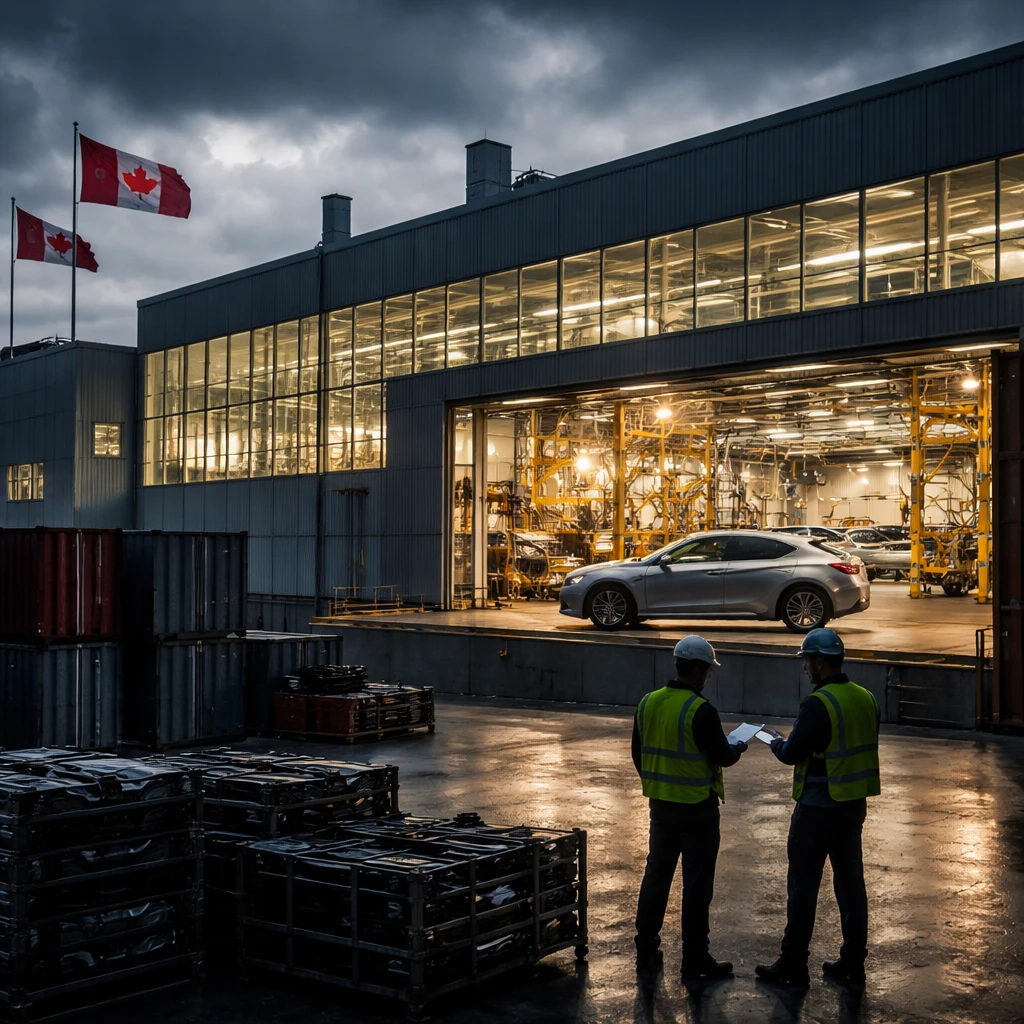
UBS has drawn attention to reported early-stage discussions between Stellantis and China-based Leapmotor about building electric vehicles at an unused assembly plant in Ontario, Canada, according to a Bloomberg report cited by UBS. The talks come after Canada and China reached an agreement in January 2026 to reduce tariffs on Chinese-made EVs.
Despite the adjustment between Ottawa and Beijing, selling Chinese-made electric vehicles in the United States remains constrained. The U.S. maintains a 100% tariff on Chinese autos and has laws that bar Chinese-linked software from connected vehicles. Reports indicate President Trump and President Xi may address these trade and technology barriers at their May summit. In January 2026, President Trump said he could be open to Chinese automakers operating in the U.S. provided they built factories domestically and employed U.S. workers.
The Stellantis-Leapmotor talks have already surfaced political resistance. Ontario Premier Doug Ford said he would oppose any deal to build EVs in Canada unless local parts were used. Meanwhile, President Trump warned he could impose 100% tariffs on all Canadian goods if Canada struck a deal with China. UBS also suggested the U.S. administration’s posture could extend to Mexico, noting reporting that GM plans to assemble vehicles in Mexico with a Chinese joint-venture partner.
Executives at U.S. automakers are acting as if multiple scenarios remain possible. Ford CEO Jim Farley told UBS the company must prepare for any potential outcome, including the arrival of Chinese OEMs in the U.S. Farley emphasized Ford’s strategy to win with customers and out-innovate competitors, pointing to continued investment in EVs using Ford’s new UEV platform. Farley also denied a Bloomberg report that Ford was in discussions with the U.S. administration about joint ventures with China inside the United States.
On trade policy and materials, UBS said a prospective new framework for steel and aluminum tariffs would likely have limited implications for the auto sector provided Section 232 stays in force. That caveat is important given Ford’s own near-term cost guidance. The company has warned of a $1.5 billion to $2.0 billion headwind stemming from aluminum tariffs and logistics disruptions, a problem compounded by supply chain issues after downtime at Novelis, a key supplier.
The developments sketched by UBS highlight several intersecting pressures for automakers: evolving trade agreements, potential punitive tariffs, local political objections to foreign-linked production, and material cost volatility. Automakers and suppliers are adjusting strategies amid uncertain policy outcomes and active discussions among governments and industry players.