
Stock Markets March 17, 2026

Uber and Nvidia Announce Robotaxi Partnership, Plans for U.S. Launches in 2027

Collaboration to deploy Nvidia’s DRIVE Hyperion and Alpamayo across an expanding global robotaxi network starting with Los Angeles and San Francisco

By Leila Farooq NVDA
Uber and Nvidia Announce Robotaxi Partnership, Plans for U.S. Launches in 2027
NVDA

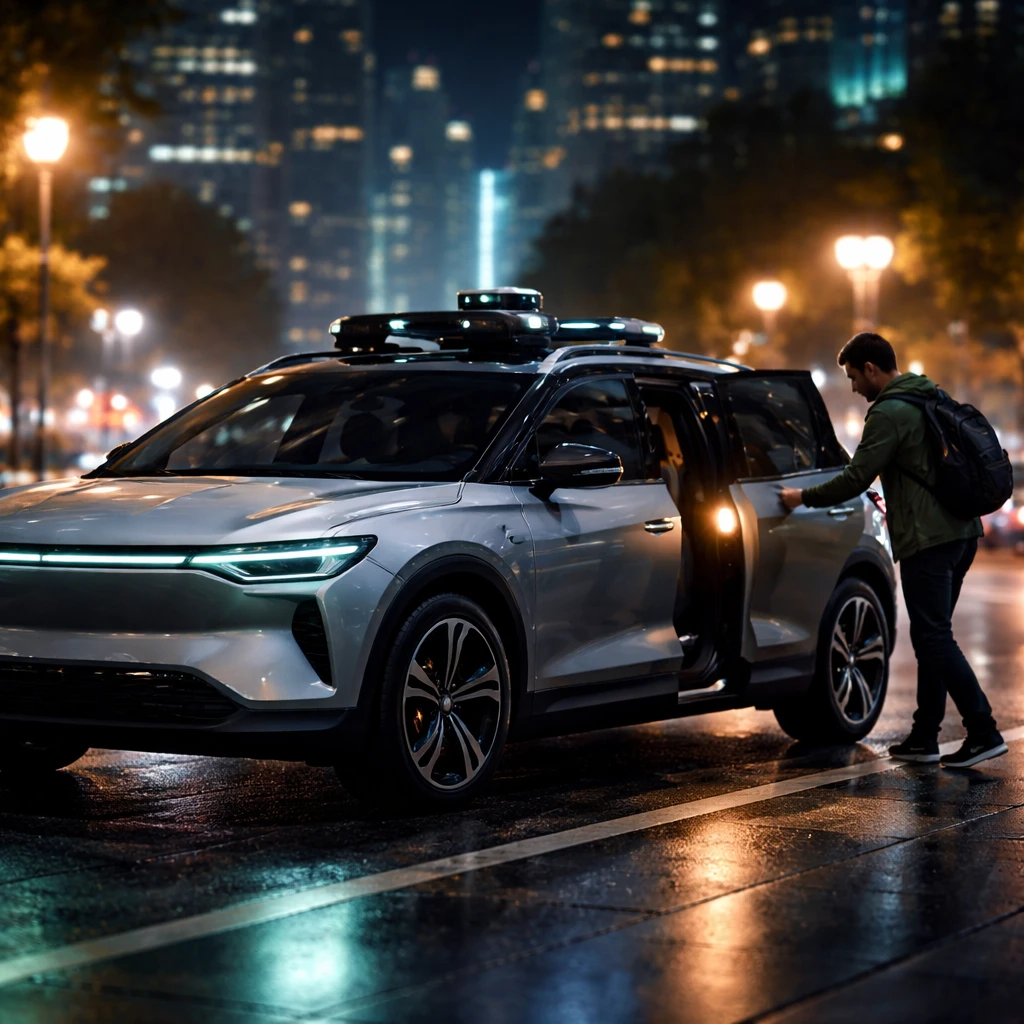
Uber and Nvidia said they will work together to roll out a fleet of robotaxis using Nvidia’s autonomous driving software, beginning with launches in Los Angeles and San Francisco in 2027 and expanding to 28 cities worldwide by 2028. The phased deployment will begin with data-collection vehicles, move to operator-supervised services, and ultimately target fully driverless Level 4 operations.

Key Points

  • Uber and Nvidia will deploy robotaxis using Nvidia's DRIVE Hyperion platform and Alpamayo AI, with initial launches in Los Angeles and San Francisco in 2027 and expansion to 28 cities by 2028.
  • The rollout will proceed in stages: data-collection vehicles, operator-supervised deployments, and eventual Level 4 fully driverless operations.
  • The partnership advances Uber's goal of a multi-player autonomous ecosystem and intensifies competition in autonomous ride-hailing, affecting mobility, automotive supply chains, and AI software markets.

Uber Technologies saw its shares rise 2% in premarket trading on Tuesday after announcing a strategic partnership with Nvidia to deploy a fleet of robotaxis using Nvidia’s autonomous driving software. The companies said initial launches are planned for Los Angeles and San Francisco in 2027, with a broader expansion to 28 cities globally by 2028.

Under the agreement, the vehicles will operate on Nvidia’s DRIVE Hyperion platform and employ Alpamayo, a reasoning-based AI model intended to handle complex driving scenarios. The partners described a staged rollout: teams will first use data-collection vehicles to capture city-specific conditions, then transition to operator-supervised deployments, and ultimately aim for fully driverless Level 4 service.

Uber characterized the tie-up as one element of a wider approach to create a "multi-player" autonomous ecosystem on its platform. The company said it wants to enable multiple developers and automakers to provide robotaxi services through Uber rather than depend solely on technology developed in-house.

The announcement adds to mounting competition as firms race to commercialize driverless ride-hailing. Alphabet's Waymo was cited as the most advanced operator, already offering fully driverless rides in Phoenix, San Francisco and Los Angeles. Tesla continues to pursue a camera-based route to autonomy while aiming to launch its own robotaxi service and leveraging large-scale manufacturing capacity.

Uber has also formed recent partnerships to broaden its autonomous options. The company has agreements with Lucid Group and autonomous driving startup Nuro to deploy robotaxis for its platform, pairing Lucid vehicles with Nuro's self-driving technology. Lucid said it plans to begin commercializing a robotaxi based on its Gravity SUV this year as part of that collaboration.

While the development of autonomous systems carries significant costs, companies involved in the space view robotaxis as a potential source of high-margin revenue if those services can be scaled successfully.


ProPicks AI note - ProPicks AI evaluates NVDA alongside thousands of other companies using more than 100 financial metrics each month. The tool is designed to identify stocks with favorable risk-reward based on current data. ProPicks AI cited notable past winners it identified, including Super Micro Computer (+185%) and AppLovin (+157%).

Risks

  • High development and deployment costs for autonomous systems - this affects capital-intensive sectors like automotive manufacturing and AI hardware/software providers.
  • Competitive pressure from established and emerging rivals in driverless ride-hailing, including operators already offering fully driverless services and those pursuing alternate technical approaches.
  • Uncertainty in the timeline from data collection to fully driverless Level 4 operations, which could influence revenue realization and market adoption in mobility and ride-hailing markets.

More from Stock Markets

Analyst Moves: Qualcomm, Target Hospitality, Trade Desk, Five Below and SolarEdge Draw Fresh Ratings Mar 22, 2026 SMBs Shift Ad Budgets Toward AI-Driven Search; Google Features Lead Adoption Mar 22, 2026 Four Years On, China Eastern Crash Probe Yields No New Answers Mar 21, 2026 Taiwan Says First Delayed F-16V Fighters to Begin Arriving This Year as Production Runs at Full Capacity Mar 21, 2026 Moscow session ends flat as headline index posts no change; top names show no movement Mar 21, 2026