
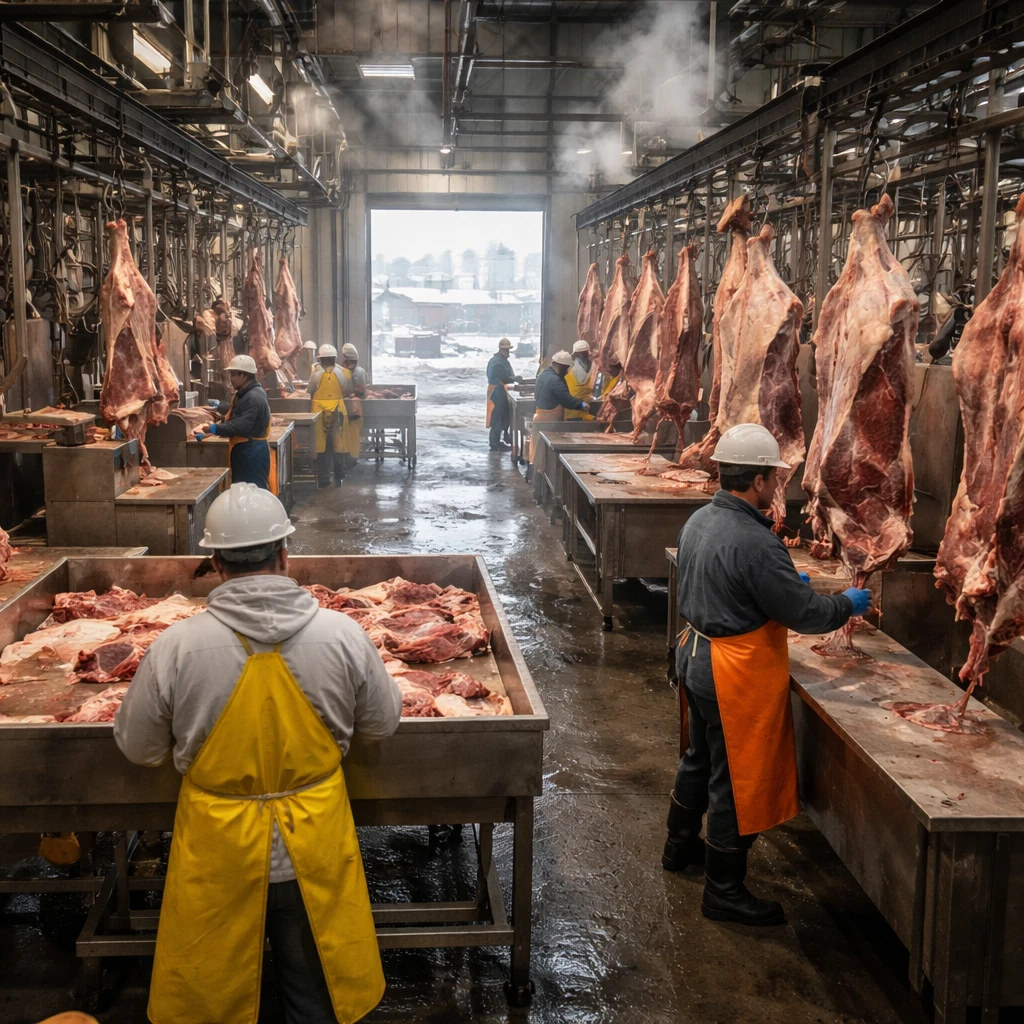
Tyson Foods, one of the leading meat processing companies in the United States, declared on Friday that it will sustain limited beef processing activities at its slaughterhouse in Lexington, Nebraska, even as it proceeds with plans to close the facility. This announcement provides a temporary extension of employment to approximately 292 workers, which accounts for about 9% of the plant's total workforce of 3,200 individuals.
The company originally announced in November that it intended to discontinue operations around January 20, citing elevated costs driven by constrained cattle availability for U.S. meat processors. According to a recent notification submitted to Nebraska state officials this week, Tyson confirmed that layoffs commenced on the planned date but clarified that a segment of the workforce will continue their duties related to the facility's shutdown for a period lasting between three and 185 days. Notably, under half of these retained employees are expected to remain employed beyond the end of January.
In a formal statement sent via email, Tyson explained, "Limited further processing will continue at our Lexington facility during this transition period," underscoring their intent to manage ongoing tasks amid closure preparations.
The cattle inventory across the United States has experienced significant reductions, reaching its lowest level in nearly 75 years. This decline is primarily attributable to prolonged drought conditions that have undermined pasture availability for grazing, compelling ranchers to downsize their herds. Reduced supply, when combined with sustained robust consumer demand for beef products, has caused retail ground beef prices to escalate sharply. December witnessed an all-time record retail price of $6.69 per pound for ground beef, representing a 19% increase compared to the previous year, based on data from the Bureau of Labor Statistics.
Despite public commitments such as President Donald Trump's October pledge to mitigate beef prices, the cost of hamburger meat and steaks has continued to rise steadily. While elevated beef prices can offer a favorable revenue environment for Tyson Foods, the company also faces the challenge of procuring cattle at historically high prices for slaughter, which impacts their cost structure.
Local officials in Nebraska have expressed hope that Tyson might either sell the Lexington plant or repurpose it to limit the economic impact on the town’s community, which has roughly 10,000 residents. Tyson Foods has noted that the Lexington beef processing complex has been operational since 1990, marking over three decades of service to the region.