
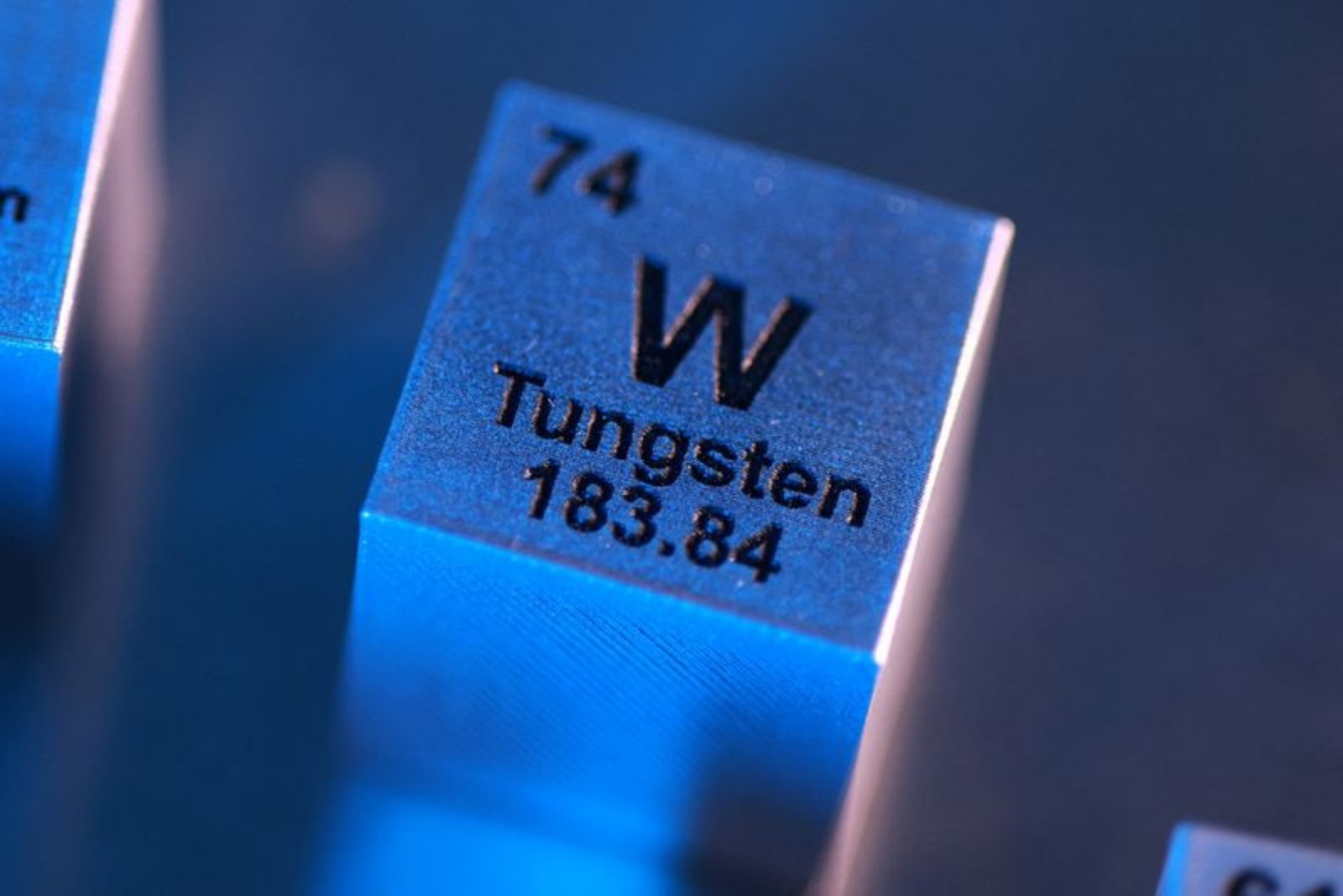
Jan 29 - Tungsten prices vaulted to new record levels this month, driven by shrinking inventories, tightened export rules from China and sustained industrial demand that has left buyers searching for scarce supplies.
Traders reported that ammonium paratungstate - the intermediate used to produce tungsten metal - was changing hands in China at approximately $1,125 to $1,150 per metric ton unit (mtu), levels described by market participants as a record high. In Rotterdam, prices reached an all-time peak near $1,100 per mtu. Several participants in the market said they expect prices to move still higher over the coming weeks.
Tungsten is prized for its exceptional hardness and for having the highest melting point of any metal. The material is predominantly used as tungsten carbide in cutting tools and wear parts that serve manufacturing, mining and construction operations. It also finds applications in aerospace and defence components, industrial gas turbines and electronics. Because tungsten is so integral to advanced manufacturing processes, sharp price moves can affect factory output and production costs.
A London-based trader summarized the market drivers in an email: "There are a lot of reasons for Tungsten to go up - market is tight, there is a lot of demand from defence, aerospace, IGT, and all other sectors, there are problems with supply (lower ore grades and other issues) and on top of that, there are issues with exports from China," the trader said.
Policy changes from China have been a key factor in the recent market tightness. Beijing introduced export controls in February 2025 that require exporters to obtain government permits before shipping tungsten materials abroad. In the most recent step, authorities named 15 companies permitted to export tungsten, a measure that market participants say could centralize export decision-making and effectively limit the volume of material available to overseas buyers.
William Parry-Jones, founder of Wolfram Advisory and a specialist in tungsten market analysis and critical materials supply chain strategy, said: "(China’s) export volume has declined by close to 40% year-on-year since the controls were implemented." He added: "There are insufficient volumes of raw materials available ex-China to replace this export volume."
Data cited from 2024 by the U.S. Geological Survey shows tungsten mine production is highly concentrated in China, which accounted for about 67,000 tons. Mine output outside China is fragmented - led by Vietnam and Russia and with modest production from Rwanda, Bolivia, Austria and Spain - and collectively amounts to only a few thousand tons a year in comparison.
Market observers also pointed to domestic factors within China that are tightening available supplies. China's restricted mining quota was cut by 6.5% in 2025 from a year earlier, and a higher pace of domestic manufacturing has increased local consumption of tungsten, reducing what remains available for export.
Global tightness was intensified after new Chinese controls on dual-use materials shipped to Japan came into force this month. Japan is among the largest importers of Chinese tungsten, and the new restrictions on dual-use items were cited by market participants as another factor that could squeeze cross-border flows.
As buyers contend with limited availability and rising costs, sectors that rely on tungsten for tooling and high-performance components - including manufacturing, aerospace, defence, mining and electronics - are likely to face higher input prices and potential supply disruptions if the current trends persist.
Key takeaways
- Ammonium paratungstate reached record levels in China ($1,125 to $1,150 per mtu) and hit a new high in Rotterdam (~$1,100 per mtu), with further gains widely expected.
- Chinese export controls implemented in February 2025 - and the recent naming of 15 approved exporters - have substantially reduced volumes available to overseas buyers, contributing to a near 40% year-on-year decline in export volume since the measures began.
- Tightness stems from both policy and production factors, including a 6.5% cut in China's mining quota in 2025 and elevated domestic manufacturing demand, raising the risk of wider impacts for sectors dependent on tungsten supplies.
Risks and uncertainties
- Ongoing export restrictions from China could continue to limit international supply, with implications for manufacturers and industries reliant on tungsten-based tools and components.
- The limited scale of mine production outside China means there may be insufficient alternative raw material volumes to replace lost Chinese exports, risking prolonged supply tightness for downstream sectors such as aerospace and defence.
- Policy changes - including recent controls on dual-use materials destined for Japan - introduce uncertainty over future cross-border flows and could further compress global availability.