
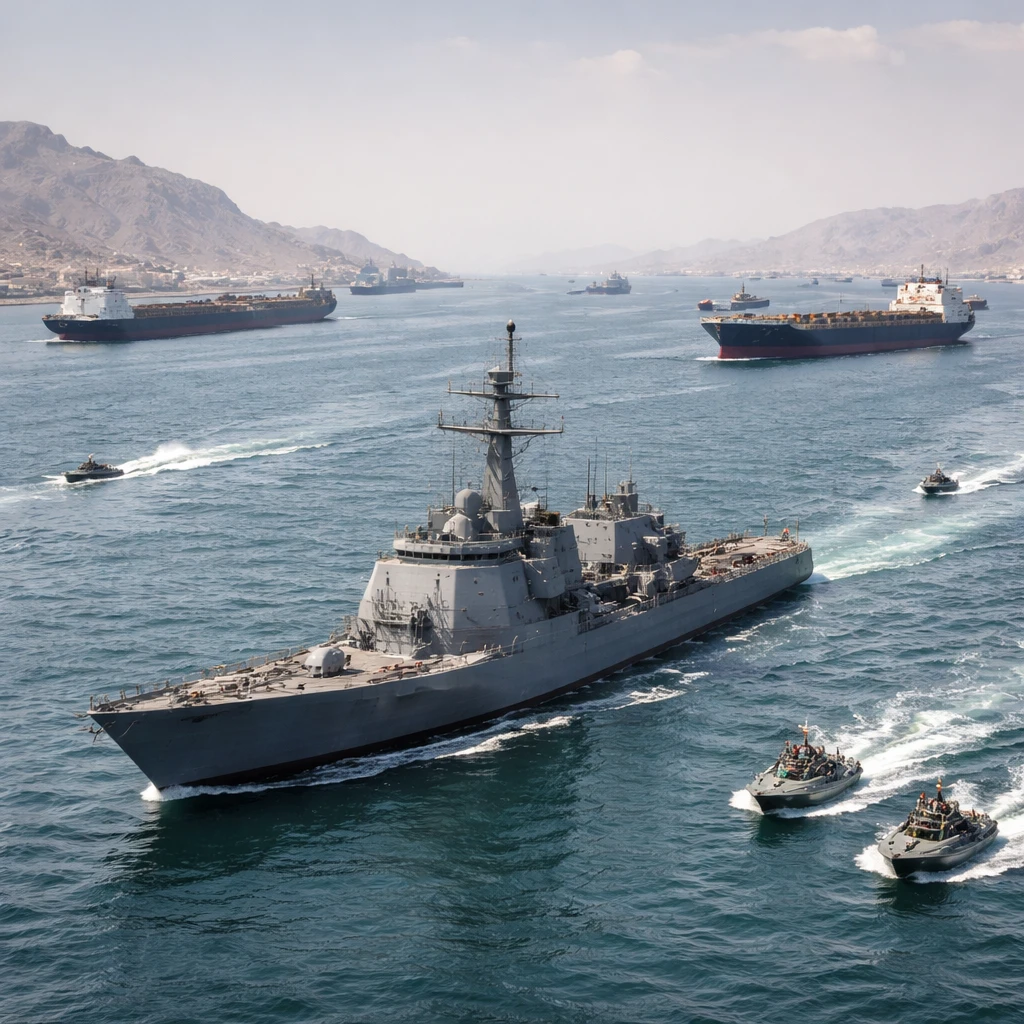
President Donald Trump on Monday appealed to other countries for help to restore shipping through the Strait of Hormuz, saying some nations have pledged assistance while others have been less willing to join the effort.
Speaking before a luncheon at the Kennedy Center, the president said the U.S. has destroyed 30 mine-laying ships operating in the strategic waterway. He added that it is not yet clear whether any mines have actually been dropped into the strait.
Trump urged additional countries to participate in reopening the channel, noting that numerous governments have told him they are on the way to provide support. He differentiated the responses by saying that some countries are enthusiastic about assisting while others are not as engaged.
Addressing expectations for the operation's conduct, the president said he anticipated that very few shots would be fired, and he stated that Iran has very few shots left. He stressed that nations should be willingly assisting the U.S. in the effort.
When pressed on which countries had offered help, Trump said he was uncertain whether those nations wanted their involvement disclosed publicly.
The Strait of Hormuz serves as a crucial maritime corridor through which a significant portion of global oil supplies transit, underscoring the strategic importance of reopening the route to commercial traffic.
Context and implications
This appeal frames the reopening of the strait as a multinational task in which the U.S. has taken direct action against vessels identified as mine-layers. The president's remarks highlight both confirmed U.S. strikes on 30 mine-laying ships and ongoing uncertainty regarding the presence of mines in the waterway. His comments also reflect differing levels of international willingness to be publicly associated with the effort.
What remains uncertain
- Whether mines have been deployed in the Strait of Hormuz remains unclear, according to the president's statement.
- Which nations are providing assistance has not been publicly disclosed, in part because of uncertainty over whether partners want their involvement revealed.
- The ultimate level of international participation and the operation's conduct beyond the president's expectation of limited gunfire are unresolved.