
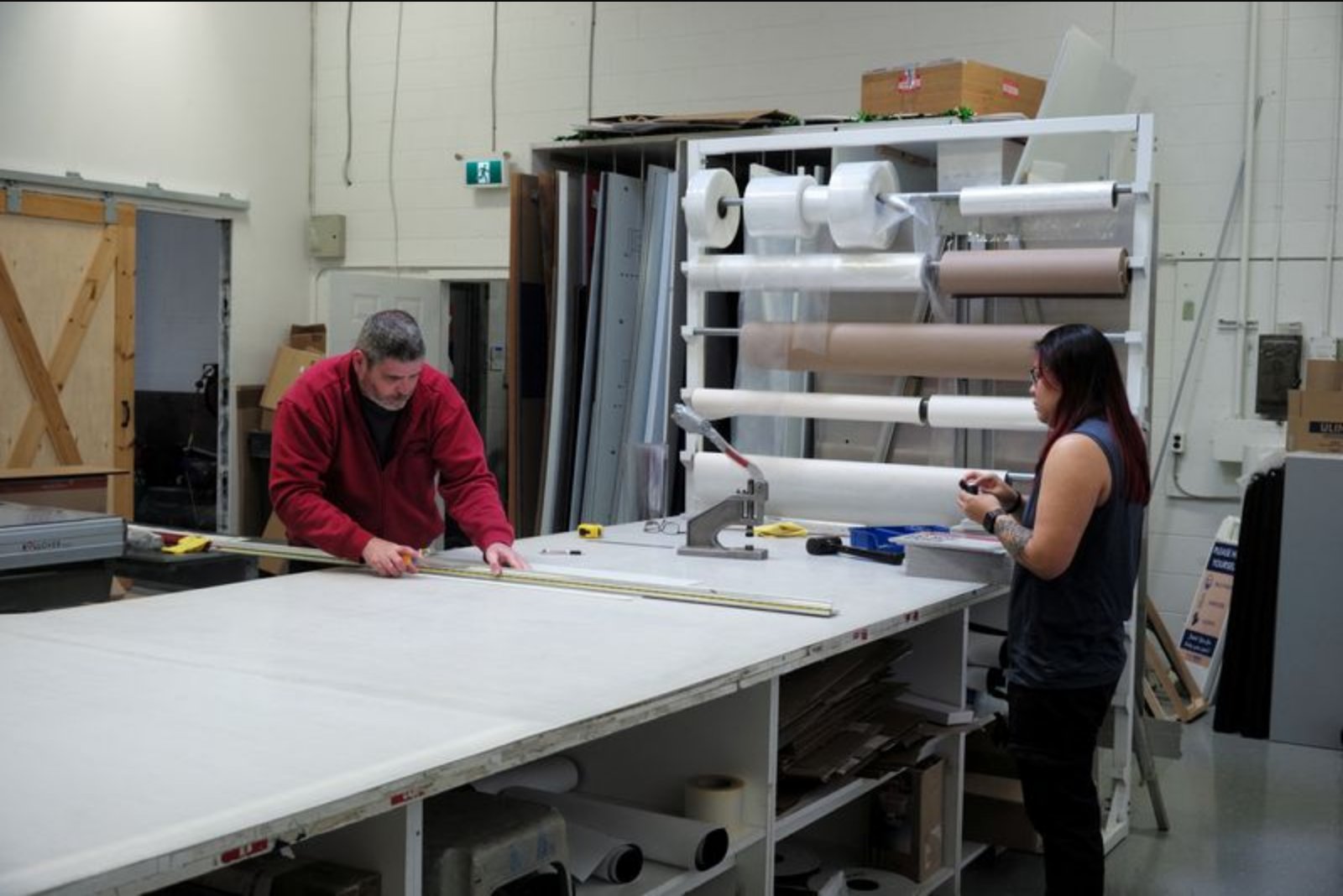
Windsor-area firms that rely on integrated supply chains with the United States report persistent caution among customers and partners as the future of the United States-Mexico-Canada Agreement (USMCA) remains unresolved. One local company, which designs and installs custom signs and graphics for businesses, including auto suppliers, described last year as its toughest since the pandemic as core automotive orders disappeared from its pipeline.
The company regained some momentum with a new project this year, but management said demand patterns have shifted. Customers are requesting extended payment schedules, placing smaller orders and negotiating more aggressively on price, actions the company links directly to trade uncertainty tied to the USMCA review scheduled for this year.
Public comments from U.S. political and trade officials have amplified the concerns. The U.S. President has repeatedly said he could eliminate the trilateral trade deal negotiated during his first term, calling it no longer relevant to the United States. Separately, the U.S. Trade Representative has described talks with Canada over the agreement - which exempts most Canadian goods from U.S. tariffs - as challenging. Those signals are translating into caution among buyers and suppliers in border communities dependent on cross-border commerce.
How Windsor feels the impact
Windsor's economy is particularly sensitive to shifts in U.S. trade policy. The city is a manufacturing hub with thousands of small and specialized parts makers that supply car companies and equipment manufacturers in the region and across the Detroit border. Manufacturing represents nearly a quarter of employment in the Windsor-Essex area, and roughly 90% of the city's exports traverse the border, often multiple times during production. At the national level, about 68% of Canada's exports go to the United States.
Those deep cross-border links help explain why local leaders say Windsor tends to register the effects of U.S. trade threats earlier and more sharply than other Canadian communities. When tariff uncertainty peaked last year, businesses paused investments, postponed production runs and cut jobs. At the height of that disruption, the region's unemployment rate rose above 11% in June, the highest among major Canadian cities at the time.
Some stabilization followed when USMCA-compliant Canadian exports were exempted from tariffs in March last year, allowing parts of the local economy to regain footing. Early this year, certain large employers in the region expanded operations - a carmaker added a third shift at its local plant and a battery manufacturer announced plans for a facility - bringing renewed hiring and improved prospects in some pockets of the labour market.
Confidence remains fragile
Despite those positive developments, local business leaders say uncertainty over the trade pact continues to restrain confidence. The Windsor-Essex Chamber of Commerce, which represents hundreds of firms in the area, said companies remain hesitant to commit to investment and hiring decisions while the trade relationship is in flux.
"When [the U.S. President] does make a threat, we feel it first, and we feel it hardest," said the chamber's CEO, describing how public statements and negotiations reverberate through a community so closely tied to the U.S. market. He added that as long as the CUSMA relationship exists, Windsor's economy is likely to hold, but any erosion of the agreement would create significant challenges.
Unemployment has moderated from its mid-year peak but remains among the highest for major Canadian urban centres at 8.6%. Local retailers and restaurants report softer foot traffic, and builders say housing activity has nearly stalled as potential buyers wait for greater clarity about employment stability and economic direction. Housing data for the region show a relatively steep decline in residential sales and average prices that outpaced national averages in February.
A local real estate developer described how the previous wave of tariff-related uncertainty led him to lay off a majority of his crew last year when sales and prices weakened. He has since rehired a portion of the workforce but said prospective buyers remain cautious, leaving the recovery in housing demand tentative.
Labour, training and education strain
The trade-related slowdown has also affected workforce development. Local institutions that train and certify skilled tradesworkers have seen reduced enrolment and demand. One college program focused on manufacturing, due to start in the coming academic year, was suspended because anticipated student interest did not materialize amid the uncertainty.
Leaders of training programs say prospective students are factoring in the uncertain trade environment when deciding whether to pursue manufacturing apprenticeships or post-secondary credentials tied to the auto sector and related industries.
Negotiation status and deadlines
Mexico has initiated formal negotiations with the United States on renewing the trilateral deal, with a completion target of July 1. Canada, by contrast, has engaged in informal talks so far. The legal framework for the agreement does not automatically collapse if negotiations extend beyond the target date, but the absence of conclusive outcomes has contributed to the prevailing business caution in Windsor and similar border communities.
Outlook
For Windsor, the trajectory of business activity appears tied closely to the stability of the Canada-U.S. trade relationship. Local leaders say the preservation of CUSMA protections offers a path to sustained recovery, while erosion of those arrangements could rekindle the near-term challenges many firms faced during the prior period of tariff uncertainty.
In the meantime, companies exposed to cross-border supply chains are continuing to adapt to weaker order books and tighter customer payment terms, while employment, housing demand and skills development remain sensitive to swings in confidence driven by trade negotiations.