
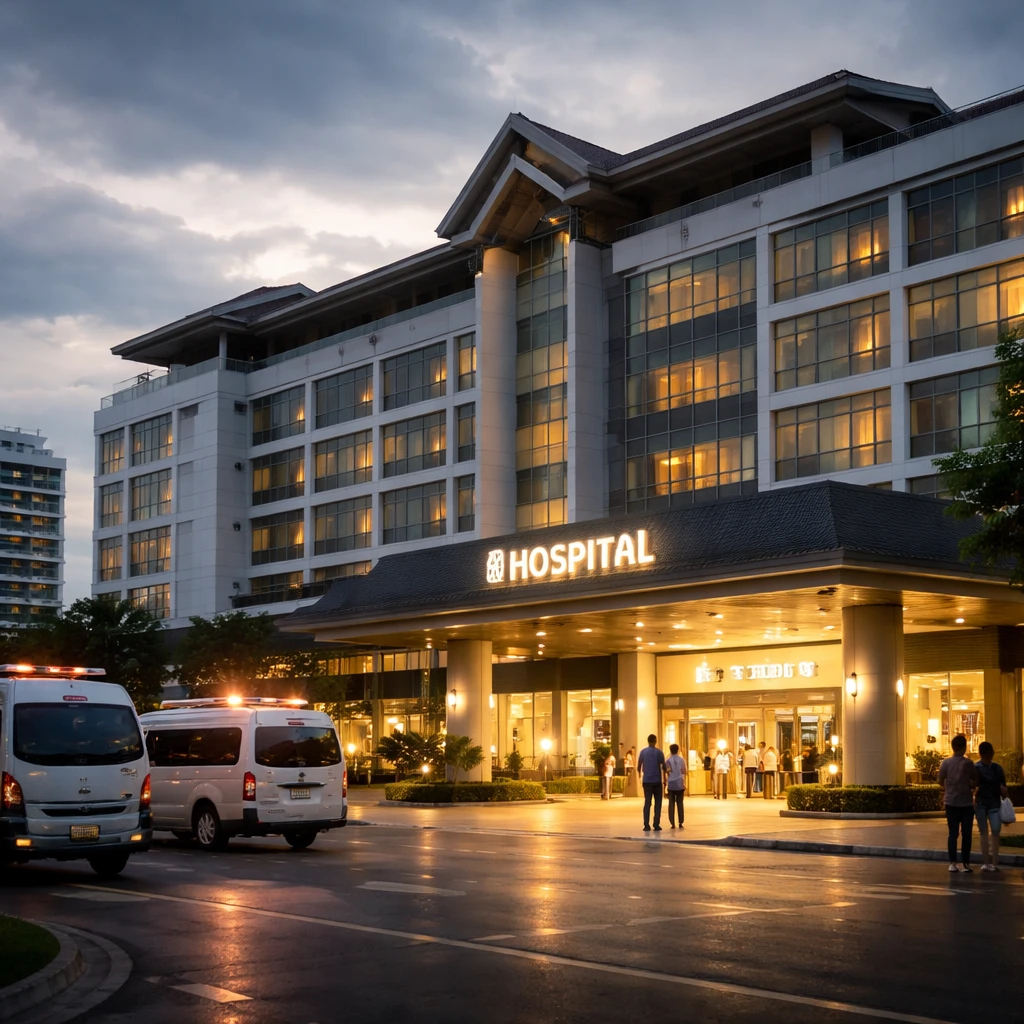
Tisco, speaking at a corporate day event, warned that Thailand's hospital operators are under short-term strain from the ongoing war, particularly institutions with significant exposure to patients from outside Thailand. The broker said first-quarter 2026 results should receive some offset from the Ramadan season, which historically represents a low period for Middle Eastern patient flows, but broader pressures remain.
According to Tisco, most hospitals have protected their medicine costs through fixed-price supply contracts, a factor that keeps procurement-related risks manageable for now. Domestic Thai patient volumes are forecast to show flat growth because there is no seasonal uplift and the broader economy is not providing a noticeable tailwind.
Company-level disclosures presented at the event highlight how individual operators are responding:
- Bangkok Dusit Medical Services - The group noted that disruptions tied to the war began to affect operations in March. Management described softness in demand among international and Thai mid-tier patient segments, while expatriate patient flows have remained steady. The company said it expects first-quarter 2026 earnings to be slightly down year-over-year. To limit supply-chain exposure, Bangkok Dusit has increased medicine inventories to two to three months and has reduced the number of stock keeping units.
- Praram 9 Hospital - Middle Eastern outpatient volumes softened during Ramadan, but inpatient occupancy remained full across the period. The hospital reported that bookings rebounded after Ramadan despite the US-Iran conflict. Qatar remains the primary source of international revenue for Praram 9, and the company identified Bangladesh and Indonesia as markets with new growth potential. On the domestic side, patient volumes have declined in non-essential and elective surgery categories.
- Bangkok Chain Hospital - Management said outpatient activity tied to the Kuwait government is currently minimal. Border disruptions temporarily diverted Cambodian patient traffic away from its Aranyaprathet facility. Overall domestic patient momentum is flat; however, the Social Security Office segment is showing improvement, and the Saraburi hospital has reportedly bottomed out after pressure from a recently opened competitor. Medicine pricing has been locked in for one year.
- Ramkhamhaeng Hospital - Management guided to mid-single-digit comparable revenue growth for 2026, but cautioned that first-quarter 2026 revenue is likely to be slightly softer year-over-year due to the impact of co-payments. Revenues from the United Arab Emirates declined amid war-related disruptions, while patient flows from the European Union have remained unaffected.
Overall, Tisco's corporate-day commentary depicts a sector managing near-term external shocks with a combination of contract protections, inventory adjustments and selective demand resilience. Still, the brokerage indicated that the mix of international exposure and subdued domestic demand implies limited growth in the near term.