
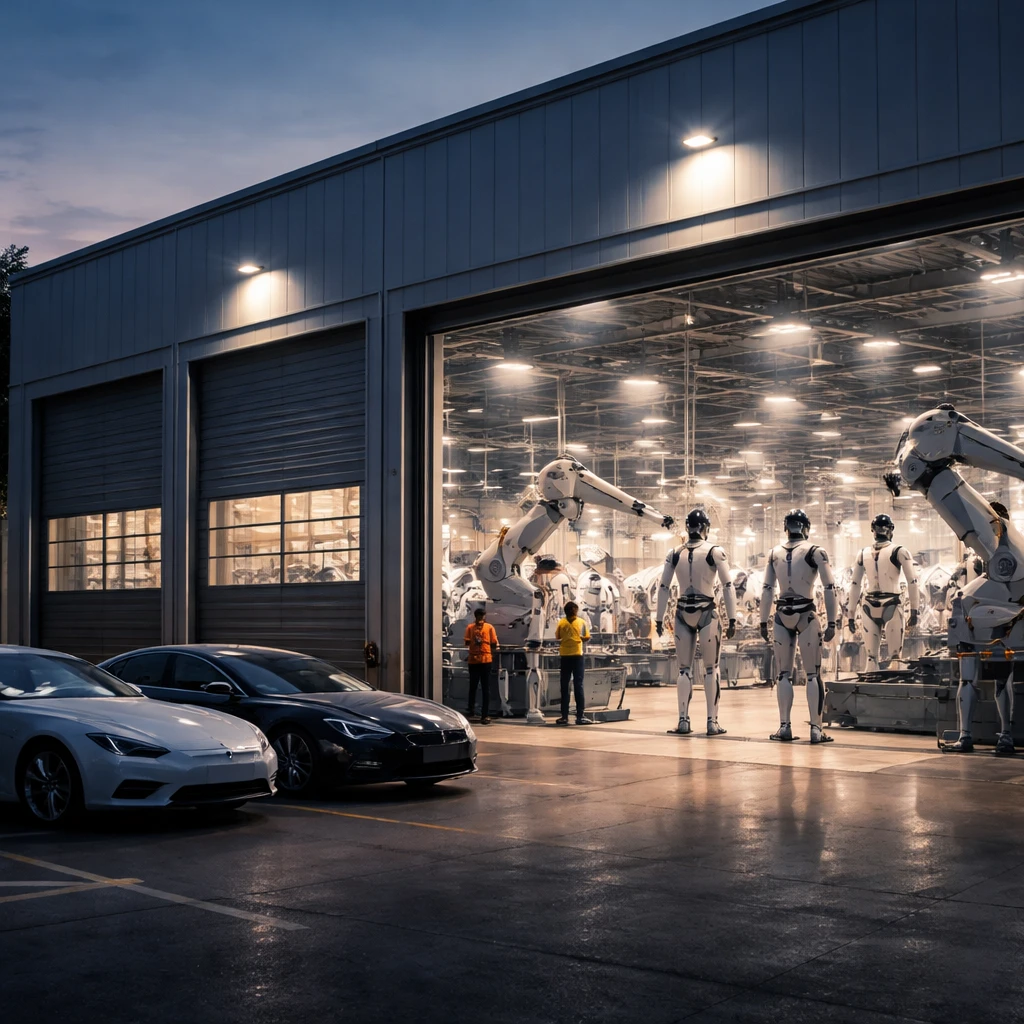
Elon Musk told analysts on Tesla's earnings call that the company will stop selling its Model S sedans and Model X SUVs, models that were central to Tesla's early growth but now represent a relatively small portion of revenue. The decision forms part of a broader strategic reallocation toward artificial intelligence and robotics, including a disclosed $2 billion investment in Musk's AI startup xAI.
William Blair analyst Jed Dorsheimer described the shift as increasingly tangible, saying Tesla is effectively "trading S and X for Optimus." According to Dorsheimer, factory space in Fremont currently used for the S and X will be repurposed to produce Optimus humanoid robots, aligning manufacturing footprint with Tesla's stated AI ambitions.
William Blair's estimates indicate Tesla sold roughly 30,000 Model S and Model X vehicles in 2025, generating about $3 billion in revenue. By contrast, William Blair noted that even achieving half of Musk's stated goal of producing 1 million Optimus units annually - at an assumed $50,000 average selling price - would imply approximately $25 billion in revenue. That calculation underscores the potential scale of revenue Tesla could pursue if robot production ramps as envisioned.
Optimus version 3 is expected to debut this year, with production slated to begin in 2027. William Blair also reported that Tesla's fourth-quarter margins surprised to the upside, supported by stronger-than-expected purchases of full self-driving software and resilient regulatory credit revenue. However, the firm warned that rising capital expenditures tied to these initiatives are expected to weigh on free cash flow.
The $2 billion investment in xAI was disclosed during Tesla's earnings presentation. Dorsheimer said the deal should be shareholder-friendly because of overlaps between Tesla and xAI; William Blair highlighted that xAI's Grok model is already integrated into Tesla vehicles, suggesting operational synergies between the two companies.
Despite these developments, William Blair maintained a Market Perform rating on Tesla, arguing that the stock already reflects expectations for robotics, autonomy, energy and chip design. The firm cautioned that execution risk and higher capital intensity remain meaningful concerns. In premarket trading on Thursday, Tesla shares were reported up 1.8%.
Summary
Tesla will cease selling the Model S and Model X, repurpose Fremont production capacity toward Optimus humanoid robots, and has announced a $2 billion investment in xAI. Analysts view the moves as a clear reallocation of capital and manufacturing toward AI-driven projects while noting margin strength in the most recent quarter and mounting capital expenditures that could pressure free cash flow.
Key points
- Tesla is ending sales of the Model S and Model X and converting related Fremont factory space for Optimus robot production, signaling a strategic pivot from specific premium EV lines to robotics and AI.
- William Blair estimates about 30,000 S and X sales in 2025 generated roughly $3 billion; the analyst firm illustrated potential upside if Optimus production scales, noting half of a 1 million-unit target at a $50,000 average selling price could equate to about $25 billion in revenue.
- Tesla disclosed a $2 billion investment in xAI; William Blair cites integration of xAI's Grok model into Tesla vehicles and expects the arrangement to provide benefits, while also flagging increased capital intensity and execution risk.
Risks and uncertainties
- Execution risk around transitioning production from established EV models to a new robotics product line could affect automotive and robotics supply chains.
- Rising capital expenditures tied to AI and robotics initiatives are expected to weigh on free cash flow, presenting financial risk that impacts Tesla's ability to fund growth across autonomy, energy and chip design efforts.
- Market expectations for robotics, autonomy, energy and chip design are already reflected in the stock, leaving limited room for upside absent successful execution; underperformance could negatively affect investor sentiment.
Note: All figures, projections and timeline references are drawn from the disclosures and analyst commentary provided during the earnings presentation and subsequent reports.