
Stock Markets March 19, 2026

Tesla Lines Up $2.9 Billion Purchase of Solar Production Equipment from Chinese Suppliers

Planned orders target machinery to underpin a U.S. solar manufacturing build-out of 100 GW by 2028, with deliveries expected before autumn and possible shipments to Texas

By Sofia Navarro TSLA
Tesla Lines Up $2.9 Billion Purchase of Solar Production Equipment from Chinese Suppliers
TSLA

Tesla is preparing to acquire roughly $2.9 billion in solar manufacturing equipment from Chinese firms including Suzhou Maxwell Technologies, Shenzhen SC New Energy Technology, and Laplace Renewable Energy to support a stated objective of establishing 100 gigawatts of U.S. solar manufacturing capacity by 2028. Some machinery will need export clearance from Chinese authorities, deliveries are expected before autumn and may be routed to Texas, and Tesla intends to deploy most of the capacity internally while allocating a portion of power for SpaceX.

Key Points

  • Tesla intends to buy about $2.9 billion in solar manufacturing equipment from Chinese suppliers to help build 100 GW of U.S. solar manufacturing capacity by 2028 - impacts the solar manufacturing and renewables sectors.
  • Some equipment, including screen-printing lines for solar cells, requires export approval from Chinese regulators; deliveries are expected before autumn and may be shipped to Texas - affects trade and regulatory oversight.
  • Tesla will use most of the new capacity internally, with a portion of power earmarked for SpaceX, while the sizable potential order could provide relief to Chinese equipment makers facing weak domestic demand - links energy infrastructure and aerospace power needs.

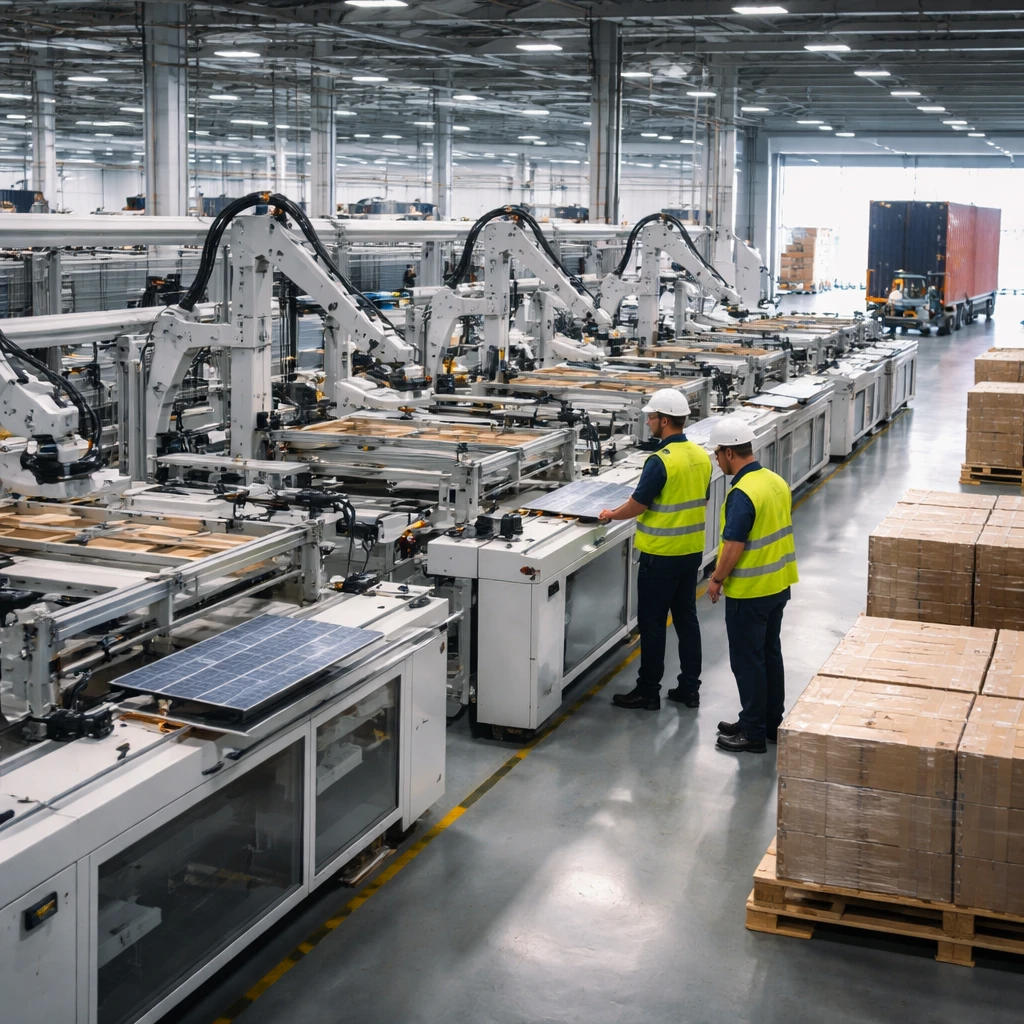
Tesla is pursuing purchases of approximately $2.9 billion in solar production equipment from Chinese manufacturers as part of an effort to expand domestic solar output. The suppliers named in the planned procurement include Suzhou Maxwell Technologies, Shenzhen SC New Energy Technology, and Laplace Renewable Energy. The equipment is intended to support Tesla's stated target of building 100 gigawatts of solar manufacturing capacity in the United States by 2028.

Among the items covered by the potential orders are screen-printing production lines used in the manufacture of solar cells. Because of export rules, some of this machinery will require approval from Chinese regulators before it can leave the country. Sources familiar with the plans indicate deliveries are expected to arrive before autumn, and that some shipments could be sent to facilities in Texas.

Tesla plans to absorb the majority of the new manufacturing capacity for its own operations. The company also expects that a portion of the generated power will be dedicated to supporting SpaceX activities. The report describing the procurement notes that, beyond the direct impact on Tesla and its operations, the potential order would offer relief to Chinese solar-equipment makers that have been contending with weak demand in their domestic market.

The transaction, if completed, links several operational and regulatory threads: a large-scale equipment transfer from Chinese manufacturers, export approval from Chinese authorities for certain types of production lines, and logistical movement of that equipment to U.S. sites, possibly in Texas. The stated end-use is primarily internal to Tesla's manufacturing and energy deployment plans, with an explicit secondary use for SpaceX.

The suppliers identified in the planned purchases serve as manufacturers of specialized solar production equipment. The potential inflow of orders to these Chinese firms would be notable against a backdrop of soft domestic demand for such machinery, and could influence their near-term order books if the contracts are finalized and the necessary export permissions are granted.

Key operational milestones for the plan include obtaining export approvals where required and completing deliveries before autumn. Those steps will determine how quickly Tesla can integrate the new machinery into its U.S. manufacturing rollout aimed at reaching the 100 GW capacity goal by 2028.

Risks

  • Export approvals from Chinese regulators are required for some equipment, introducing regulatory and timing uncertainty - impacts cross-border trade and supply chains.
  • Deliveries must arrive before autumn to meet the current schedule; any delays could slow integration into U.S. manufacturing facilities - affects project timelines and deployment plans.
  • Chinese suppliers face weak domestic demand, so cancellations or changes to the potential order could leave those manufacturers exposed to continued softness in orders - impacts the equipment manufacturing sector.

More from Stock Markets

Taiwan Says First Delayed F-16V Fighters to Begin Arriving This Year as Production Runs at Full Capacity Mar 21, 2026 Moscow session ends flat as headline index posts no change; top names show no movement Mar 21, 2026 Musk Offers to Pay TSA Salaries as Funding Deadlock Worsens Airport Delays Mar 21, 2026 Market Movers: Geopolitical Volatility and Chip-Related Shifts Drive This Week's Stock Stories Mar 21, 2026 Macy's Confronts Murky 2026 Outlook as Jefferies Flags Cautious Guidance Ahead of Q4 Results Mar 21, 2026