
TeraWulf Inc. (NASDAQ:WULF) saw its stock rise 8% in after-hours trading on Monday after unveiling two strategic infrastructure purchases that enlarge its portfolio of power-ready sites by roughly 1.5 gigawatts (GW).
The digital infrastructure company said the additions more than double its platform capacity to 2.8 GW across five sites. Management framed the moves as aligned with a strategy to secure energy-advantaged locations that have near-term power availability.
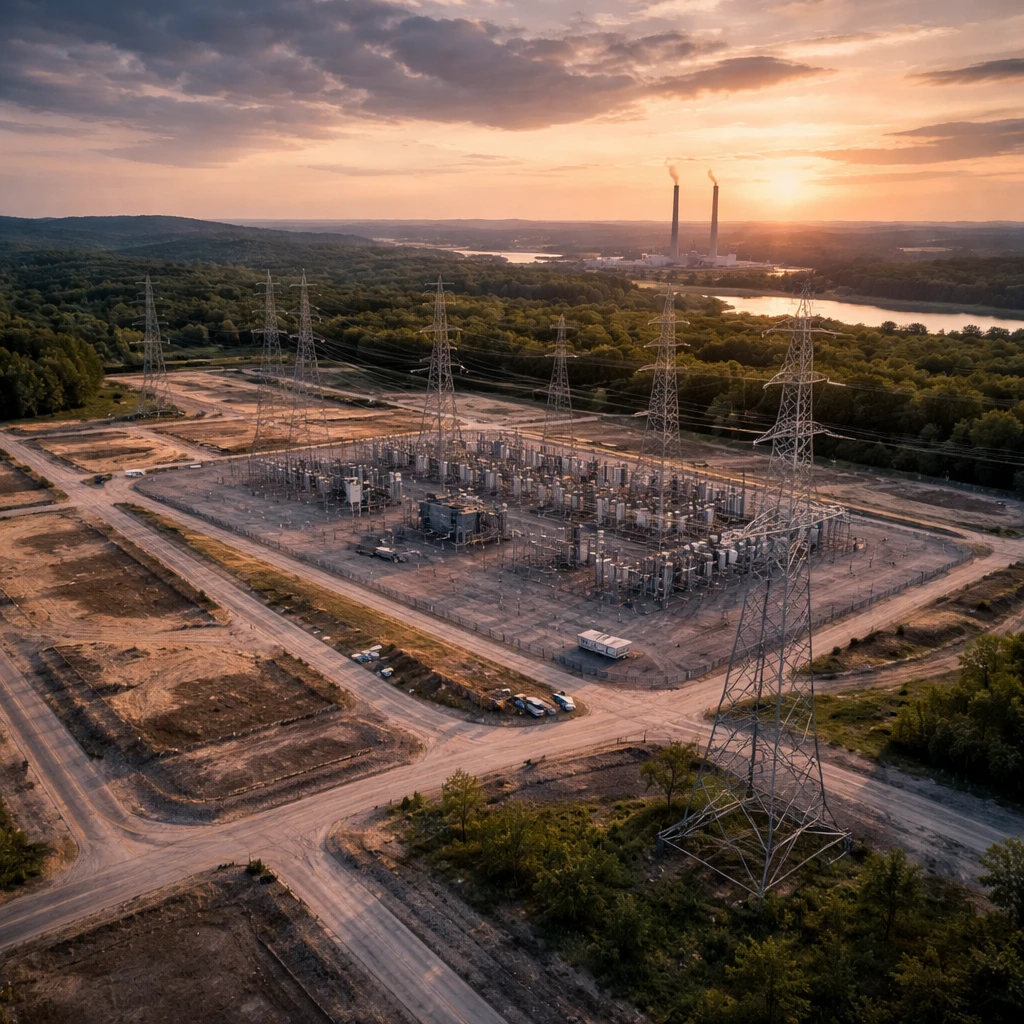
In Kentucky, TeraWulf acquired a former industrial property in Hawesville that includes more than 250 buildable acres and roughly 480 megawatts (MW) of existing power availability. The company noted the site is served by multiple high-voltage transmission lines, contains an on-site energized substation, and has a direct connection to the regional transmission network.
The Maryland purchase is the Morgantown Generating Station. That asset currently has 210 MW of operational generation capacity and, according to TeraWulf, the potential to be expanded to 1 GW. The acquisition establishes the company in the PJM market and reflects an approach of reinvesting in existing energy assets.
Commenting on the transactions, Paul Prager, Chairman and Chief Executive Officer of TeraWulf, said, "These acquisitions reflect our strategy of reinvesting in existing energy infrastructure to support grid reliability, long-term economic activity, and responsible growth. Hawesville provides immediate access to scalable power, while Morgantown allows us to expand existing generation to meet growing load demand in a way that is net-positive for the grid."
TeraWulf said the enlarged development pipeline supports its growth objective of contracting 250 to 500 MW of new capacity each year. However, the company cautioned that the closing of the Morgantown acquisition is contingent on certain third-party consents and regulatory approvals, including from the Federal Energy Regulatory Commission.
The company did not provide additional timing or financing details in the announcement. The disclosed facts show a plan to leverage existing generation and transmission infrastructure to accelerate capacity availability across multiple regional markets.