
Taiwan's electricity tariffs will remain unchanged until the next scheduled review in September, the government confirmed at its semi-annual assessment - a decision reported by Bank of America. The Ministry of Economic Affairs said it will continue to weigh geopolitical risks and keep a close watch on volatile global energy prices while seeking to stabilise inflation and preserve industrial competitiveness.
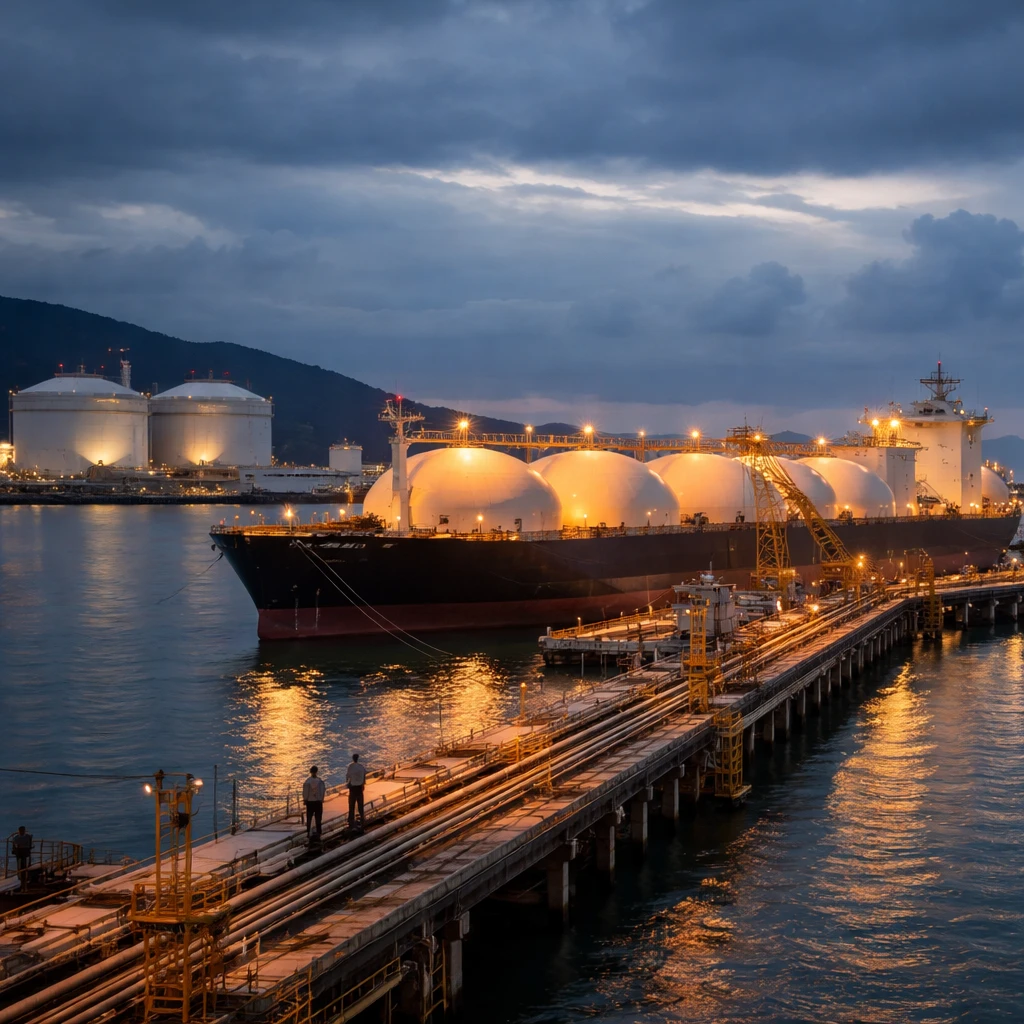
Officials indicated that immediate fears of an outright shortage of liquefied natural gas (LNG) have eased. Supplies required through mid-June have been secured, and Taiwan plans to raise its intake of US-sourced LNG from June under newly signed contracts. The ministry noted that aggressive spot-market buying by Asian purchasers, including Taiwan, changed shipping patterns earlier in the year - several LNG carriers that were initially destined for Europe were redirected to Asia in March - and this dynamic, combined with recent procurement, has reduced the likelihood of rationing or industrial curtailment in the near term.
Even as shortfall risks recede, the cost environment has tightened markedly. LNG fuels about half of Taiwan's power generation, and Qatar had previously supplied roughly 34% of the island's LNG before complications following the effective closure of the Strait of Hormuz. Taiwan is reportedly sourcing spot LNG at roughly twice the price of Qatari contract volumes, a gap that translates into an additional NT$1 billion to NT$1.1 billion in cost per cargo.
Market tightness may persist. The article's source notes that approximately 17% of Qatar's export capacity could be effectively sidelined for three to five years following Iranian attacks. To shield consumers and industry from imported energy-price shocks, policy measures continue to route support through state-owned entities - chiefly CPC and Taipower - with fiscal backstopping to follow where necessary.
Under the existing fuel price-smoothing mechanism, CPC is absorbing at least 60% of increased fuel costs and has proposed a capital injection to manage elevated expenses. Taipower has a record of receiving budget support and equity injections after it built up losses during the Russia-Ukraine conflict.
With power tariffs kept frozen and the smoothing mechanism in place, near-term pass-through of energy price increases into consumer inflation should be limited. Bank of America estimates that a 10% rise in oil prices contributes roughly 0.1 percentage point to headline CPI inflation in the near term.
The Central Bank of China (CBC) adjusted its annual CPI forecast only modestly in March - lifting it to 1.80% from 1.66% - even after raising its oil price assumption to $85 per barrel from $58 per barrel. The CBC's core inflation projection remains at 1.75%.
The combination of held tariffs, secured short-term LNG supply, and state-led cost smoothing provides a buffer for both consumers and industry. Nevertheless, the situation retains material uncertainties linked to global energy price volatility and regional geopolitical developments.