
Overview
Sysco Corp is reportedly nearing an agreement to acquire Restaurant Depot for roughly $29 billion including debt, a move that investors reacted to by driving the food distributor's shares down over 2% in premarket trading. Under the reported terms, Restaurant Depot shareholders would receive $21.6 billion in cash and 91.5 million Sysco shares, which would equate to approximately 16% of Sysco's outstanding common stock once the transaction closes.
Deal economics
The total reported transaction value stands at $29.1 billion including debt, representing a multiple of more than 14 times Restaurant Depot's operating income. Sysco plans to fund the cash component principally through about $21 billion of new and hybrid debt, supplemented by $1 billion in cash and equity on hand.
Capital allocation and shareholder programs
As part of the financing plan, Sysco intends to pause its share buyback program after the deal closes to focus on deleveraging. The pause in buybacks reflects a shift in near-term capital allocation priorities driven by the additional leverage the acquisition would introduce to Sysco's balance sheet.
Strategic rationale and operating models
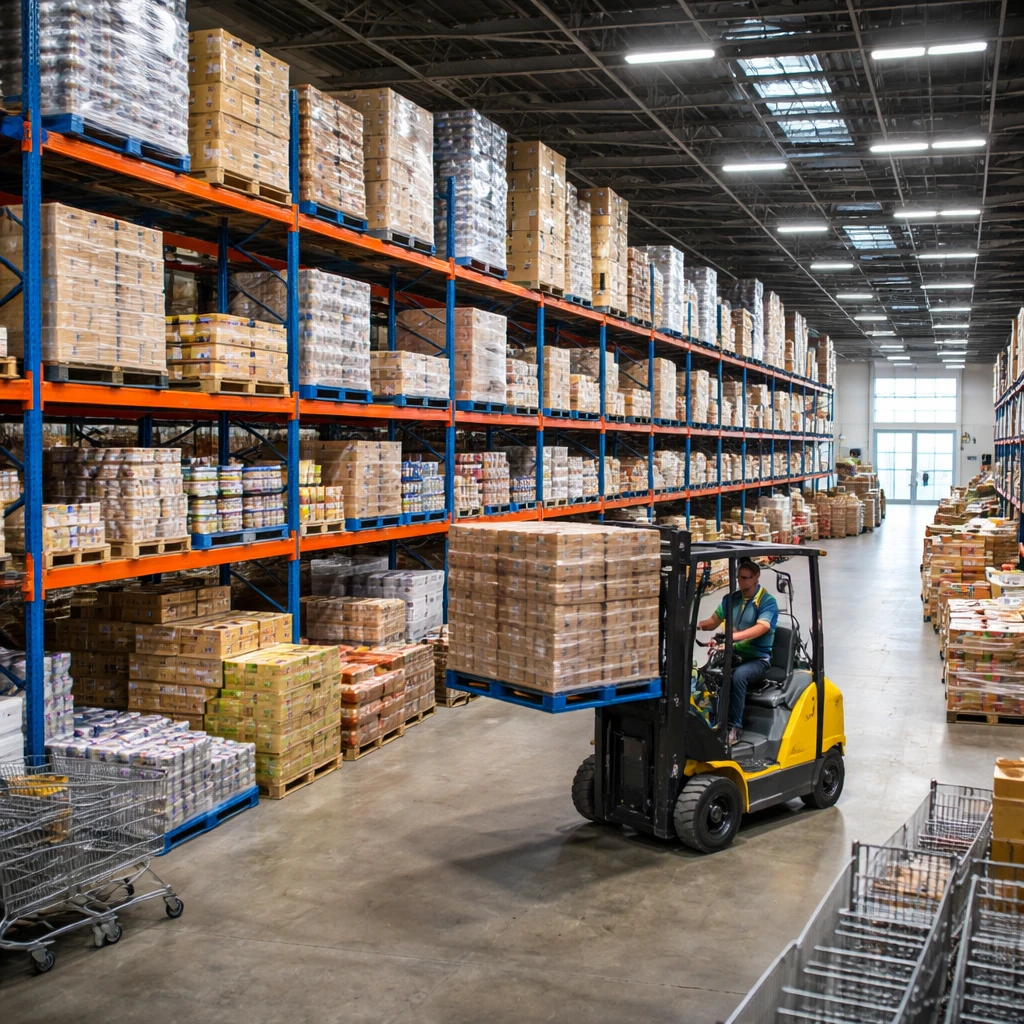
The acquisition would extend Houston-based Sysco's footprint into the cash-and-carry distribution channel. That model permits small restaurant operators and independent businesses to shop in person at warehouses and purchase supplies without placing advance orders or requiring delivery. Restaurant Depot operates 166 large-format warehouse stores across 35 states and reported about $16 billion in revenue in 2025.
Sysco's existing business is structured around customers that typically order in larger volumes and require delivery services. The two models - Sysco's delivery-focused distribution and Restaurant Depot's walk-in membership format - are distinct in how customers access inventory and fulfil orders.
Operations, leadership and workforce
Following close, Restaurant Depot is expected to function as a standalone business unit within Sysco, with its current leadership remaining in place and reporting to Sysco Chief Executive Kevin Hourican. The report indicates there are no planned layoffs at either company tied to the transaction.
Company scale and recent context
Sysco, with a market capitalization near $40 billion, serves restaurants, healthcare facilities, hotels and entertainment venues through more than 330 distribution centres spanning 10 countries, and reported more than $81 billion in sales last year. The company has rebuilt significant parts of its business since the disruptions to food-service supply chains during the COVID-19 pandemic, positioning it to attempt a large-scale acquisition.
Restaurant Depot began as a Brooklyn warehouse in 1976 operating under the name Jetro Cash & Carry and later rebranded in the 1990s, becoming the family-owned chain that operates today.
Market reaction
News of the reported transaction and its financing plan weighed on Sysco's shares in premarket trading, with a decline of more than 2% noted after the report surfaced.
Implications
If completed as reported, the deal would combine two contrasting distribution approaches under one corporate umbrella: a delivery-centric national distributor and a widespread network of large-format, membership-based warehouses aimed at immediate, in-person purchasing by independent foodservice operators.