
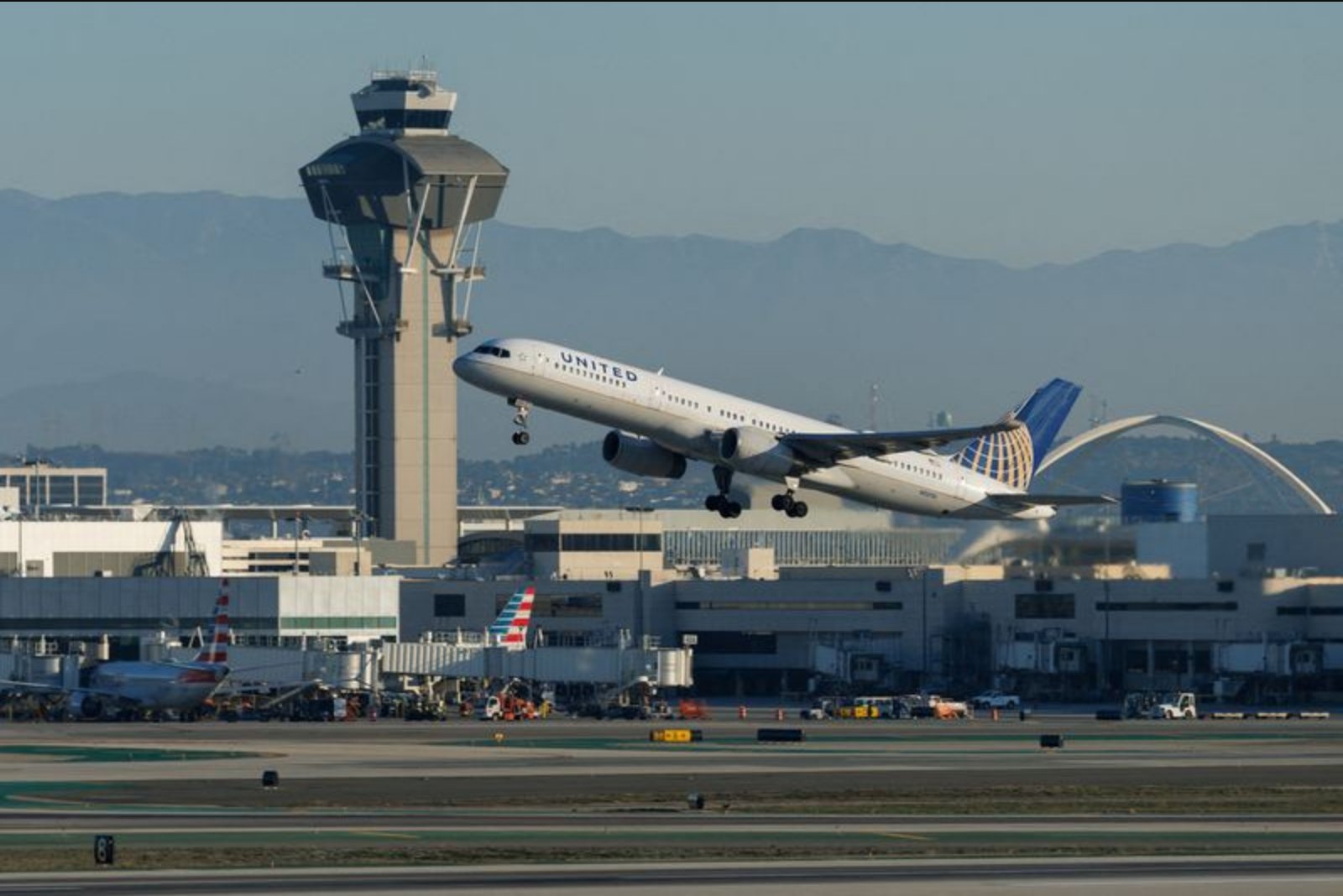
When United Airlines' chief executive signaled to staff earlier this month that higher oil prices could present an opening to "buy assets, absorb network changes, etc.," the choice of words underscored more than short-term operational concern. It reflected a strategic view that sustained fuel inflation could strain some competitors enough to create acquisition or network-expansion opportunities for stronger carriers.
The recent jump in crude and refined fuel costs has moved beyond a transient headwind for the U.S. industry. Executives and credit analysts describe the current spike as a potential proving ground - the first acute financial stress test since the pandemic - in which carriers with limited margins or unfinished turnarounds may be compelled to shrink, tap markets for liquidity, or carry deeper losses while better-capitalized rivals preserve or accelerate investment and market-share gains.
Modeling the downside
United is explicitly planning for severe scenarios. Management is modeling Brent crude at levels as high as $175 a barrel and assuming prices that stay above $100 through 2027. Brent was trading around $112 recently. In that upside case, United estimates an annual fuel bill increase of about $11 billion - a sum more than twice the company’s best-ever annual profit. Trade-group data also highlight the sharp movement in refined product prices: jet fuel was about $4.24 per gallon on the most recent Thursday cited, versus $2.50 a gallon just before the first U.S.-Israeli strikes on Iran.
Fuel represents roughly a quarter of typical airline operating costs. Because carriers price many tickets weeks or months ahead, rapid fuel moves can leave costs outpacing revenue realization.
Which carriers are most exposed
Credit-ratings firms point to low-cost and ultra-low-cost airlines as the most vulnerable if high fuel prices persist. Moody’s noted that JetBlue, Spirit and Frontier were already loss-making last year before the latest spike in oil. Moody’s also calculated that had Brent averaged $80 a barrel last year instead of $69, operating profit across rated U.S. airlines would have been roughly halved to about $6 billion.
Among network carriers, Delta Air Lines and United stand out as having the clearest ability to manage a prolonged shock without changing strategic course. Moody’s said these two produced the highest operating margins among rated U.S. airlines last year. S&P Global Ratings cited low leverage, stronger liquidity positions and a greater share of premium traffic as factors that leave these carriers better placed than peers to weather sustained increases in fuel costs.
Beyond that pair, the picture is more mixed. American Airlines expects to finish the March quarter with more than $10 billion in total available liquidity, but carries about $25 billion of long-term debt. American management has also quantified sensitivity - each 1-cent rise in jet fuel adds about $50 million to annual costs - and said recent fuel pressure added roughly $400 million to first-quarter expenses. The airline intends to pursue higher revenue and remain flexible on capacity to offset the hit.
Southwest, often cited for a comparatively strong balance sheet, could still face pressure to its earnings and liquidity if a fuel shock is prolonged, according to Fitch. That could force tougher decisions about cash allocation. Alaska Air Group reported roughly $3 billion in liquidity and said it had $18 billion in unencumbered assets; the carrier also reported having raised fares to offset higher fuel costs, maintained capacity so far, and was reviewing its cost structure.
Where stress will likely appear first
If the fuel spike continues, stress is most likely to surface first at carriers with thin margins or incomplete turnarounds. JetBlue entered the year with about $2.5 billion in liquidity and no fuel hedges, a mix that S&P said increases near-term vulnerability because the airline is expected to burn cash this year before improving toward breakeven in 2027.
Frontier reported roughly $874 million in liquidity while recording a net loss last year, which leaves the airline with limited cushion to absorb an extended fuel shock in a low-fare business model. Spirit, which is in bankruptcy proceedings, explicitly warned in its latest annual report that the fuel spike posed an "immediate and substantial negative impact" to results and said a sustained increase could imperil creditor talks and even force liquidation.
Potential industry outcomes
Analysts say the current cycle could widen the gap between well-capitalized network carriers and lower-cost rivals before any formal consolidation occurs. J.P. Morgan strategists have argued that a prolonged period of higher fuel costs could hasten a shakeout among weaker low-cost carriers, eventually improving the competitive outlook for larger, brand-loyal airlines after 2027.
Fitch highlighted the operational signs that would likely mark the onset of stress: deeper capacity reductions, aircraft parked on the ground, deferred capital spending, and new borrowing to shore up liquidity. "When you double your number one or number two cost item on your (profit and loss statement) almost overnight, that has a significant impact," Delta's CEO observed. "There are those that don’t have any margin to absorb that."
Implications for markets and operations
For investors and industry operators, the immediate takeaway is that fuel cost volatility can rapidly change both cash-flow dynamics and strategic optionality. Higher fuel bills can force carriers into decisions that alter capacity, pricing and capital deployment - all of which affect competitive positioning. In a capital-intensive sector where working-capital dynamics and liquidity profiles vary widely, those shifts can translate directly into balance-sheet and market-share consequences.
How events unfold will depend on how long prices remain elevated and the degree to which airlines can pass costs through to fares or offset them with other revenue and cost actions. Executives and credit agencies are already modeling severe scenarios; the gulf between carriers with ample margins, liquidity and premium demand and those without could widen materially if the current fuel environment persists.
Bottom line
Elevated oil and jet-fuel prices pose a credible, industry-wide challenge that is testing balance sheets, strategic flexibility and the resilience of airlines operating on thin margins. The stress is likely to be asymmetric - doing more damage to lower-cost carriers operating with limited liquidity while offering established network operators with stronger financial profiles the chance to protect or expand market position.