
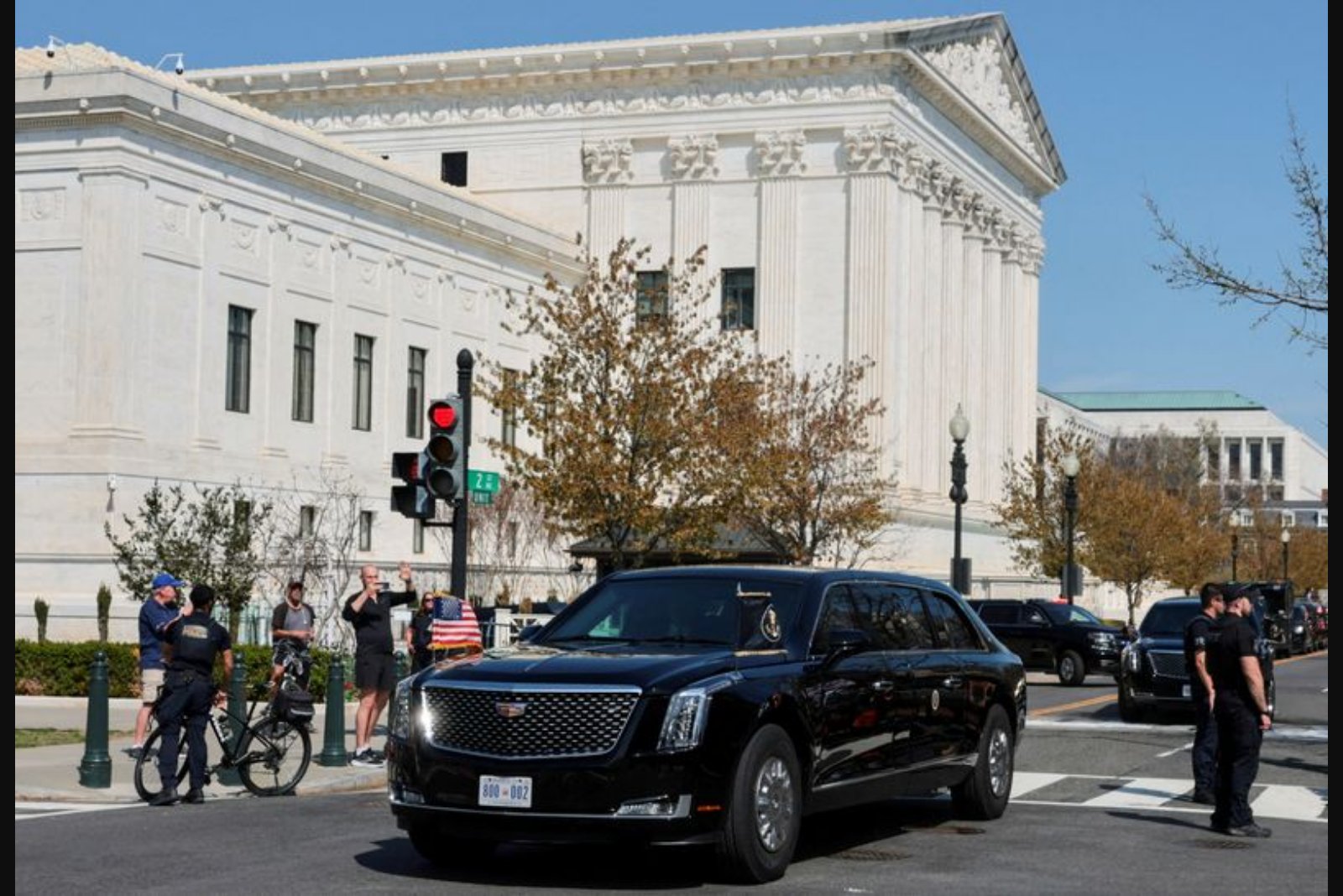
Since the president's return to office in January 2025, the U.S. Supreme Court has become a central arena for legal battles over a broad swath of his administration's policies. The high court has taken up disputes that reach into trade, immigration, the independence of federal agencies, domestic troop deployments, protections for transgender people, mass federal layoffs, and more. Below is a detailed review of the principal cases tied to President Trump's actions that have reached the nation's highest court, together with the rulings, procedural moves and the specific legal holdings or questions the justices have addressed.
Tariffs imposed under an emergency law
On February 20, the justices struck down the administration's expansive tariff program that relied on a law designed for national emergencies. In a 6-3 decision, the Court affirmed a lower court's finding that the president had exceeded his statutory authority by invoking the International Emergency Economic Powers Act, known as IEEPA, to impose broad tariff measures. The ruling emphasized that the statute at issue did not vest the president with the power claimed to implement tariffs, and underscored the Constitution's allocation of taxing and tariff authority to Congress rather than the executive.
That decision ends, for now, an aggressive tariff campaign that has defined much of the administration's trade posture since the start of the term. The tariffs had been a central feature of a global trade conflict initiated by the president, prompting tensions with trade partners, volatility in financial markets and uncertainty for the world economy.
Birthright citizenship directive under scrutiny
On April 1, the justices signaled serious doubts about the legal basis for the administration's directive intended to narrow birthright citizenship. During arguments, the Court questioned the administration's lawyer on the validity of an executive order instructing federal agencies not to recognize U.S. citizenship for children born in the United States if neither parent is a citizen or a lawful permanent resident, commonly referred to as a green card holder.
A lower court had blocked the order, concluding that it ran afoul of the 14th Amendment of the Constitution and a federal statute that codifies birthright citizenship protections. The Supreme Court's proceedings on April 1 reflected the justices' skepticism about the policy and its practical consequences. The Court is expected to issue a ruling by the end of June.
Earlier in this case, on June 27, 2025, the Supreme Court issued a decision that had been favorable to the president in a related procedural respect by curbing federal judges' authority to impose nationwide injunctions that could block presidential policies across the country.
Attempt to remove a Federal Reserve governor
The justices expressed doubts on January 21 about the administration's effort to fire Federal Reserve Governor Lisa Cook, an unprecedented step with implications for the central bank's independence. During oral argument, several justices suggested they were unlikely to allow the administration to immediately carry out the removal while Cook's legal challenge remains pending.
The dispute centers on statutory protections within the law that created the Federal Reserve, which require that governors can be removed by the president only "for cause." The statute, however, does not define "for cause" nor does it lay out specific removal procedures. The president sought Cook's removal in August on allegations that she committed mortgage fraud prior to taking office, allegations that Cook denies and has characterized as a pretext motivated by differences over monetary policy. Governor Cook was appointed during President Biden's administration. A decision in the case is expected by the end of June.
Federal Trade Commission firing and the future of tenure protections
In arguments heard on December 8, 2025, the Court's conservative justices appeared inclined to uphold the legality of the president's removal of an FTC commissioner, signaling a possible expansion of presidential authority at the expense of long-standing tenure protections for members of independent agencies. The case involves the administration's move in March to remove Rebecca Slaughter, a Democratic member of the Federal Trade Commission, before her term had expired.
A lower court had found that the president exceeded his authority with that dismissal. In his appeal, the Justice Department argued that statutory tenure protections for heads of independent agencies unconstitutionally interfered with executive power. While the case is pending, the Court allowed the president to remove Slaughter. A ruling in the appeal is expected by the end of June.
Copyright Office director's removal held in abeyance
On November 26, 2025, the justices declined to rule immediately on a bid by the Justice Department to allow the president to dismiss the U.S. register of copyrights and director of the U.S. Copyright Office, Shira Perlmutter. The Court left intact a lower court order that had blocked the firing while Perlmutter's legal challenge continues, keeping her in place for the time being.
Restrictions on deploying National Guard troops near Chicago
On December 23, 2025, the Supreme Court refused the administration's request to allow the deployment of hundreds of National Guard troops to the Chicago area. The decision left in place U.S. District Judge April Perry's order that blocked the deployment, an injunction sought by Illinois state officials and local leaders. The Department of Justice had asked the Court to permit the troop movement while litigation proceeded, but the justices declined to do so for the moment.
Immigration raids and the limits of law enforcement discretion
In a September 8, 2025 decision, the Court allowed federal agents to carry out immigration raids in Southern California that prosecutors said targeted people for removal, but that had been temporarily limited by a lower court order. The justices granted the Department of Justice's request to stay a district judge's order that barred agents from stopping or detaining people without "reasonable suspicion" they were in the country illegally, and that prohibited relying on race, ethnicity, or accent as factors in detention. The order by U.S. District Judge Maame Frimpong, issued on July 11, 2025, had found that the administration's conduct likely violated Fourth Amendment protections against unreasonable searches and seizures.
Temporary Protected Status for Haitian and Syrian nationals
The Court is scheduled to hear arguments on April 29 over the administration's effort to end Temporary Protected Status for more than 350,000 Haitian nationals and roughly 6,100 Syrians residing in the United States. The justices have kept in place two judicial orders that temporarily block the administration from terminating TPS for these groups while litigation continues.
Under the administration, the Department of Homeland Security has moved to end TPS for approximately a dozen countries. TPS provides legal protections to people from countries experiencing natural disasters, armed conflict or other extraordinary conditions that prevent safe return.
Temporary Protected Status for Venezuelans placed on hold
On October 3, 2025, the Court allowed the administration to pause a lower court's ruling that had found Homeland Security Secretary Kristi Noem lacked authority to end a Temporary Protected Status designation for hundreds of thousands of Venezuelan migrants. The Supreme Court granted the administration's request to put on hold U.S. District Judge Edward Chen's decision while litigation proceeds. TPS grants recipients protection from deportation and access to work authorization when their home countries are stricken by war, disaster or other humanitarian crises.
Revocation of immigration "parole" protections
On May 30, 2025, the justices permitted the administration to end a form of immigration "parole" for roughly 532,000 migrants — Venezuelan, Cuban, Haitian and Nicaraguan nationals — that had been granted under the previous administration. The Court stayed U.S. District Judge Indira Talwani's order that had halted the revocations, potentially exposing many holders of parole status to removal as the legal challenge continues. Parole is a temporary permission in U.S. immigration law allowing individuals to be present for urgent humanitarian reasons or for significant public benefit, and it can provide the right to live and work in the United States.
Deportations of Venezuelan migrants under the Alien Enemies Act
On May 16, 2025, the Supreme Court maintained a block on the administration's efforts to deport Venezuelan nationals under a 1798 statute historically used in wartime, finding procedural shortcomings in how the government sought to remove them. The Court agreed to maintain a request by the American Civil Liberties Union attorneys representing the migrants to keep the halt on removals in place for the time being.
Earlier, on April 19, 2025, the Court had ordered a temporary pause on deportations of dozens of migrants detained at a Texas facility. On April 7, 2025, the justices also placed limits on how deportations under the Alien Enemies Act may proceed while the use of that law for this purpose remains contested. The administration has accused those Venezuelans of being members of the Tren de Aragua criminal gang, allegations that are part of the government's justification for removal efforts.
Deportations to "third countries" and process protections
On June 23, 2025, the Supreme Court allowed the administration to resume a policy of deporting migrants to countries other than their countries of origin without providing them a specific opportunity to demonstrate the harms they might face in the receiving nation. The Court granted the government's request to lift a judicial order that had required migrants subject to so-called "third country" deportations be given a "meaningful opportunity" to inform U.S. officials that they would face torture at their destination, while litigation proceeds.
The judicial requirement had been imposed by U.S. District Judge Brian Murphy in Boston, who concluded the administration's policy likely violated due process protections. On July 3, 2025, the justices further lifted limits Murphy had put in place to protect eight men the administration sought to return to South Sudan under this policy.
Return of a wrongly deported Salvadoran national
On April 10, 2025, the Supreme Court ordered the administration to facilitate the return of Kilmar Abrego, a Salvadoran man whom the government acknowledged had been deported to El Salvador in error. The Department of Justice had asked the Court to set aside an April 4 order by U.S. District Judge Paula Xinis that required the administration to take steps to "facilitate and effectuate" Abrego's return. Abrego, who had been residing in Maryland and whose wife and young child are U.S. citizens, was flown back to the United States on June 6, 2025, according to an announcement by U.S. Attorney General Pam Bondi. Upon his return, he was slated to face criminal charges for transporting illegal immigrants; he pleaded not guilty.
Transgender military ban permitted
On May 6, 2025, the Court allowed the administration to implement a policy that bars transgender people from serving in the U.S. military. The justices granted the Justice Department's request to lift a nationwide injunction issued by U.S. District Judge Benjamin Settle, which had previously prevented the armed forces from discharging transgender troops and rejecting transgender recruits. Judge Settle had concluded that the president's policy likely violated equal protection guarantees in the Constitution, but the Supreme Court's action enabled the policy to move forward while legal challenges continue.
Passport gender designation restrictions
On November 6, 2025, the Court allowed the administration to enforce a policy barring applicants from listing a sex on U.S. passports that reflects their gender identity rather than the sex assigned at birth. The justices granted the Justice Department's request to lift a district court order that had blocked the policy while a class-action lawsuit proceeds. U.S. District Judge Julia Kobick had concluded the policy likely violated the Constitution's equal protection guarantee.
Large-scale federal layoffs and agency downsizing
In a July 8, 2025 order, the justices permitted the administration to proceed with plans for mass job cuts across the federal government. The Court lifted a May 22, 2025 order by U.S. District Judge Susan Illston that had blocked large-scale "reductions in force" during ongoing litigation. The intended workforce reductions were planned at numerous agencies, including the Departments of Agriculture, Commerce, Health and Human Services, State, Treasury and Veterans Affairs, among more than a dozen others. Judge Illston had held that the president had exceeded his authority in the way the cuts were being implemented; the Supreme Court's action allowed the downsizing plans to move forward while litigation continues.
Removal of Consumer Product Safety Commission members
On July 23, 2025, the Supreme Court allowed the president to remove three Democratic commissioners of the U.S. Consumer Product Safety Commission - Mary Boyle, Alexander Hoehn-Saric and Richard Trumka Jr. - by lifting a lower court order that had prevented their dismissal while their challenge proceeded. The action increased the administration's ability to exercise control over an agency that had been structured by Congress to operate with a degree of independence.
Labor board members kept from their posts
On May 22, 2025, the justices temporarily allowed the administration to prevent two Democratic members of federal labor boards from returning to their positions while legal challenges to their removals proceed. The Supreme Court put on hold separate district court orders that had protected Cathy Harris of the Merit Systems Protection Board and Gwynne Wilcox of the National Labor Relations Board from being dismissed before their terms expired. Both officials had been appointed during the prior administration.
Reinstatement orders for fired federal employees blocked
On April 8, 2025, the Court stayed an injunction that required the administration to rehire thousands of probationary federal employees. The stay paused U.S. District Judge William Alsup's March 13, 2025 order directing six federal agencies to reinstate recently dismissed probationary hires while litigation over the legality of the dismissals continues. The injunction had covered probationary employees at the Departments of Defense, Veterans Affairs, Agriculture, Energy, Interior and Treasury.
Authority to withhold foreign aid
On September 26, 2025, the justices permitted the administration to withhold approximately $4 billion in foreign aid that had been authorized by Congress for the current fiscal year, advancing the president's "America First" policy preferences. The ruling involved the executive branch's authority to restrict payment of funds Congress had appropriated, even though the Constitution vests spending power in the legislative branch.
Payments to foreign aid organizations
Earlier, on March 5, 2025, the Supreme Court declined to allow the administration to withhold payments owed to foreign aid groups for services they had already provided under government contracts. The justices refused to grant the administration's request to avoid payment to organizations that had carried out humanitarian work for the government.
Dismantling parts of the Education Department
On July 14, 2025, the Court allowed the administration to pursue efforts to dismantle parts of the Department of Education, a measure tied to the president's effort to shrink the federal role in education and transfer more authority to state governments. The justices lifted a district court order by Judge Myong Joun that had reinstated nearly 1,400 department workers who had been affected by mass layoffs, and that had blocked transfers of key functions to other federal agencies. Litigation over those moves continues while the injunction was lifted.
Cuts to medical research and to teacher training grants
On August 21, 2025, the Court permitted the administration to move forward with wide-reaching cuts to National Institutes of Health grants specifically tied to research involving racial minorities or LGBT populations, a change aligned with the administration's stated approach to diversity, equity and inclusion initiatives and transgender identity. Earlier, on April 4, 2025, the justices allowed the administration to proceed with large reductions to teacher training grants, also part of the broader effort to scale back diversity programming.
Access to Social Security Administration records
On June 6, 2025, the Supreme Court granted the Department of Government Efficiency broad access to personal information contained in Social Security Administration systems, a move tied to the administration's drive to reduce the federal workforce and centralize data use for efficiency efforts.
Records request involving DOGE and transparency litigation
Also on June 6, 2025, the justices extended a pause on lower court orders that had required an entity identified as DOGE to turn over records to a government watchdog advocacy group seeking details about its operations. This action followed a temporary pause the Court issued on May 23, 2025.
Procedural posture and what's next
Across this broad docket the Supreme Court has issued final rulings in some matters, temporary stays and procedural rulings in others, and reserved judgment in several cases where full legal briefing and argument remain pending. Multiple decisions are explicitly expected by the end of June in matters that were argued earlier in the year, while other cases returned to the Court at various points through late 2025 for rulings on procedural questions or to adjudicate appeals.
Collectively, these cases place at issue the balance of power between the executive branch and Congress, the independence of regulatory agencies, the reach of federal immigration authorities, and the administration's ability to reconfigure federal programs and personnel policies. They also touch on constitutional rights claimed by individuals - including equal protection and Fourth Amendment concerns - as plaintiffs and lower courts have challenged policies ranging from passport gender designation rules to the suspension of temporary immigration protections.
Notable individuals, officials and judges named in the cases
- Federal government officials who figure prominently in the litigation include Federal Reserve Governor Lisa Cook, FTC Commissioner Rebecca Slaughter, Copyright Office Director Shira Perlmutter, and Homeland Security Secretary Kristi Noem.
- Other named parties and individuals include Kilmar Abrego, whose erroneous deportation and ordered return to the United States drew a Supreme Court directive; and three Consumer Product Safety Commission members - Mary Boyle, Alexander Hoehn-Saric and Richard Trumka Jr. - whose dismissals the Court allowed to proceed.
- Several judges whose rulings were central to the disputes include U.S. District Judges April Perry, Maame Frimpong, Edward Chen, Indira Talwani, Brian Murphy, Paula Xinis, Benjamin Settle and Julia Kobick, as well as U.S. District Judge Susan Illston and U.S. District Judge William Alsup among others.
Scope and scale of populations affected by immigration and protection policy rulings
The litigation touches hundreds of thousands of migrants and noncitizens. The administration's move to end TPS protections is aimed at more than 350,000 Haitian nationals and about 6,100 Syrians, according to the cases the Court will hear. The revocation of parole status targeted roughly 532,000 Venezuelan, Cuban, Haitian and Nicaraguan migrants. Separate litigation concerned hundreds of thousands of Venezuelan migrants who had benefited from Temporary Protected Status under the prior administration, as well as deportation orders contested under the Alien Enemies Act.
Areas of the federal government directly affected by Supreme Court actions
- Financial policy and the Federal Reserve's structure were implicated by the dispute over the attempted removal of a Fed governor.
- Regulatory independence at agencies such as the Federal Trade Commission, the Consumer Product Safety Commission, the Copyright Office and federal labor boards was placed at the center of litigation over removals and tenure protections.
- Multiple Cabinet-level and programmatic areas, including Education, Health and Human Services, Agriculture, Commerce, State, Treasury and Veterans Affairs, were involved in litigation tied to workforce reductions and reorganizations.
- Immigration enforcement practices and humanitarian relief programs were the subjects of repeated Supreme Court involvement, affecting tens and hundreds of thousands of people across multiple nationalities and legal classifications.
Concluding observations
The Supreme Court's docket in 2025 has reflected a concentrated and sustained legal challenge to the president's agenda across diverse policy arenas. Some rulings have curtailed major initiatives - most notably the decision blocking the use of a 1977 emergency statute to impose sweeping tariffs - while other decisions have permitted the administration to press forward on personnel changes, immigration enforcement tactics and substantial programmatic shifts. Several key disputes remain unresolved and are set for further adjudication, with decisions anticipated in the near term in a number of cases.
As these matters proceed, the Court's rulings will determine not only the fate of specific policies and personnel moves, but also shape broader questions about statutory interpretation, the allocation of authority among branches of government, and the procedural protections afforded to individuals and groups affected by executive action.