
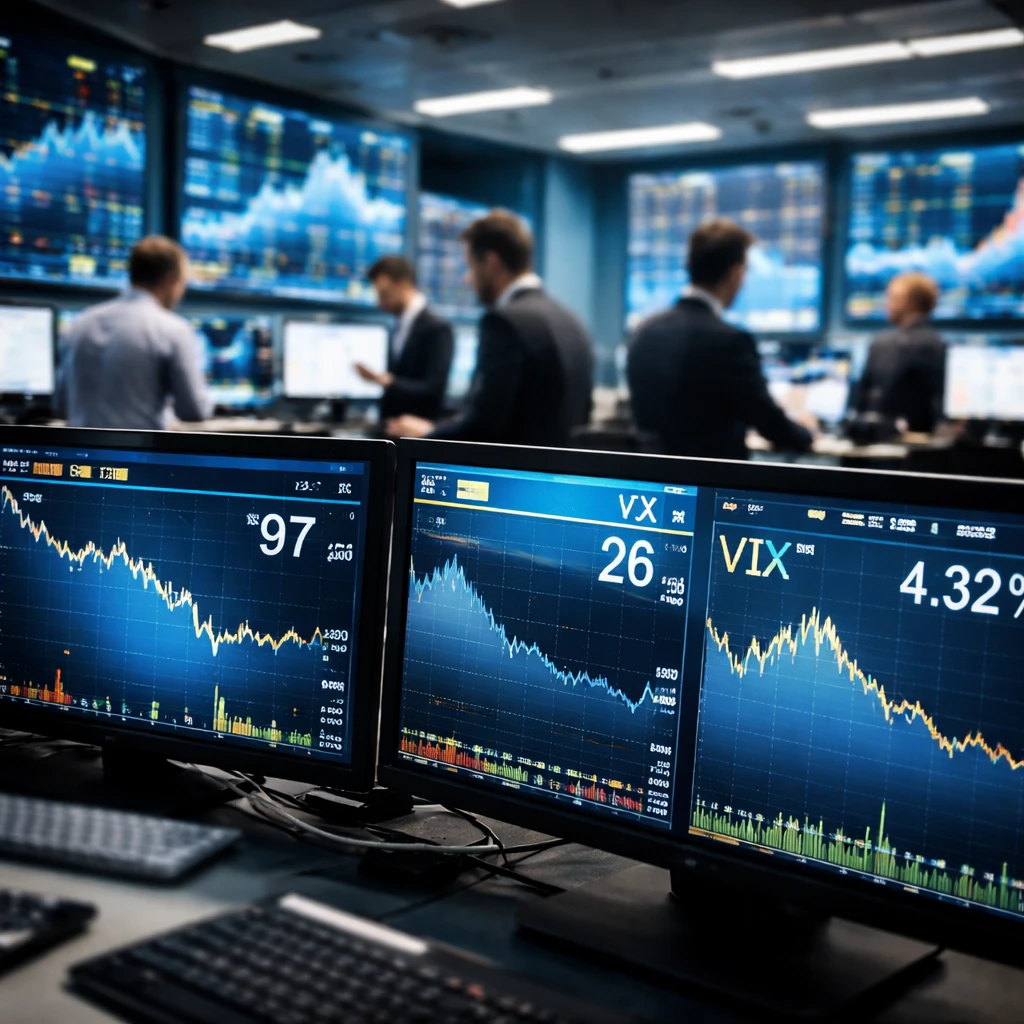
U.S. stocks traded higher on Wednesday as oil prices retreated from the recent surge that drove volatility across markets. Goldman Sachs midday market intelligence reported Brent crude settled near $97 per barrel after touching $117 just three days earlier.
The moderation in commodity markets relieved some strain on both equity and fixed-income markets. The VIX eased to about 26, and the yield on the 10-year U.S. Treasury slid to 4.32%. While both measures have come down from the very highest recent levels, they remain elevated relative to pre-conflict norms, indicating that investors still see notable risk.
Economic releases this week took a secondary role to geopolitical developments, with February indicators largely overshadowed by ongoing uncertainty. Market participants and analysts continue to assess the conflict through two primary channels - its potential effects on growth and on inflation - as these forces will shape policy and corporate outlooks.
On the inflation front, February trade price data showed a larger-than-expected rise in core import prices, which climbed 1.2% month-over-month. The report attributed the increase in part to a substantial rise in imported computer accessories excluding semiconductors, stronger metals prices, and lagged effects from a weaker dollar. The same report noted that tariffs implemented by the Trump Administration starting a year ago are also influencing the inflationary picture. Goldman Sachs used the available information to estimate that Core PCE inflation rose 2.93% in February.
In the travel and lodging sector, hotel revenue per available room (RevPAR) increased 4.9% year-over-year last week, extending the positive momentum observed in February. Despite that strength, prediction markets currently place a 60% probability on the energy crisis persisting through mid-May, a scenario that could quickly undercut hotel demand if it plays out.
Market responses on Wednesday included gains for hotel-related equities, with real estate investment trusts that own physical hotel properties particularly benefitting from the combination of improved RevPAR and lower interest rates. Traders continue to weigh the near-term easing in commodity stress against the uncertain path of the conflict and its effects on inflation and economic activity.
Looking ahead, investors are likely to monitor further moves in oil prices, incoming inflation measures, and any shifts in the geopolitical landscape that could influence both growth and price stability.