
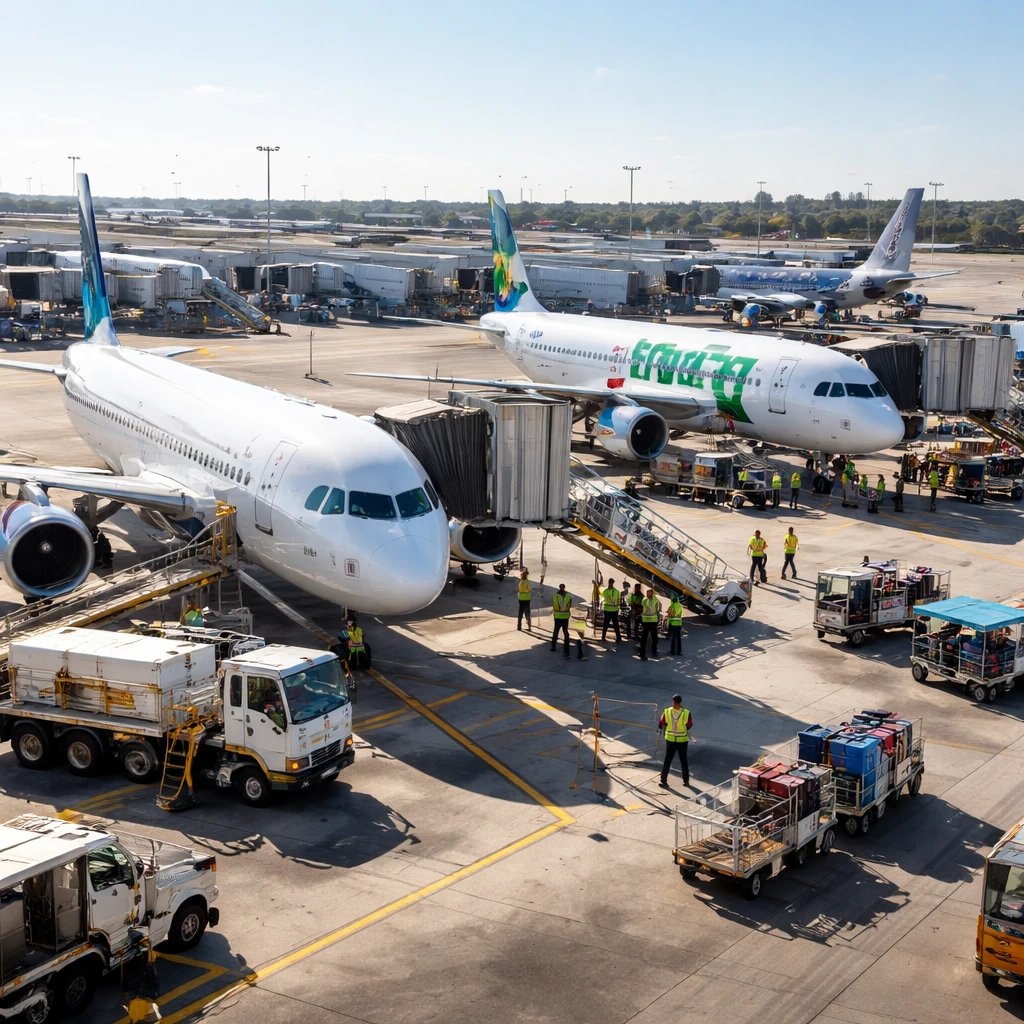
The abrupt end of Spirit Airlines’ operations on May 2, after creditors could not reach agreement on a $500 million government backstop, has opened short-term opportunity for other low-cost U.S. carriers to raise fares and absorb some of Spirit’s market share. But industry participants and analysts say Spirit’s exit will not erase the structural stresses that have squeezed the cheapest segment of the U.S. airline market.
Spirit’s absence gives rivals room to cherry-pick routes and boost ticket prices, but the same cost pressures that helped topple Spirit remain in force. Post-pandemic wage inflation, higher aircraft lease and maintenance expenses, and a sharp jump in jet fuel have eroded the traditional cost advantages that defined the ultra-low-cost carrier model. Those pressures reduce the flexibility budget airlines have to raise fares without dampening demand among highly price-sensitive flyers.
"I expect Spirit’s liquidation to be a modest benefit to its low-cost competitors," said Joe Rohlena, senior director at Fitch Ratings. "But I don’t expect it to be sufficient on its own to overcome other hurdles that the discounters are facing."
Financial results and margin trends illustrate the degree of strain. An analysis from TD Cowen shows Frontier’s adjusted EBIT margin plunged from 9.3% in 2019 to negative 12.1% in 2025, while JetBlue’s margin moved from about 10.0% to negative 3.7% over the same period. Even Delta, which has remained profitable, saw its EBIT margin fall from 19% to 10%.
Selective capacity replacement rather than wholesale restoration
Executives say Spirit’s network will not be rebuilt wholesale. Rather than trying to replicate every route Spirit operated, carriers are filling select opportunities where they see commercial advantage. Frontier reports the industry has replaced about half of the capacity Spirit had cut for May, with Frontier responsible for roughly 40% of that restored flying. Frontier projects that absorbing parts of Spirit’s footprint will lift revenue per seat by 3% to 5%.
Frontier’s CEO Jimmy Dempsey highlighted the airline’s recent performance, noting record adjusted revenue in its most recent quarter and saying the company is well positioned to replace lost capacity and emerge "structurally stronger."
JetBlue is pursuing growth around Fort Lauderdale, a market where Spirit had been concentrated, offering loyalty matches to eligible former Spirit customers. JetBlue expects to operate about 130 daily departures in that region by the summer, more than 75% higher than its 2025 levels. The company did not comment for this report.
Not every budget carrier is struggling to the same degree. Allegiant, which focuses on lightly served leisure routes, posted an adjusted operating margin of 14.9% in the quarter, contrasting with negative margins reported by JetBlue and Frontier.
Fuel costs remain the decisive vulnerability
Fuel prices are the single largest swing factor for the low-cost segment. The ability to recover sharply higher fuel costs through ticket price increases or ancillary fees is limited by a customer base that is extremely price-sensitive. That constraint leaves little room for error if wholesale fuel prices stay elevated.
Andrew Levy, CEO of Houston-based Avelo Airlines, said limited pricing power makes the environment "a little harder for companies like mine." Avelo’s fuel bill rose from about $2.56 per gallon in February to roughly $4.71 in April. The airline responded by raising base fares by about $20, increasing fees and using promotional tactics to preserve demand.
The financial exposure at larger low-cost carriers is substantial. Frontier paid $268 million for fuel in the first quarter at an average price of $2.88 per gallon and is forecasting $4.25 per gallon for the current quarter. Assuming similar fuel consumption, the increase that Frontier does not recoup would imply a roughly $70 million to $83 million hit to earnings.
JetBlue reported it paid $2.96 per gallon in the first quarter and has forecast a fuel price range of $4.13 to $4.28 for the current quarter. If consumption holds steady, fuel expense would increase from $573 million in the first quarter to a projected range of $797 million to $826 million, implying an unrecovered cost well above $100 million.
Both carriers expect to recoup only a fraction of the higher fuel bill: JetBlue expects to recover around 30% to 40% of the increase, while Frontier anticipates recouping about 35% to 45%.
"The ability to recoup sharply higher fuel prices is the primary consideration at the moment," said Jarrett Bilous, an analyst at S&P Global.
Broader market context
Large legacy carriers, including Delta and United, have continued to generate profits in 2025, helped by stronger spending from higher-income travelers and more diversified revenue streams. By contrast, the ultra-low-cost model remains exposed to concentrated weakness when costs rise and pricing flexibility is constrained.
Even as low-cost carriers take advantage of vacancies in certain markets, the industry-wide pressures of higher wages, lease and maintenance costs, and volatile fuel prices mean the economics that once made the discounter model durable have weakened. That dynamic suggests any lift from Spirit’s exit will be incremental rather than transformative.
What to watch next
- How much additional capacity carriers restore from Spirit’s former network versus targeted route additions.
- Whether fuel prices stabilize or continue to increase, and the degree to which carriers can pass those costs to travelers.
- Quarterly margin trajectories for Frontier and JetBlue as they absorb route changes and rising operating expenses.