
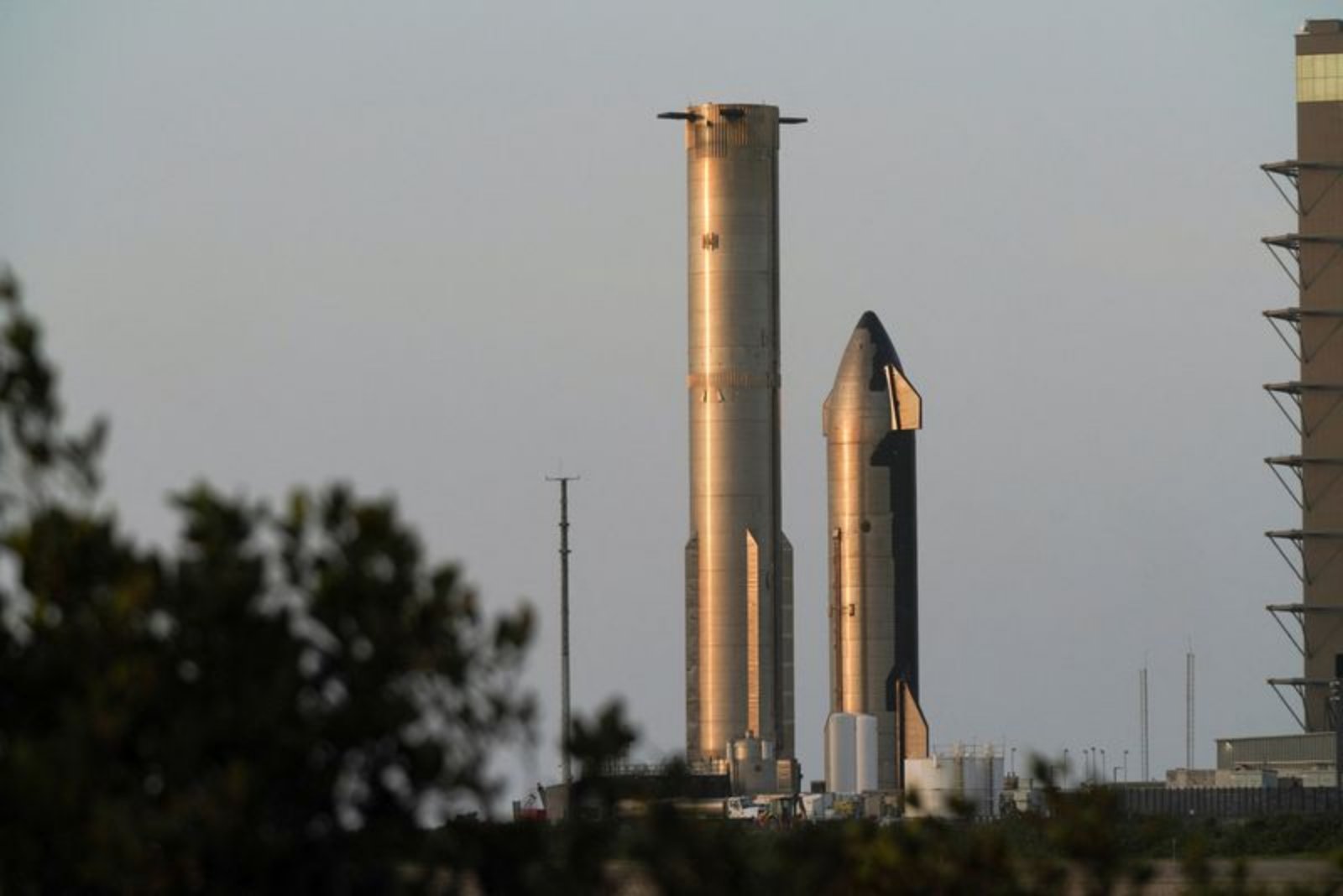
The IPO market has been waiting for a catalytic deal, and the privately held rocket company SpaceX may be that moment. With the last debut at a valuation above one trillion dollars occurring when Saudi Aramco listed in 2019, a SpaceX offering of the size currently discussed would stand out as the first such event in years.
Confidential filing activity by SpaceX points to an intention to pursue an exceptionally large public listing. The company has reportedly filed confidentially and is considering a raise of $50 billion or more, at a valuation that could reach $1.75 trillion. At that scale, the transaction could overtake Saudi Aramco as the largest IPO in history.
"SpaceX will be far and away the largest IPO in history at the sizes being discussed now," Samuel Kerr, global head of equity capital markets at Mergermarket, said. "It will be a real test for public market capacity at a time of real market turmoil. But if any business can list in this market, its probably SpaceX given the tremendous hype."
Market participants and analysts describe the potential listing as a pivotal test. If public investors receive the offering enthusiastically, it could signal that the market has sufficient depth and risk tolerance to absorb very large, high-valuation deals after a prolonged lull. That would be interpreted by many as a validation of late-stage private market pricing and could spur other issuers who have deferred listings to press ahead.
Katherine Liu, vice president at IPO research firm IPOX, framed a successful SpaceX debut as an event that could catalyze a broader resurgence in large-scale public offerings. A positive reception, she said, would show that public markets can accommodate sizeable, high-valuation deals and might encourage more companies to test the window.
At the same time, the transaction is unusually singular in several respects. SpaceX is associated with a celebrity founder whose presence and following create a distinctive retail dynamic. That characteristic, together with the combining of multiple growth narratives under one corporate banner, could make the company a standout that does not necessarily translate into renewed enthusiasm for other issuers.
"It’s either a bellwether or a harbinger," Brian Jacobsen, chief economic strategist at Annex Wealth Management, said. He added that there is enough enthusiasm around the business to attract investor interest, but it might be so singular, with its celebrity CEO, that it could actually hurt other space stocks rather than lift them by attracting all the attention.
Part of what makes SpaceX an outsized listing is the combination of its core launch business, its broadband arm Starlink and a recent corporate move that folded in an artificial intelligence venture. Elon Musk said in February that SpaceX had acquired his AI start-up xAI in a record-setting deal. That transaction, reported by Reuters and cited by people familiar with the matter, placed a combined valuation that allowed observers to ascribe a $1 trillion value to SpaceX and a $250 billion value to xAI.
"The recent xAI fold-in allows him (Musk) to bundle launch, Starlink, and AI into a single, scarce mega story that can support a richer valuation than the businesses might achieve separately," Minmo Gahng, assistant professor of finance at Cornell University, said.
Reported estimates of SpaceX’s recent financial performance further help explain why investors could be drawn to such a listing. People familiar with the matter told Reuters that SpaceX generated about $8 billion in profit on between $15 billion and $16 billion of revenue last year. Those figures, if confirmed publicly, place the company among high-margin, high-growth businesses that have the potential to command significant investor attention.
Despite those strengths, market indicators show that the environment for new listings has been challenging. An index that tracks major IPOs has underperformed the broader equities benchmark over the past 12 months, reflecting the cautious stance taken by many public investors toward fresh, large-scale offerings. Issuers across capital-intensive sectors in particular have struggled to attract public market demand, contributing to a backlog of delayed listings.
There is also a converse risk: a SpaceX deal so large that it consumes investor capacity. Samuel Kerr and others note that an offering of the contemplated magnitude could be so dominant that it crowds out other mega issuers, prompting some to postpone their own plans rather than compete for the same pool of capital.
The coming months will determine which of these dynamics prevails. If investor appetite aligns with the scale and story SpaceX presents, the listing could mark the beginning of a broader revival in mega-deals. If not, the company’s uniqueness may limit any positive spillover and leave the IPO market’s long-awaited recovery still pending.
Charts and data note: Market observers have highlighted several indicators that reflect the current state of the IPO market and the potential impact of a successful SpaceX listing. Those include measures of public market capacity, major IPO performance relative to benchmarks, and the size of the pipeline of delayed or prospective large-scale offerings.