
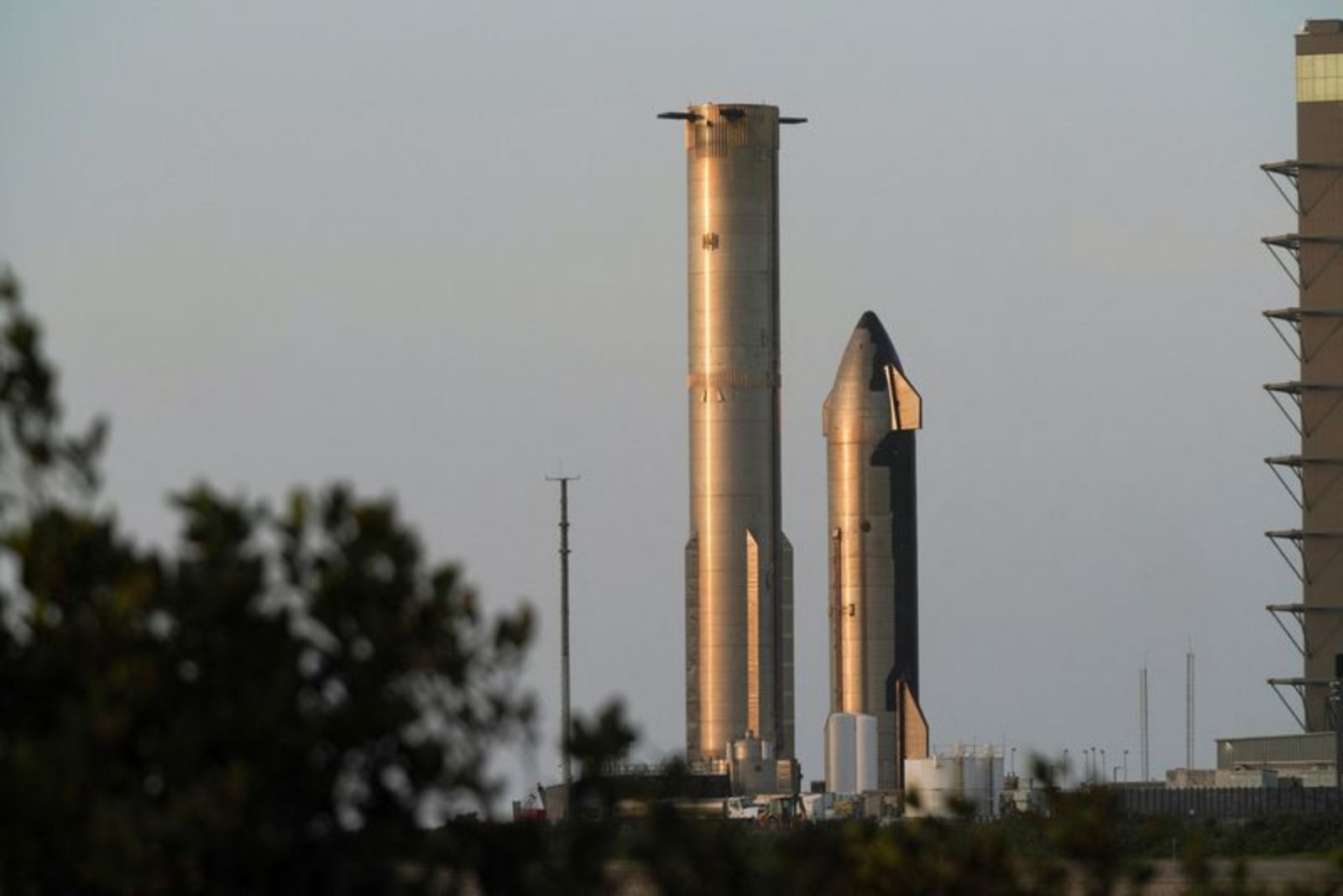
SpaceX has submitted a confidential registration for a U.S. initial public offering, a move that could produce the largest stock market debut in history if the company achieves a valuation exceeding $1.75 trillion. The filing places the commercial space company at the center of investor interest as participants evaluate exposure to a business built on reusable rockets and a rapidly expanding satellite broadband network known as Starlink.
The confidential filing follows SpaceX’s merger with xAI, a transaction that implied a valuation of about $1 trillion for the rocket manufacturer and roughly $250 billion for the developer of the Grok chatbot. That deal has drawn attention to how closely SpaceX’s ambitions are now tied to artificial intelligence and data distribution, particularly after xAI was granted access to distribution channels through a share-swap arrangement that folded the social media platform X into the AI startup.
Headquartered in Starbase, Texas, the company could seek to raise more than $50 billion in an initial public offering - a sum that would surpass the 2019 flotation that has held the record for the largest IPO to date. Such a debut, if realized at the reported scale, would likely reenergize a public listings market that has been muted in recent years, attracting demand from both retail and institutional investors. Some investors will be drawn by the Musk brand, while others will be focused on the commercial prospects of SpaceX’s launch services and satellite operations.
Market professionals suggest investors may employ sum-of-the-parts techniques to assess the company, though valuation swings could be significant depending on public confidence in the vision driving the business. "Investors could use a sum-of-the-parts analysis, but, like with Tesla, SpaceX’s valuation could very much fluctuate wildly based off how much the public believes in Musk’s vision," said Angelo Bochanis, data and index associate at Renaissance Capital, an IPO-focused research and ETF provider. "So far, investors seem to be clamoring for any sort of exposure to SpaceX."
SpaceX is currently the most valuable private company based on the valuation implied by its xAI merger. The company was last valued at about $800 billion in an independent secondary share sale. The prospect of an IPO has also been echoed among other high-profile startups reportedly considering large public offerings, which would together test investor appetite for new listings after a prolonged era in which many large startups remained private while drawing on deep private capital pools.
Observers note the filing will invite closer analyst and investor scrutiny of what some commentators term "Muskonomy" - the collective interplay of Elon Musk’s broad business interests and their financing, governance and cross-company relationships. A listing could feature a dual-class share structure that allows the founder to raise capital while retaining control, even after the dilution that accompanies a public offering, according to Minmo Gahng, assistant professor of finance at Cornell University. "A likely dual-class share structure would let Musk tap public capital while retaining firm control, even after the substantial dilution that comes with a public offering," he said.
Elon Musk oversees a wide array of businesses spanning electric vehicles, space launch, satellite broadband, artificial intelligence and social media. He has also consolidated X into the xAI entity, potentially supplying the AI developer with a large source of data and distribution. Some analysts caution investors about the demands of overseeing multiple highly valued enterprises simultaneously. "It is understandable that investors would be concerned with Musk overseeing multiple significant enterprises, especially given his polarizing public profile at times. However, SpaceX appears somewhat differentiated," said Kat Liu, vice president at IPOX. "The business is operationally mature, technologically ahead in several key areas, and profitable, which provides a solid fundamental underpinning."
Financial results cited by people familiar with the matter indicate SpaceX generated roughly $8 billion in profit on $15 billion to $16 billion of revenue in the most recent year. Those figures bolster the argument that the business has fundamental strength beyond its founder's public profile, with operational maturity in launch services and the economics of satellite broadband beginning to show in the company’s financial performance.
Space has again become a focus for private and public capital, with billionaires and private firms funding investments in rockets, satellite systems and plans for lunar activity. As government agencies increasingly rely on commercial partners and defense spending rises, space is being framed as an arena shaped by technological advantages, national security priorities and potential new economic returns.
In a related development, SpaceX has sought regulatory permission to deploy as many as 1 million solar-powered satellites configured as orbital data centers - a scale far beyond current deployments or typical proposals. Engineers and technologists have discussed for many years the concept of offloading energy-intensive computing from Earth to space-based platforms, and the company’s satellite ambitions have revived those conversations in investor and technical communities.
The merger with xAI has also focused attention on how an integrated network of rockets, satellites and AI could be leveraged to address technical and capital challenges associated with extending artificial intelligence infrastructure beyond terrestrial limits. Artificial intelligence remains a dominant theme on financial markets, with securities linked to AI contributing to strong performance across technology sectors and lifting valuations where AI exposure exists.
Summary
- SpaceX confidentially filed for a U.S. IPO, potentially seeking to raise more than $50 billion and aiming at a valuation above $1.75 trillion.
- The filing follows a merger with xAI that implied valuations of $1 trillion for SpaceX and $250 billion for the Grok chatbot developer.
- Investors and analysts expect strong demand but note increased scrutiny of Elon Musk’s multi-company interests and potential governance arrangements.
Key points
- Market impact - An IPO at the reported scale would likely be the largest ever and could revitalize the IPO market, affecting both equity issuance activity and investor allocations to late-stage startups.
- Business fundamentals - SpaceX’s growth is driven by reusable rockets and the Starlink satellite network, with reported profitability supporting its commercial case.
- Cross-sector implications - The filing highlights intersections among aerospace, satellite broadband and artificial intelligence, sectors that may see heightened investor and regulatory attention.
Risks and uncertainties
- Valuation volatility - Public sentiment about the founder’s vision could cause wide swings in valuation, complicating price discovery for investors and impacting demand for the offering. This primarily affects equity markets and investor allocations.
- Governance and concentration risk - A probable dual-class share structure could allow concentrated control by the founder, prompting scrutiny on governance that affects corporate governance frameworks and cross-company financing.
- Execution and regulatory challenges - Ambitious plans such as deploying up to 1 million solar-powered orbital data center satellites face technical and regulatory hurdles, introducing uncertainty for the aerospace and satellite services markets.