
S&P Global Ratings has downgraded Clearwater Paper Corp.'s credit rating to 'B+' from 'BB-' and attached a negative outlook, citing operating performance that has fallen short of expectations and an industry backdrop that S&P expects will pressure prices and utilization into 2026.
The rating agency anticipates that Clearwater's S&P Global Ratings-adjusted leverage will exceed 4x over the coming 12 months. S&P attributes the higher leverage primarily to weak earnings, and to an expected increase in excess solid bleached sulfate (SBS) paperboard capacity in the U.S. that could depress pricing as participants compete for volume in 2026.
On a forward-looking basis, S&P projects Clearwater will generate adjusted EBITDA of about $87 million. With roughly $375 million of adjusted debt outstanding, that EBITDA figure would place the company's adjusted debt-to-EBITDA ratio in the 4x-5x range by the end of 2026. S&P also cautioned that any material unplanned downtime at Clearwater's facilities could further reduce adjusted EBITDA and worsen leverage metrics.
Cash flow pressure is a central concern in S&P's analysis. The agency noted that cash flow deficits represent a substantial risk across its forecast horizon, driven in part by Clearwater's relatively high capital expenditure requirements at a time when earnings are weak.
S&P highlighted the timing of the company's financing obligations, noting that Clearwater's asset-based lending revolving facility becomes current in November 2026, and that $275 million of unsecured notes mature in August 2028. These maturities and near-term liquidity demands factor into the agency's assessment of the firm's ability to manage leverage while maintaining operations.
To preserve cash, S&P expects Clearwater to temporarily reduce growth capital spending. The agency modeled a reduction in capex to about $70 million in 2026, compared with roughly $100 million per year in 2024 and 2025. S&P also anticipates that tighter working capital management - including aligning inventory with SBS demand - will provide additional cash flow support during 2026.
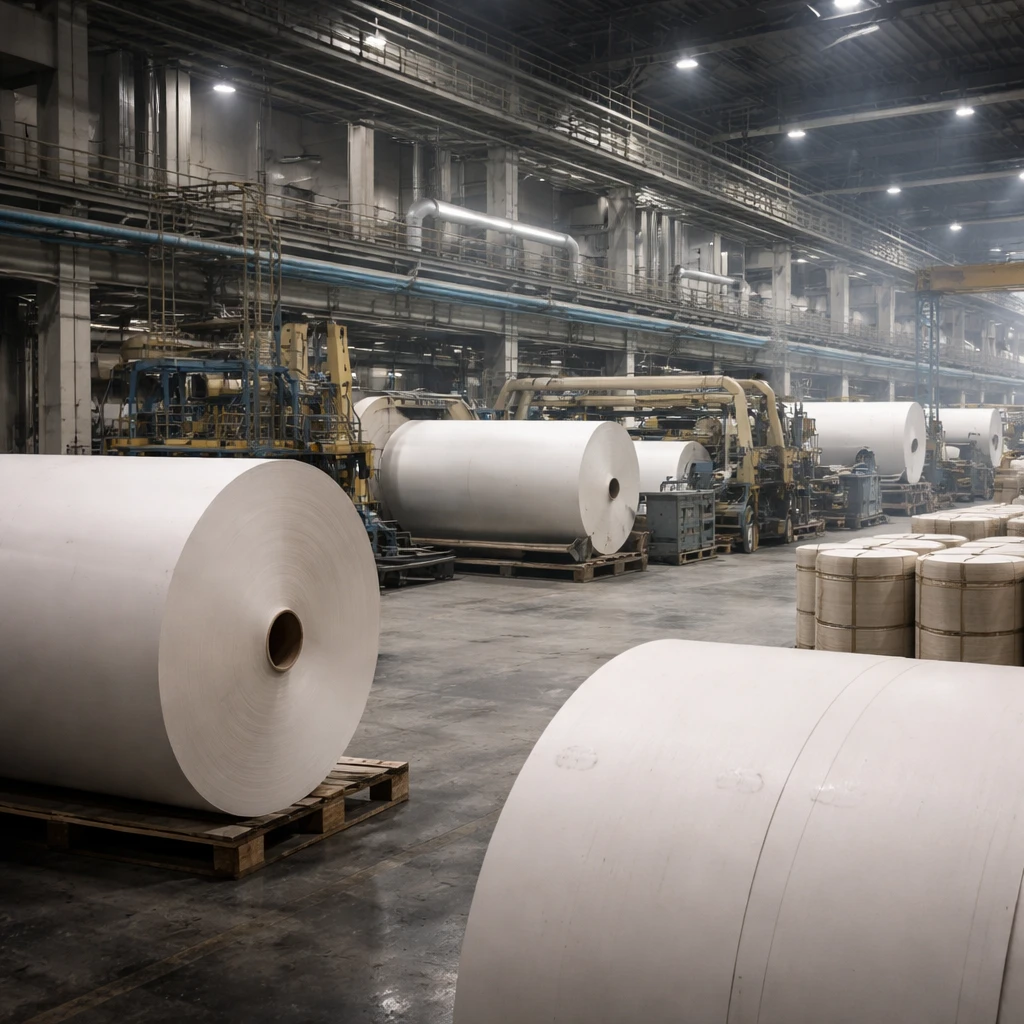
Operationally, S&P has revised its assumptions downward to reflect an oversupplied market. The agency expects Clearwater to operate at about 85% of capacity in 2026, which it notes is below the 90%-95% utilization range it regards as normal demand. S&P cited additional industry capacity announced in 2025 that is expected to be fully operational in 2026; if industry demand does not keep pace with this new supply, downward pressure on SBS pricing is likely.
While S&P acknowledged that growing demand for sustainable packaging supports more favorable medium- to longer-term fundamentals for the sector, it concluded that near-term demand will lag available supply over the next 12 months. That gap, per the agency, is expected to keep Clearwater's utilization rate suppressed, exert further pressure on margins and limit the company's ability to raise prices.
Bottom line: S&P's downgrade reflects a combination of weak near-term earnings, anticipated industry oversupply in SBS paperboard that should pressure pricing and utilization, and financial obligations that together create a higher-leverage profile and elevated cash flow risk through 2026.