
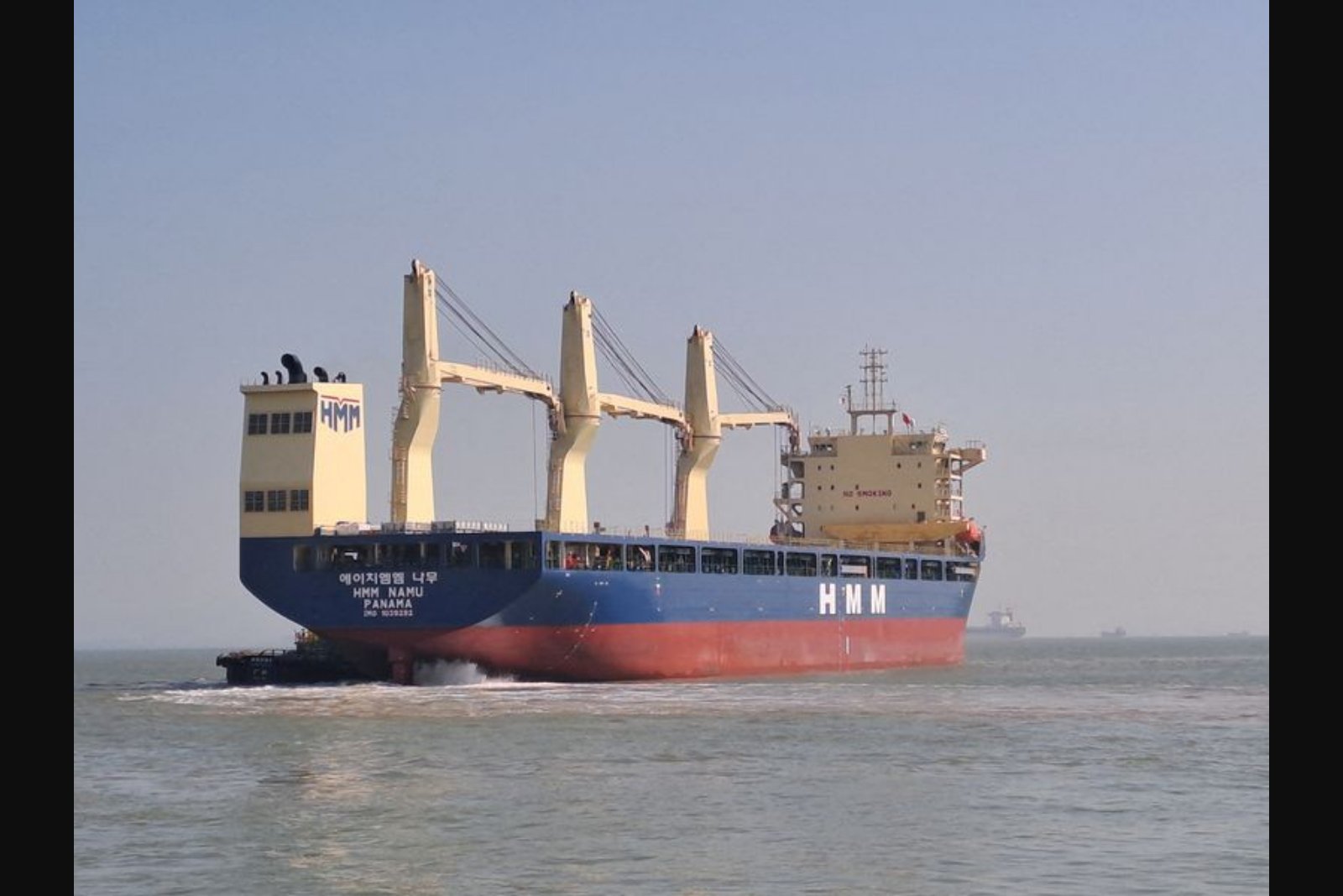
South Korea's Oceans Ministry said on Friday that government investigators have begun probing the cause of an explosion and fire that struck a Korean-operated vessel in the Strait of Hormuz, with officials stressing that it remains unclear whether the damage resulted from an attack or from an internal malfunction.
The vessel's operator, HMM, said investigators sent from South Korea boarded the ship at about 0600 GMT after the vessel was towed into port in Dubai. A company spokesperson cautioned that it was too early to predict when the inquiry would be completed.
HMM earlier confirmed that the ship, identified as HMM Namu, completed berthing in Dubai by 2300 GMT on Thursday. According to the company and officials in Seoul, the vessel experienced an explosion and a fire in the engine-room area on Monday while it was anchored near the United Arab Emirates.
All 24 crew members aboard the ship, including six South Korean nationals, were reported unharmed.
Responses from international and diplomatic actors have been mixed. U.S. President Donald Trump asserted that Iran had fired at the South Korean vessel and urged South Korea to join U.S.-led efforts to secure shipping through the Strait of Hormuz. Seoul's presidential office said on Wednesday that it had suspended a review of whether to participate in the U.S. escort operation, known as "Project Freedom", after President Trump put the plan on hold.
Iran's embassy in South Korea issued a denial, saying it "firmly rejects and categorically denies" allegations that Iranian armed forces were involved in damage to the vessel. Separately, Iran's state-run Press TV carried commentary suggesting a South Korean vessel had been targeted; the Iranian embassy said that article represented outside commentary and did not reflect Tehran's official position.
Seoul has stated it is maintaining an open approach to all possible causes of the incident - including both external attack and internal malfunction - and is prioritizing a thorough fact-finding process before deciding on any response.
The location of the incident increases its sensitivity. The Strait of Hormuz typically handles about a fifth of the world's oil and liquefied natural gas shipments, and South Korea relies heavily on imported energy. That dependence heightens the strategic and economic attention paid to the investigation's findings.
At this stage, investigators are conducting on-site examinations after the vessel's arrival in Dubai, while diplomatic statements from involved parties remain in contention. Authorities have affirmed the importance of establishing verifiable facts before drawing conclusions or taking further action.
Note: The investigation is ongoing and officials have not provided a timeline for its conclusion.