
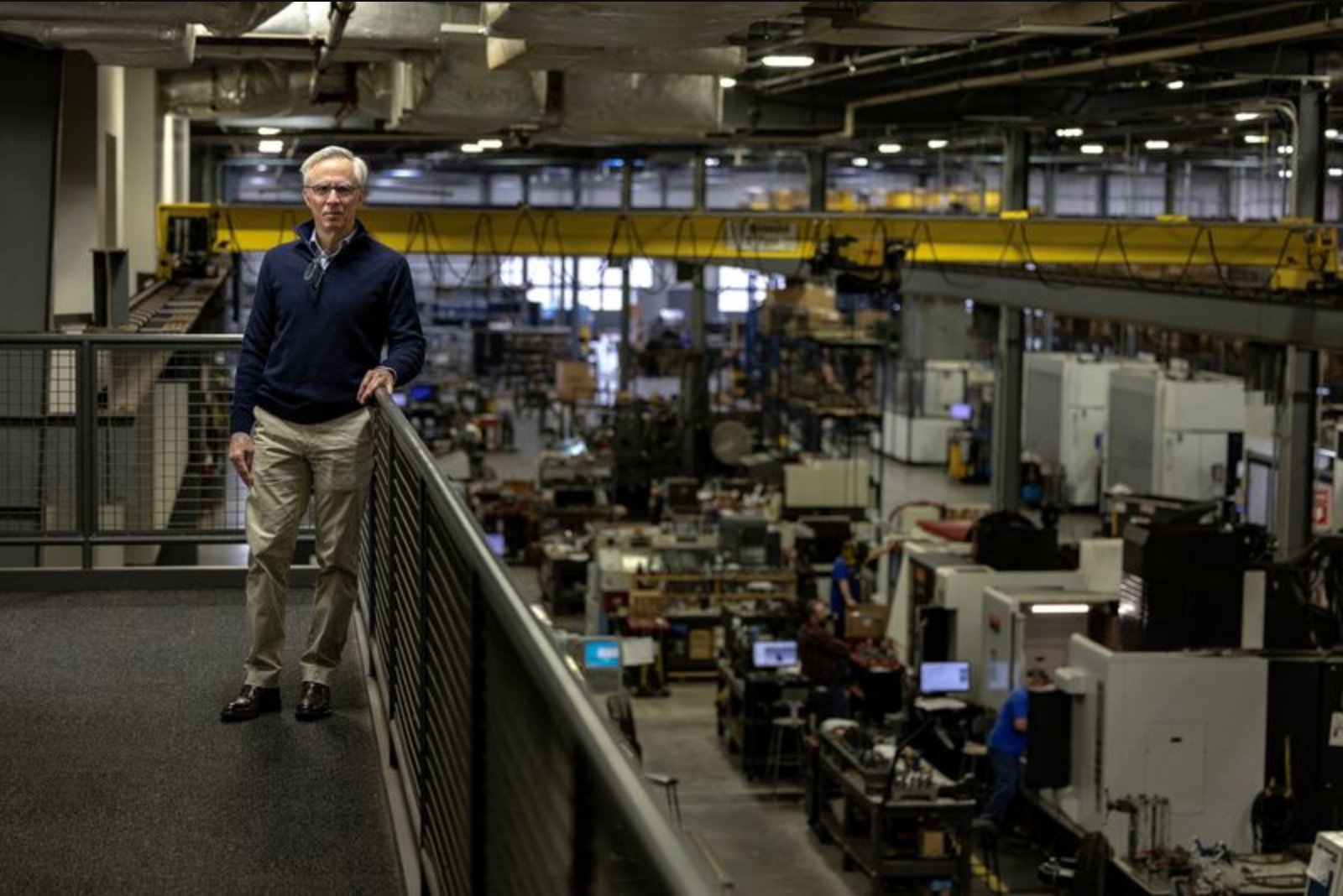
One customer recently offered John Axelberg, CEO of General Stamping & Metalworks, an $800,000 order to double output of tubular frames used in large-scale solar farms. Axelberg turned the request down. Despite solar-related work driving nearly 30% revenue growth for his small metal forming business last year - growth that was supported by tax incentives in the Inflation Reduction Act - other sectors the company serves, including farm equipment and heavy trucks, were down about 20% overall. He also voiced concern that solar-related credits his company benefited from might be at risk under the current administration.
Axelberg’s hesitation exemplifies the split picture in industrial towns such as South Bend, where federal policies are producing winners and losers rather than a broad manufacturing resurgence. Some segments are experiencing notable gains, while others face higher costs, softened demand or murky policy signals that hinder new investment decisions.
Local manufacturers weigh incentives against tariffs and policy uncertainty
At General Stamping & Metalworks, a family-run operation with about $130 million in annual sales and a history stretching back to 1922, the CEO said tariffs have driven up prices for metal and imported parts. He also voiced a specific worry about the durability of solar incentives, saying: "I have no confidence that he won’t just pass another executive order and start coming after the (solar) credits we’ve received and try to claw them back." Axelberg added that the uncertain policy environment has caused him to pause plans to use 25 adjacent acres for expanded finishing and assembly work.
Those concerns are echoed across the community. For some firms, federal moves such as tariffs have raised domestic steel prices and helped certain suppliers. For others, policy shifts and rhetoric directed at specific industries - notably electric vehicles - have created an investment pause and left order books uneven.
Administration officials point to early signs of improvement, but benefits take time
Pierre Yared, acting chair of the Council of Economic Advisers, pointed to rising manufacturing productivity, greater investment in plant and equipment, and a slowing pace of manufacturing job losses as initial indicators that the administration’s policies could yield benefits. He noted, however, that these capital investments require time to come online and that the full effects will not be immediate: "It will be some more time before we fully materialize the benefits of the President’s policies," he said.
Boons concentrated in a few niches, broader manufacturing remains fragile
South Bend illustrates the unevenness: the town has hosted substantial projects in defense, steel processing, data center construction and electric vehicle battery manufacturing, yet many legacy manufacturers report stagnant or declining activity.
Defense production is among the stronger performers. AM General, a Humvee maker based in the area, built a new plant to fulfill an $8.7 billion U.S. defense contract for a new generation of military vehicles. Steel processing activity in the region, run by Cleveland-Cliffs, stands to gain from tariffs that have elevated domestic steel prices. In a company release tied to its February earnings, CEO Lourenco Goncalves described the measures as ushering in "a new golden era and a manufacturing renaissance that will make America strong again."
A major wave of construction has also arrived with Amazon building an $11 billion data center campus near South Bend that will ultimately include about 30 buildings. Data centers spur demand for heavy equipment and raw materials during construction, but once completed they generally do not produce large numbers of permanent factory jobs. The Federal Reserve estimated global spending on data centers at more than a half trillion dollars last year and projected the surge will "increase dramatically" through 2030.
Near Amazon’s site, a $3.5 billion joint venture between General Motors and Samsung is under construction to manufacture electric vehicle batteries. Yet the GM project has encountered headwinds related to the administration’s stance on electric vehicles: GM disclosed it has slowed construction and does not have a target opening date. A GM spokesman, Stuart Fowle, said the company is using the delay to "observe EV demand and plan for our future needs."
Rapid development creates secondary stresses for established manufacturers
Large investments bring benefits but also immediate pressures for long-time local producers. Jeff Rea, CEO of the South Bend Regional Chamber, said the rush of development has driven land prices sharply higher, describing the market around the new projects as "nutso." Companies say rising property values have pushed up property taxes, and increased demand for utilities has led to higher electricity and water costs.
Master Roll Manufacturing, which produces and reconditions parts for steel processing equipment, sits across from Amazon’s sprawling construction site. CFO Jon Ferguson said sales at the plant are steady rather than booming, and that nearby construction has worsened labor shortages by absorbing available skilled workers. "A lot of companies in the area are upset with how (the data center boom) is falling out," he said.
Daniel Adams, CEO of Manufacturing Technology Inc., whose company evolved from a tool and die shop founded in 1926 to specialize in friction welding, described a similar mixed outcome. He said aerospace customers are performing well, but automotive business has softened since the change in policy emphasis on EVs. "There’s an investment pause by car companies and tier-one (auto suppliers)," he said. Adams also pointed to short-term labor competition: "People go to the shiny place and maybe make two dollars (an hour) more."
Jobs data and construction spending show a complex national picture
Despite high-profile announcements of new domestic investments - the White House has been publicizing major commitments from companies including Apple and Meta to invest in U.S. factories and workforce training - the manufacturing job count in South Bend has slid since late 2020. The town has lost over 1,000 factory jobs since the end of 2020, including 265 jobs lost since the current President took office.
The pattern is echoed nationally. According to the Bureau of Labor Statistics, U.S. manufacturing jobs have declined by about 100,000 since the President’s inauguration. Construction spending on manufacturing plants climbed from $5.9 billion in February 2021 to a peak of $20.8 billion in October 2024, but fell to $17.0 billion by December 2025, illustrating a surge in investment that has not been uniformly sustained.
Michael Hicks, an economist at Ball State University who studies manufacturing, assessed the data pragmatically: "There’s no evidence of a manufacturing renaissance," he said, adding that the sector looks to have declined over the last 10 to 11 months.
What this means for investment and expansion choices
For many managers in South Bend, the calculus for new investment has become more conservative. Axelberg, who earlier expressed misgivings about policy shifts affecting solar credits, put off plans to expand onto land adjacent to his plant. "It’s almost like there is no policy," he said. "It’s like the whims of a king." That uncertainty, combined with higher input costs and labor shortages in some trades, is prompting manufacturers to delay or scale back expansion plans.
Other firms are responding differently. Cleveland-Cliffs expects to benefit from tariff-driven steel price increases, and defense contractors have capacity commitments tied to large federal contracts. Large corporate projects provide construction-related work for suppliers but may not deliver a long-term boost in local manufacturing employment once facilities are completed.
Conclusion
South Bend’s experience captures the uneven consequences of recent federal policy shifts. While certain industries - notably defense and segments tied to tariffs - are seeing tangible gains, others face eroded demand, higher costs or postponements of investment. The result is a manufacturing landscape where local leaders confront tradeoffs: benefit from nearby large projects and higher prices for some commodities, but cope with labor competition, rising taxes and lingering uncertainty about the longevity of incentive programs and regulatory choices.